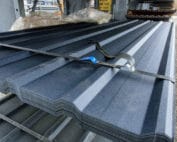
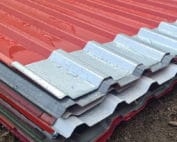
Roofs and sheet metal
Is second-grade sheet metal suitable for roofing? How to assess the trade-offs
Key points in brief
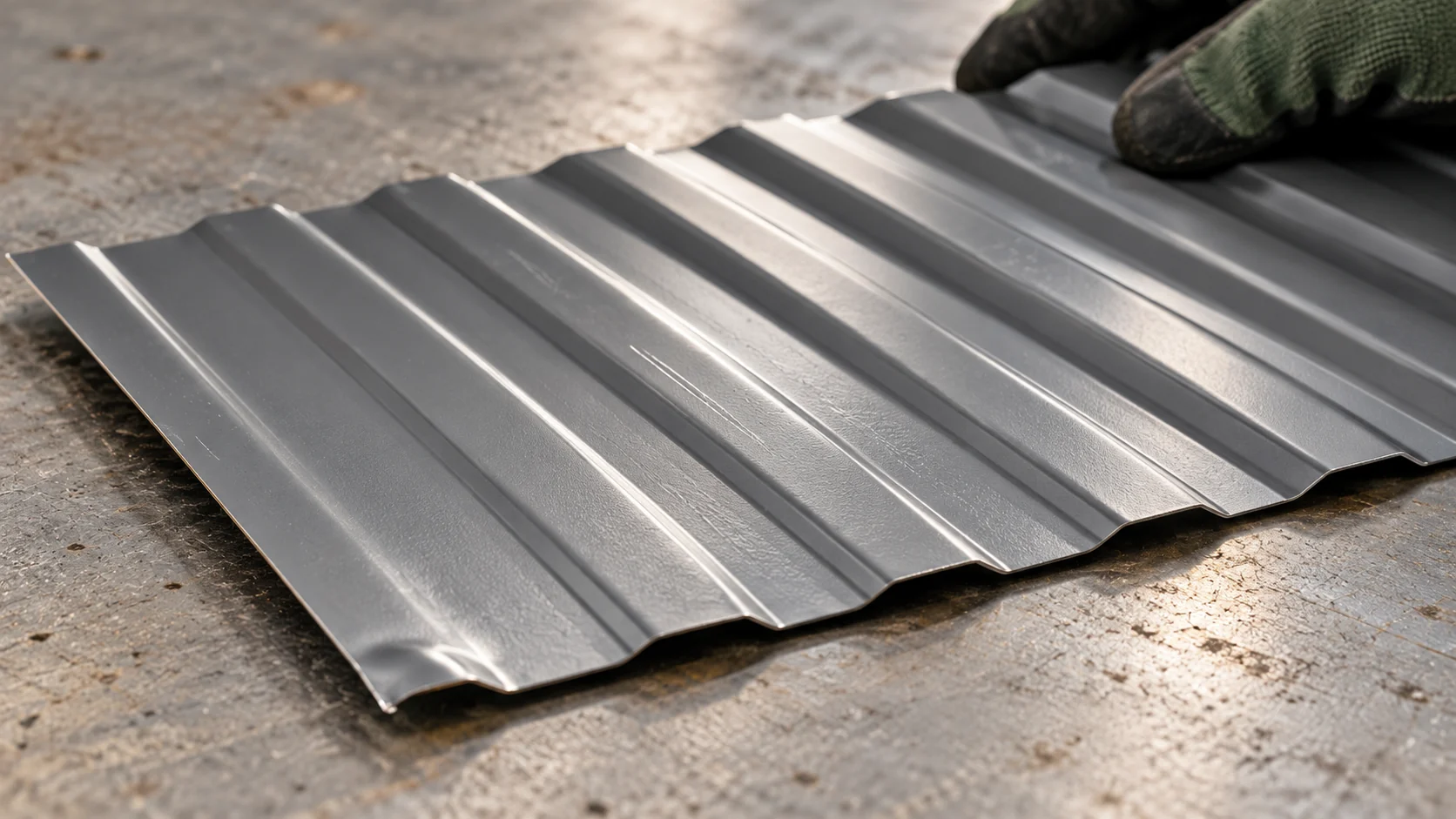
Second grade does not describe one specific defect. A sheet may have a scratch, a difference in shade, a non-standard dimension or a deformation. Each of these situations has a different significance. A low price is an advantage only when the condition of the material and the terms of sale suit the planned application. It should not be assumed that it is always a fully functional steel sheet with a minor mark on the coating. The reason for reclassification must be established for the batch. Important are the description of the condition, identification of the product and the available documents. Without this data it is difficult to assess whether the saving has a technical justification.
What does the information about second grade mean?
End-of-line stock and second grade are not always the same thing either. Material with limited availability may have a different reason for being reduced in price. Ask about the condition of the specific sheet, not just the name of the sales department. The general label “outlet” leaves too many possible variants.
Which differences mainly concern appearance?
An uneven shade or gloss may be a problem on a representative façade. On less visible structures its significance is often smaller. It still has to be confirmed that the identified problem actually concerns appearance. A photo from a distance does not show the condition of the surface protection.
A scratch requires an assessment of depth and location. A light mark on the protective film is not the same as damage that exposes the metal. Do not try to judge the whole batch by one favourably positioned sample. The inspection should cover both sides and the edges of the selected sheets.
It is also good to inspect the surface in side light, which reveals unevenness.
Which defects can make installation or tightness more difficult?
A crushed edge may prevent a correct overlap. A twisted sheet may not lie on the supports as intended. Holes, deep damage and permanent deformation require separate assessment. It should not be assumed that tightening the screws will correct every shape.
On a roof, junctions and drainage points are particularly important. Damage in this zone may matter more than a similar mark elsewhere. Sheets of unconfirmed suitability are not selected on the basis of a table for another, undamaged variant.
Where can such material be considered?
Possible applications are less exposed cladding or ancillary structures, if the specific condition of the material allows it. This is not an automatic list of approvals. Structural requirements, tightness and safety still apply. A less presentable appearance does not reduce the loads acting on the sheet.
In a hypothetical back-of-house building in Pleszew, some sheets may be shortened. Cutting off a section with a defect may then be possible, but it must be planned in the cutting layout. The remaining part must still have the appropriate profile, coating and edges for the intended joint.

How do you calculate the real saving?
Assume you need 60 m² of usable coverage. The batch costs, for calculation purposes, €6.48 net per metre, but 72 m² must be purchased because of the lengths and offcuts. The material will amount to €466.56 net. That is €7.78 for every square metre of area needed, still excluding transport and extras.
The amounts are an illustrative example, not an offer. For comparison, add the labour for sorting and fitting. Also establish whether matching material can be bought later. A low rate per square metre purchased may be less attractive when converted to the part actually used.
What should you ask before confirming the purchase?
Ask for the dimensions, thickness, profile, description of defects and the scope of the available batch. Confirm the condition of the surface under the film and how it was previously stored, if known. Establish the transport conditions. Do not accept declarations about parameters without linking them to the identification of the material.
The terms of liability and any warranty should be unambiguous. Do not assume they are identical to those for first grade. Record which defects were indicated and which application was agreed. This makes it easier to assess the order and to clarify any subsequent discrepancies.
When is it better to walk away from an apparent bargain?
If neither the type of material nor the nature of the damage can be established, the risk of costs increases. Likewise when the plan requires perfectly matching laps and the edges are permanently deformed. Repair does not always restore the original properties. It is not worth basing tightness on an unverified assumption.
A sensible purchase has three foundations: known condition, suitable application and a calculated cost of the usable part. If any element is missing, the discount does not give the full picture. Sometimes a smaller batch of material with confirmed properties will make it easier to complete the work than a larger stock of random sheets.
Short answers
Can every scratch be covered with touch-up paint?
No. The approach depends on the coating, the depth and the size of the damage. Touch-up does not repair geometry or automatically restore all properties.
Does second-grade always have a shorter service life?
There is no single answer. The reason for reclassification, the condition of the material and the conditions of use are decisive. The grade name alone does not describe service life.
7 branches. Materials closer to your project.