Mineral wool panels
What are the advantages and limitations of mineral wool panels in everyday use?
Key points at a glance
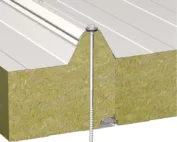
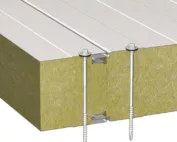
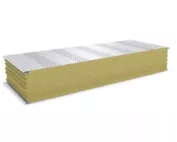
A mineral wool panel combines steel surfaces with a fibrous core. This construction can be a good choice for a workshop, warehouse or back-of-house area. It does not, however, remove the need for design or attention to detail. It is worth assessing it by its everyday effects: ease of cleaning, noise protection, heating cost and weight during installation. Both sides of the panel form finished surfaces. In a dry workshop, no additional layers are needed just to achieve a standard wall enclosure. This simplifies planning and reduces the number of wet processes. The appearance remains technical, which is worth accepting before ordering.
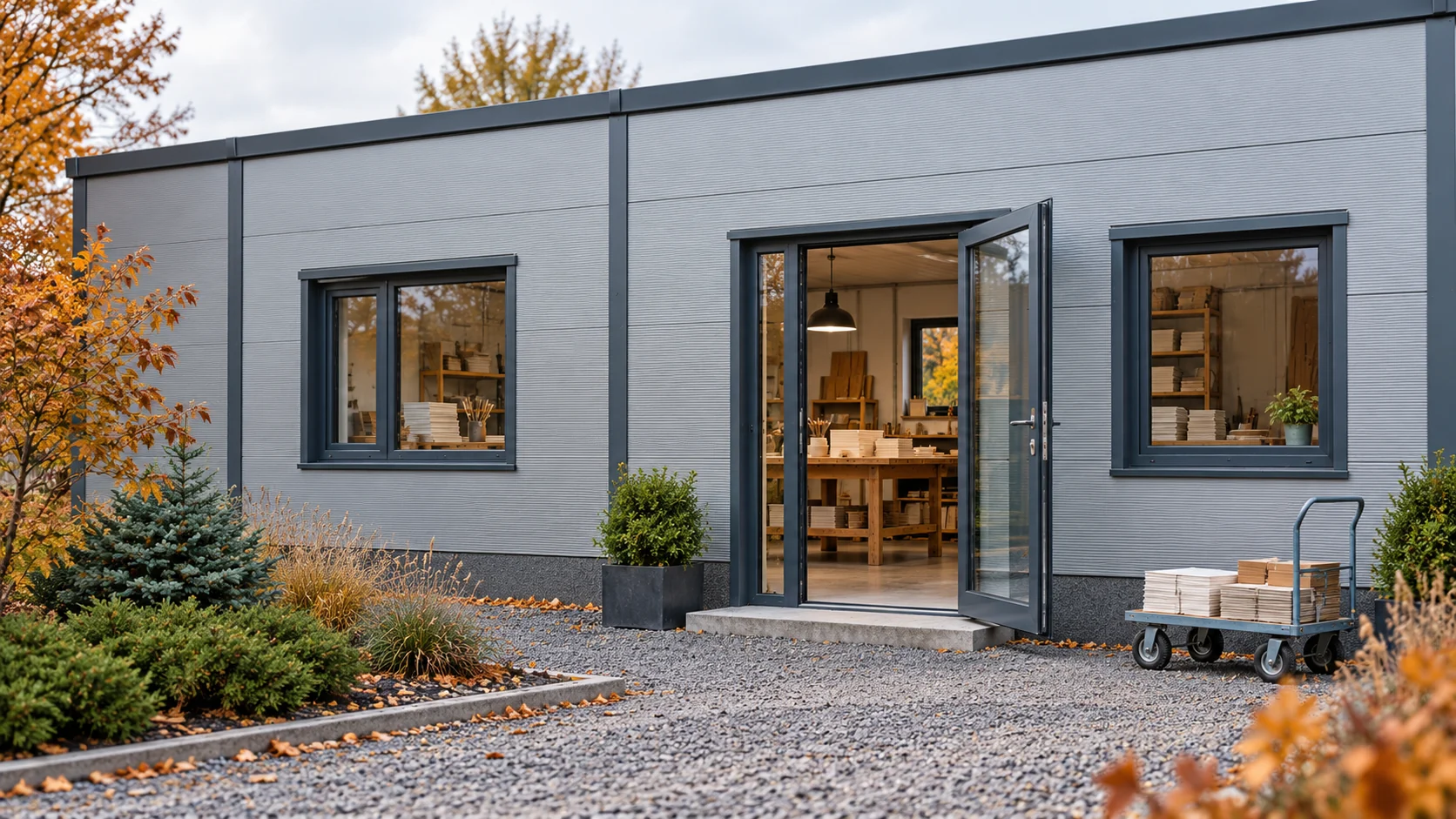
A finished surface speeds up interior fitting
In a small bindery, a light-coloured cladding can work well with wooden tables. The positioning of lamps and the choice of profiling are important. Long, smooth panels can show reflections and minor surface deviations. A sample or a viewing of a similar façade helps to assess the effect that a small colour sample does not convey.
However, a finished surface does not mean that all finishing work can be omitted. Corner pieces, closures at the floor and opening surrounds remain necessary. It is worth viewing them together with a large wall panel. It is precisely the small terminations that are close at hand, to trolleys and equipment during normal work in the room.
Fire properties are a strong point, but with conditions
The mineral core does not behave like insulating foam. Nevertheless, the full panel with facings and joints determines the classification. Reaction to fire describes different phenomena than the fire resistance of a wall. Neither piece of information should be replaced by the general term ‘fire-resistant’.
The benefit is practical when the selected assembly meets the project requirements. The class must cover the planned orientation, support spacing and execution of joints. Doors, penetrations and terminations are also part of the solution. Agreeing the details precisely at the outset limits the risk of costly changes on site.
Mineral wool helps with acoustics but does not eliminate all sound
The fibrous core is one of the features influencing the panel’s insulation performance. This does not mean that a plain steel surface will effectively absorb reverberation in a room. Sound can reflect from the sheet steel, floor and ceiling. Attenuating transmission through the wall and calming the sound within the interior are two different tasks.
In a workshop with a loud machine, it is worth reducing noise at the source itself. Doors and flanking paths must also be checked. A laboratory result for a panel is not a promise of silence once any window or grille has been installed. For a more difficult case, the entire room enclosure needs to be selected.

Greater weight requires a work plan
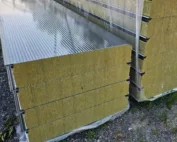
Mineral wool panels are generally heavier than PIR-core panels of comparable thickness. This affects unloading, mounting handles and structural load. A long element can be difficult to position safely even when the weight itself has been deemed acceptable. Wind and access to the wall also matter.
Weight should not be guessed from thickness alone. It depends on the core, profile and facings. When replacing old cladding, the existing supports and connections must be assessed. Increased weight is not just a matter of choosing a larger lift. The entire load path should remain verified.
Thermal insulation occupies a defined thickness
For the same panel thickness, different cores can have clearly different thermal parameters. Mineral wool is therefore chosen with all requirements in mind, not merely the available space. In a permanently heated workshop, thermal bridges at the floor, reveals and structure must also be considered.
With occasional heating, the way the space is used between visits matters. Wet items brought into a cool room increase the risk of condensation. A thicker core does not remove vapour from the air. Adequate ventilation, moisture control and tight panel joints are necessary.
Durability depends on protecting simple details
The steel facing makes cleaning easier if the coating has been selected for the working conditions. Its limitation is susceptibility to scratches and accidental impacts. In areas with forklift traffic, independent bumpers are useful. Shelving should be positioned to allow inspection and cleaning of the lower part of the wall.
The core must remain protected from water. Cuts, openings and ends require a system-compatible solution. After installation, swarf is removed, and during use the trims and seals are checked. These are ordinary building maintenance tasks. Without them, even a well-chosen material can lose its practical advantages.
Short answers
Is mineral wool always more advantageous than PIR?
No. Its advantages must be weighed against weight, required thickness and the room’s requirements. The choice should result from comparing specific panels and the entire building envelope.
Will a steel wall with mineral wool reduce reverberation?
The thermal performance of the partition alone does not determine sound absorption within the room. Reverberation may require separate acoustic materials selected for the room and its function.
7 branches. Materials closer to your project.