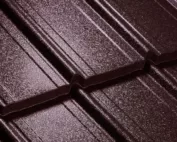
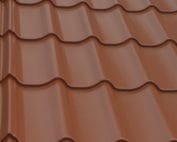
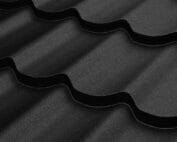
Roofs and metal sheets
When should you choose modular tile-effect metal roofing and when full-length sheets?
Key points in brief
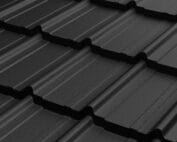
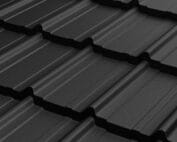
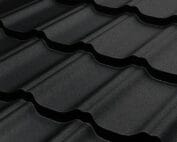
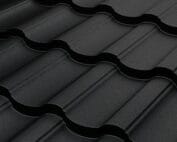
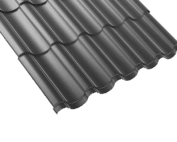
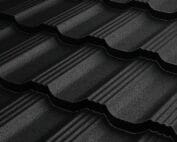
Modules and made-to-measure sheets can produce a similar roof pattern. However, they differ in how the work is organised. Small elements are easier to carry and lay out on complex roof slopes. A long sheet can reduce the number of transverse joints. The right choice follows from the roof geometry and access to the building, not from the size of the material alone. There is no common format for all modular tile-effect metal roofing. In one example variant, the element has an overall dimension of 1195 × 740 mm. It covers 1140 × 700 mm, i.e. 0.798 m². Other profiles may have different dimensions, number of rows and method of overlap.
Does a module always mean one dimension?
A made-to-measure sheet is also subject to limitations. The length depends on the profile and production capabilities. The pressings have a defined rhythm. When cutting, the position of the sheet end relative to the tile step must not be ignored. Therefore, before measuring, the selected cross-section model must be specified.
What follows from the shape of the roof slope?
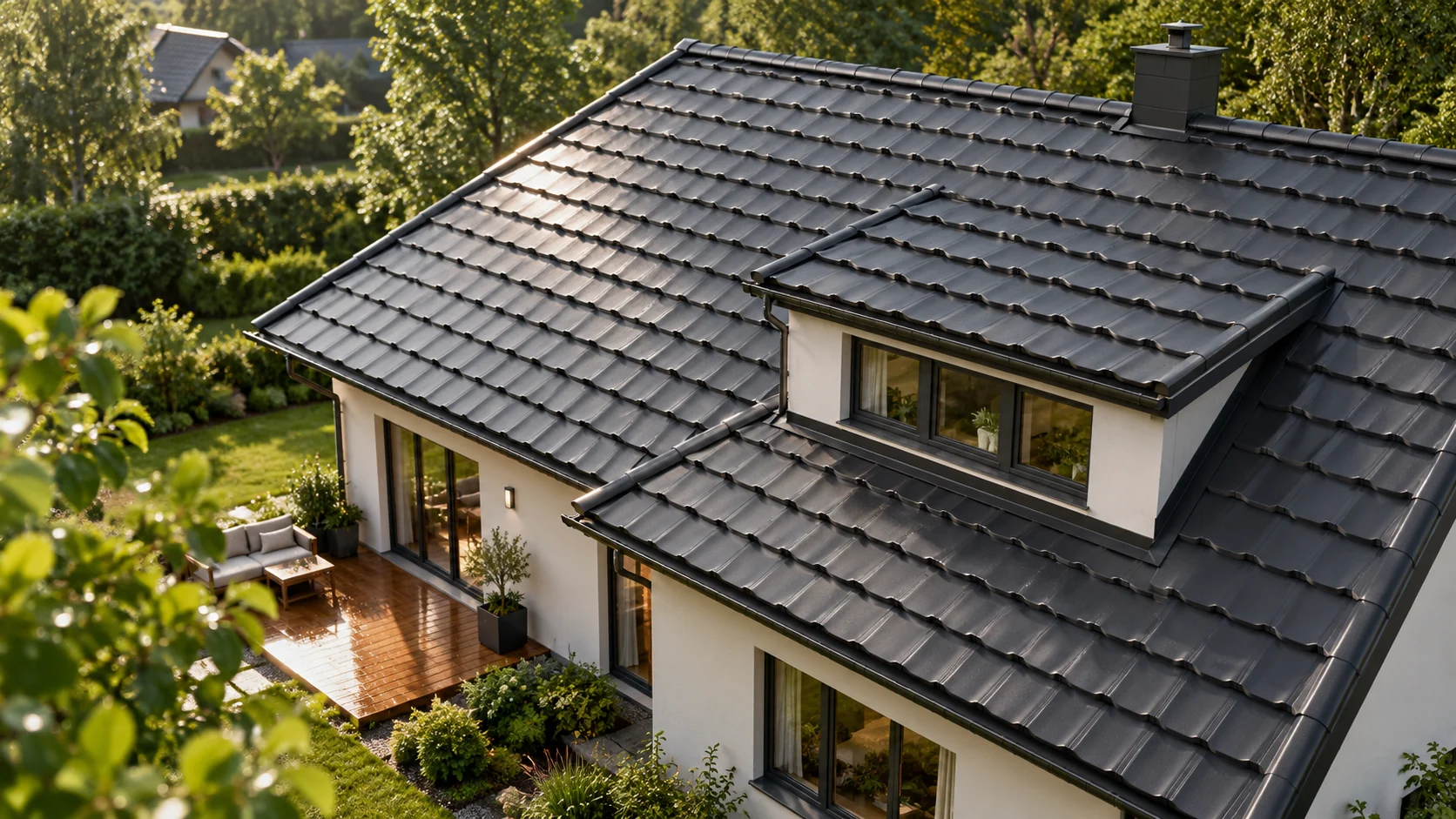
On a gable roof with rectangular slopes, long sheets can be laid from eaves to ridge. With the appropriate length, some transverse overlaps are avoided. On a roof with many hips, significant portions of sheets may be cut off. In that case, the modular format deserves comparison.
This does not mean zero waste with modules. The direction of the interlock and the covering pattern limit the use of offcuts. It is worth preparing two cutting plans for the same roof. The number of purchased elements is compared, not only the geometric area of the slope.
How does the format affect work on site?
Imagine a house in Krotoszyn with a narrow passage between the fence and the wall. This is an organisational example. Bringing in long sheets may require a different route or equipment. Short modules are easier to move, but packs still have considerable weight and require planned unloading.
A large sheet is susceptible to deformation during improper handling. It must not be dragged over the previous one or grabbed carelessly by the corners. When determining the format, the number of people and the method of handing the material onto the roof are taken into account. This cost is often not visible in the price per metre.
Which differences are worth comparing side by side?
| Condition | What to check |
|---|---|
| A simple, long roof slope | The option of covering with a strip without a cross joint |
| Many roof valleys and dormers | Cutting modules and using offcuts |
| Limited access | Package dimensions and the unloading method |
| Future repairs | Access to fixings and a consistent material allowance |
The table organises the decision, but it does not point to an automatic winner. The roof slope length must be compared with the permissible sheet length. With modules, it is worth assessing the number of joints and the requirements of the specific system.

How can the cost of both solutions be compared?
In both quotes, assume the same steel thickness and a comparable coating. Record the quantity of material from the cutting plan. Add flashings, fixings, transport and labour. The difference in sheet price may be smaller than the difference in the cost of supplying the material or making complex cuts.
For example, a surcharge of €1.39 per m² on an order covering 145 m² adds €201.55. Recalculate the amount if the alternative sheet format changes the area you need to buy. Compare both options for the same finished roof.
Small elements can be handled differently from a sheet covering the entire roof slope length. Roof access, storage space and the number of people affect the organisation. These differences are worth discussing with the contractor before deciding on the order variant.
Is a small module easier to replace?
A smaller element may limit the area to be removed. However, access to it depends on the laying direction and fixing. Not every module can be removed without disturbing adjacent parts. With a long sheet, removal may be more extensive, but the number of transverse laps may be smaller.
Ask about a reasonable allowance for future repairs. It does not have to mean a full pallet. What matters is the consistency of the profile and coating. A sheet stored for years in a damp place will not be a good reserve material. Storage conditions also matter for a small allowance.
How can a decision be made before ordering?
On one drawing, mark the roof shape, obstacles and delivery access. Ask for a modular variant and a cutting plan for sheets cut to size. The contractor should assess both layouts with regard to handling and installation. Choosing only after this conversation reduces the risk of unnecessary changes.
Do not combine arbitrary formats from different families just because they look similar. The rhythm of the profiles and the seams may differ. The entire covering area should be planned as a consistent layout. Then flashings and later repairs are also easier to predict.
Short answers
Does modular tile-effect metal roofing suit every roof?
You need to check the permissible pitch and the geometry of the details. The modular format does not remove requirements for weathertightness, the substrate or fixing.
Does a sheet cut to length eliminate all trimming?
No. Edges at roof valleys, chimneys and slopes may still need adjustment. The ordered length organises the cutting layout, but does not replace work on the details.
7 branches. Materials closer to your project.