Roofs and metal sheets
Trapezoidal steel sheet or tile-effect metal roofing for a house? Choosing by roof slope and residents’ needs
Key points in brief
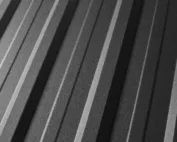
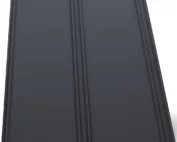
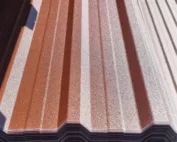
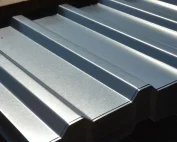
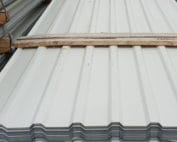
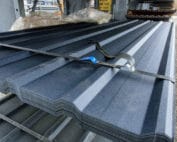
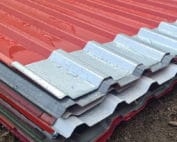
Trapezoidal steel sheet can look good on a house, and tile-effect metal roofing is not reserved for a single building form. The choice is determined by the covering pattern, the pitch and the number of details. Residents’ comfort also depends on the layers beneath the metal sheet. Instead of looking for the material best suited to every house, compare two complete solutions for your own roof. Trapezoidal sheet creates straight lines running along the roof slope. It emphasises economical geometry well. Tile-effect metal roofing introduces an additional transverse rhythm. It can have gentle waves or flatter fields. Both solutions are available in various colours and coating textures.
Which pattern should suit the building form?
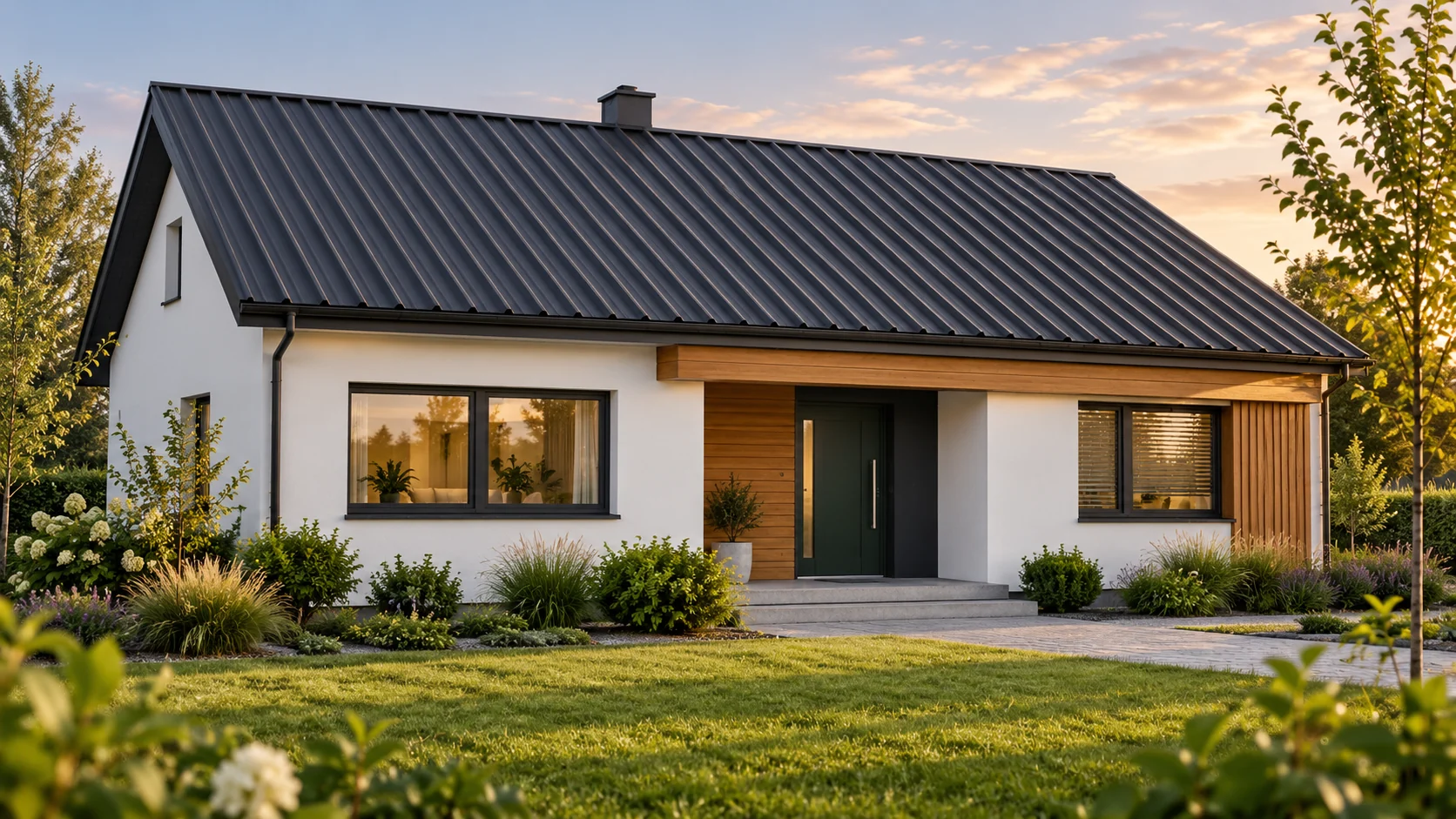
Assess a sample from several metres away, not just in your hand. On a large roof slope a fine profile looks different than on a small canopy. The eaves, gutters and chimney also matter. A carefully laid trapezoidal steel sheet with matched flashings can give a calmer effect than a covering with a strong, dense pattern.
Does the roof pitch decide the choice?
It may limit the available variants. Each system has its own conditions for pitch and joints. There is no single permissible angle for all trapezoidal steel sheets or all tile-effect metal roofings. A higher profile also does not automatically permit an almost flat roof.
Check whether the roof slope will be covered without transverse joints. Lap joints and transitions can change the requirements. At a low pitch even local deflection affects drainage. That is why the choice starts with the roof slope design and only later with comparing patterns and prices.
What differences affect installation?
| Feature | Trapezoidal steel sheet | Tile-effect metal roofing |
|---|---|---|
| Drawing | Longitudinal ribs | Longitudinal and transverse embossments |
| Selection of supports | Cross-section and loads | Profile, module and mounting system |
| Cutting plan | Sheet strips | Sheets made to measure or modules |
This is a comparison of principles, not a load-bearing table. The final spacing of support elements is selected for the specific covering. The old substructure should not be retained simply because the new sheet has a similar weight.
What about rain heard in the bedroom?
Both materials are thin metal coverings. Droplet impacts can set them vibrating. The way sound is transmitted to the interior depends on the entire assembly. Insulation, airtightness and finish are important. The transverse pattern of the tile-effect metal roofing alone does not guarantee quiet.
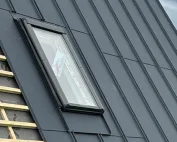
In a house with a child’s room under the roof slope, it is also worth assessing roof windows. This is a different element from the insulated part of the roof. When comparing quotes, ask about the entire layer build-up. The difference between two construction variants may be more important than the difference between the sheet profiles themselves.

How can you compare cost on the same surface area?
Let us assume two hypothetical sets for a simple roof. The first requires 154 m² of purchased material, the second 149 m². Even an identical rate per metre will give a different total. The difference results from the cover width and the cutting layout. It does not yet indicate an error or the quality of the covering.
For both variants, add flashings, fastenings and the required substrate. The steel thickness and coating class must also be standardised. A cheaper trapezoidal steel sheet with different surface protection is not a strict equivalent of a more expensive tile-effect metal roofing. First equalise the parameters, then assess the cost difference.
During renovation, also inspect what remains under the new covering. Damp wood, incorrect support or a lack of free ventilation may require separate work. The new sheet will conceal these places but will not repair their condition. The cost of preparing the roof should be visible before comparing materials.
How does the way the house is used affect the details?
If you plan a chimney, ventilation or installation on the roof, the penetration solutions should be created before covering. The installation of equipment must be compatible with the profile. Not every bracket fits every rib. Loads and the way they are transferred to the structure must also be checked.
Think about later cleaning and inspections. A roof with many folds has more places where leaves can accumulate. The space under trees requires different attention from an exposed slope. Neither of the two materials relieves you of keeping gutters clear and checking flashings.
How can you avoid choosing based on a photo alone?
The photograph shows the light, the viewing angle and a specific colour. It does not show the layers beneath the covering or the cost of the details. Ask for a coating sample and a cross-section drawing. Check how the reflections change in sun and shade. Matt and gloss finishes in the same code can look different.
Finally, compare the appearance with the technical conditions of your own building. If both solutions meet the design, the choice can be based on aesthetics and the full cost. If one requires significant changes to the structure or the roof slope, that difference should be visible before ordering.
Short answers
Is trapezoidal steel sheet suitable only for agricultural buildings?
No. It can be used on houses when the specific variant matches the design. The visual effect is determined by the profile, the coating and the finish of the details.
Is tile-effect metal roofing always more expensive?
Not in every complete comparison. Differences in cutting layout, flashings, substrate and installation can change the result. The same roof and scope must be priced.
7 branches. Materials closer to your project.