Roof coverings
Four checks before you choose tile-effect metal roofing
In brief
Before choosing tile-effect metal sheets, check the requirements for the particular model against the shape of the roof and the condition of its supporting layers. Each system has its own permitted range of pitches. Where the manufacturer requires an additional layer beneath the covering, the design must specify its construction. On a renovation, check that the roof timbers are dry and sound. Record the sheet specification and coating together with a drawing of the sheet layout. The roofer can then identify the flashings, fixings and cuts the job will need.
1. Does the covering suit your roof?
Start with the roof pitch, its shape and the condition of the structure. The selected model must fall within the conditions of use specified by the manufacturer. A single minimum pitch value cannot be assumed for all tile-effect metal roofing. Sometimes the range depends on an additional sub-roof solution. This must be designed, not replaced with any membrane.
For a renovation, an assessment of the roof truss and the substrate is needed. The low weight of the sheet does not remove structural defects or moisture problems. Also check access to roof valleys, chimneys and windows. An unusual detail may influence the choice of profile and the way flashings are made. It is worth establishing this early, before material with a specific geometry is ordered.
To compare quotes, prepare one current roof drawing. It should contain the actual dimensions and markings of the roof slopes. This ensures that everyone is pricing the same object. If one proposal is based on a design and the other on a measurement, the difference in totals may result from quantity, not from a more favourable price.
2. Do you know the material and the type of protection?
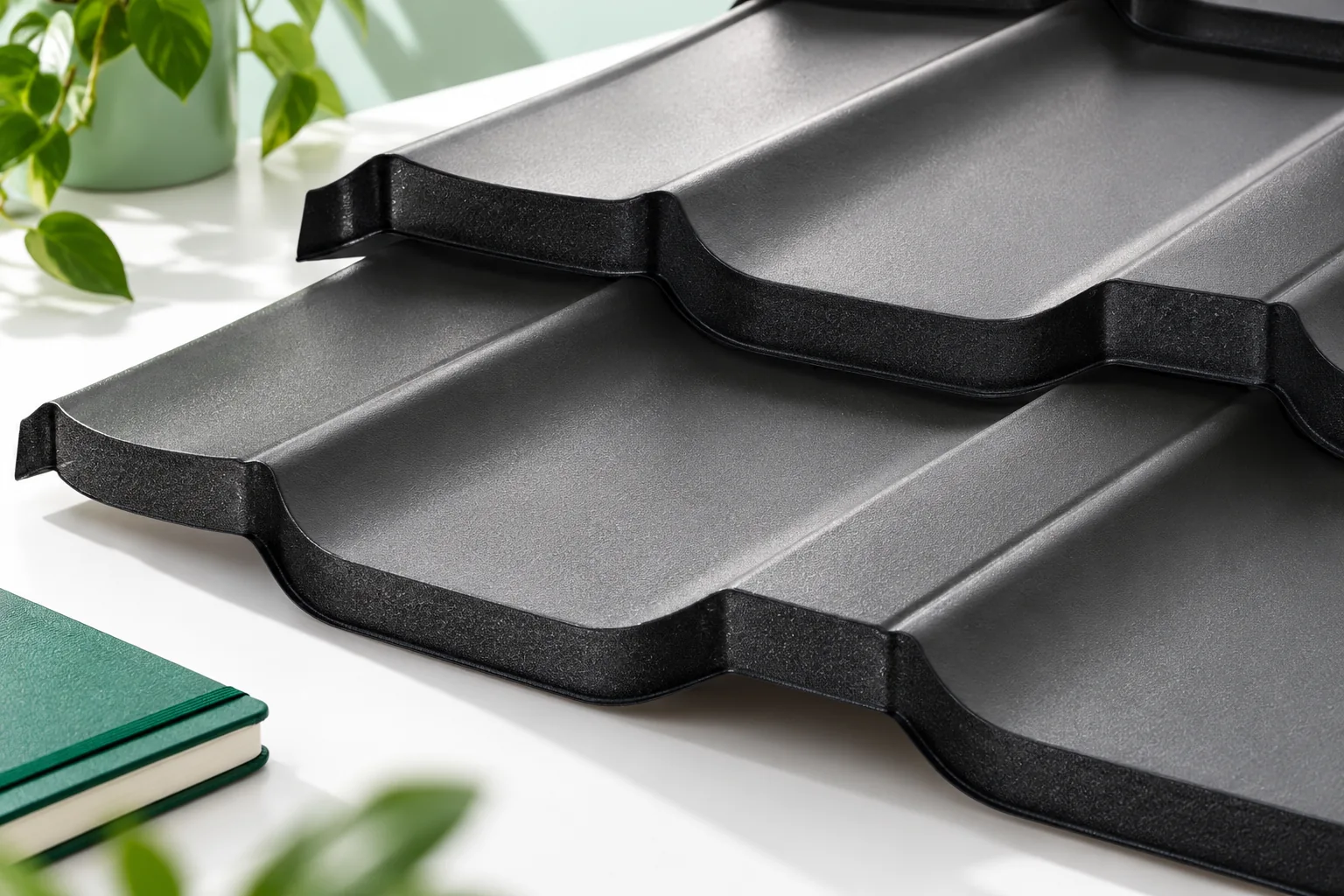
The specification should separately describe the nominal thickness, the metallic substrate and the organic coating. The term ‘matt tile-effect metal roofing’ alone is too general. Different systems may look similar but have different parameters and scope of application. It is not worth paying extra for an unclear class name without clarification of what properties you receive.
The coating is selected according to the building’s surroundings and the conditions on the underside. Moisture, contamination and possible salinity are important. Also check the warranty conditions. Protection of appearance and the warranty for a specific material defect do not have to cover the same period. A large number of years in an advertisement does not replace the content of the document.
It is worth viewing the sample in natural light next to the façade and flashings. This serves to assess colour and texture, not to determine load-bearing capacity. Do not test quality by randomly bending the sheet. Permissible support and application are stated in the technical data, not in the subjective impression of the stiffness of a sample held in the hand.

3. Does the format suit the cutting plan and the organisation of works?
Long sheets can make good use of rectangular slopes. Modules are often convenient near dormers, roof valleys and on small sections. However, both variants must be calculated for the specific roof. A general percentage of material savings does not replace a drawing. What matters is the possibility of correctly using offcuts, not just their area.
The format also affects delivery and storage. A long sheet requires a suitable vehicle and support during unloading. Modules are easier to place in a tight space, but must still be protected from moisture. It is worth checking access and the date of works. Material waiting a long time for installation requires the conditions described in the instructions.
Compare the number of panels or sheets and the effective coverage area. The price unit must be consistent. The price per piece, per total square metre and per effective square metre describe different quantities. Only after conversion can the cost difference be assessed, and then the impact of transport and installer labour added.
4. Do you have a complete system and a contractor who knows its details?
The covering requires suitable flashings, fixings and ventilation components. Separate solutions apply to chimneys, windows and service penetrations. A quote limited to the main sheets does not show the price of a finished roof. Check the availability of accessories in the chosen colour and their compatibility with the profile shape.
The installer should be able to indicate how to start at the eaves, the laying sequence and the ridge solution. These details may differ between models. General experience with any steel sheet is not enough. It is worth agreeing on the acceptance of layers that will later be covered and on the documentation of difficult connections.
Pay attention to the cutting tools and the cleanliness of the work. The coating can be damaged by an unsuitable method or by left-over swarf. A good product will not eliminate the effects of such mistakes. The quote should cover careful execution, cleaning of the surface and handover of usage instructions, not just the screwing down of the sheet.
How should you finalise your choice before confirming the order?
Gather the agreements in a single specification. The profile, thickness, coating, colour, quantity and complete set of accessories should match. Attach the cutting plan and the delivery terms. If any item remains general, clarify it before purchase. A later change may affect the ordered lengths, deadlines and the fit of the flashings.
On delivery, compare the material with this list. Pay attention to transport damage and colour differences. Questionable items must be clarified before laying. Four checked areas do not guarantee the absence of every defect, but they organise the most important decisions. Thanks to them, colour becomes a conscious final choice rather than the starting point for the whole roof.
7 branches. Materials closer to your project.