Roofs and metal sheets
What is tile-effect metal roofing made of and what protects its steel core?
Key points in brief
Tile-effect metal roofing is thin steel sheet formed to create a repeating tile pattern. However, its strength and durability do not come from the pattern alone. The steel core, surface protection and the way the roof is installed are what matter. It is worth separating these elements, because a colour description and a long warranty do not replace technical data. The basis is steel of a specified thickness and properties. Pressings give the thin sheet its shape and influence how it performs. Popular products often have a 0.5 mm core, but other variants also exist. The order must state the specific thickness, not just the term “strong sheet”.
Which element carries the loads?
The covering transfers loads to the supports. It is not a self-supporting roof without a structure. Correct battens, fixings and the arrangement of components matter. Increasing the sheet thickness does not allow the support arrangement to be changed arbitrarily or calculations for the adopted system to be omitted.
How is the steel surface protected?
A metallic protection is applied to the steel, for example a layer of zinc or a suitable alloy. Surface preparation layers, a primer and an organic finish are then applied. The exact build depends on the material. Not every tile-effect metal roofing sheet has an identical coating system.
The underside of the sheet is also protected. This may differ from the visible side. This does not mean that the lower side may remain permanently wet. Correct conditions beneath the covering are part of durability. A good coating does not replace removing the cause of constant condensation.
What do millimetres and micrometres mean in the description?
The thickness of the steel core is given in millimetres. The paint thickness is usually given in micrometres. For example, 25 µm is 0.025 mm. This value must not be added to the core specification and the result presented as thicker steel. Both layers have different functions.
Polyester and polyurethane coatings, among others, are available on the market. Their suitability depends on the parameters and environmental conditions. The chemical name alone does not determine overall durability. The scope of application, colour protection and maintenance conditions of the specific variant must be checked.
Why are the waves and steps formed?
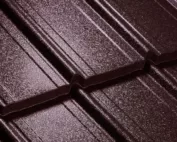
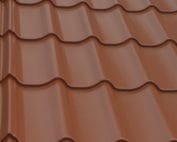
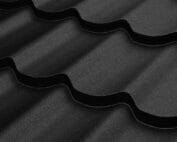
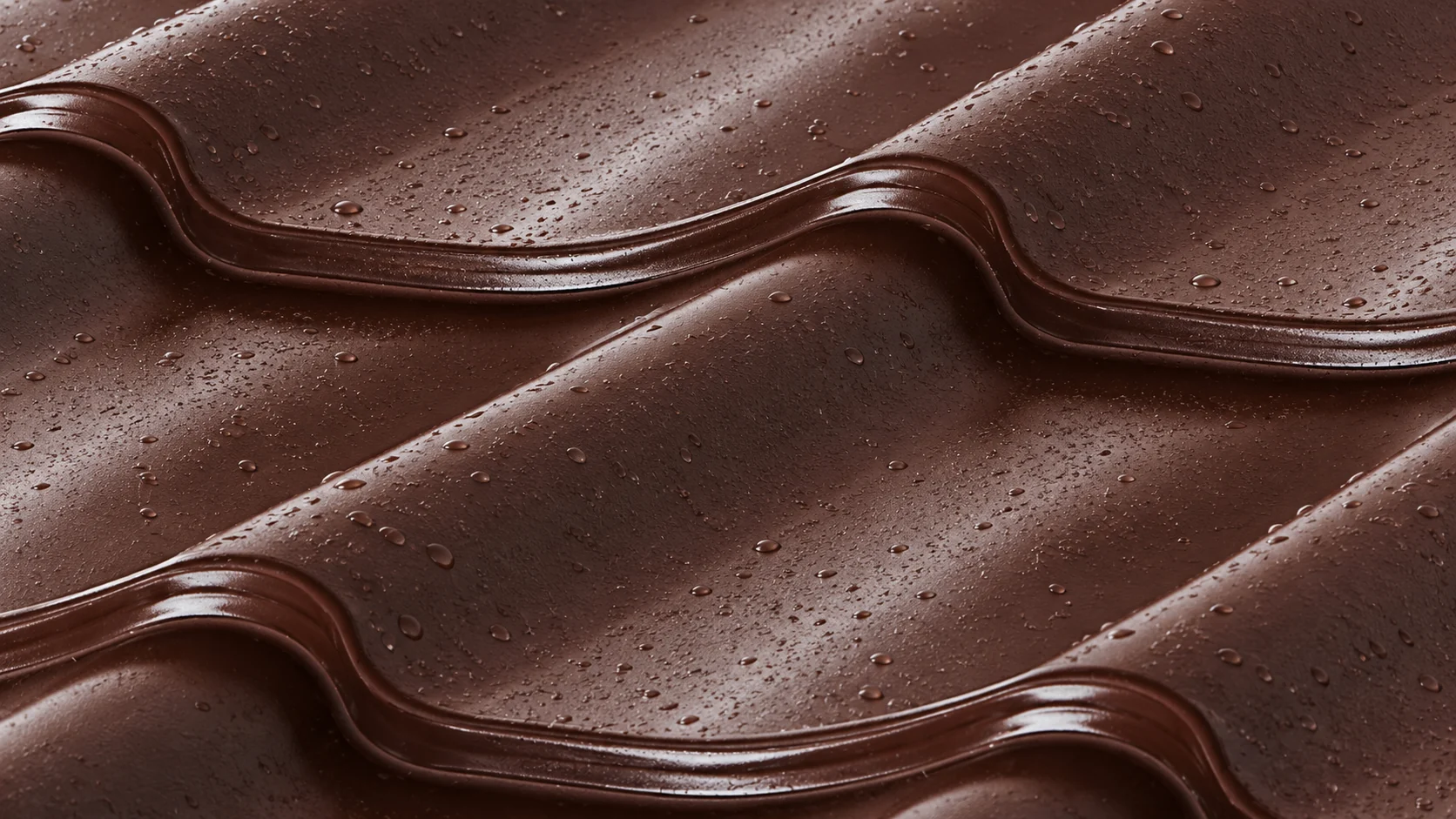
The longitudinal profiling and transverse steps give the covering its pattern. They also affect rigidity and the method of support. The module is the repeatable distance associated with the pressing. In one profile it may be 350 mm, in another it may differ. This dimension should not be determined according to the installer’s habits.
The sheets must fit together at the overlaps. Even a similar wave does not guarantee compatibility between different families of tile-effect metal roofing. When repairing, compare the full cross-section and the rhythm of the steps. Attempting to press non-matching sheets together usually spoils the appearance and may impair the performance of the joint.

Why doesn’t the covering use the full outline of the sheet?
Part of the material covers the joints with adjacent elements. Hence the difference between the overall width and the coverage. In the example of a long sheet, these are 1170 and 1100 mm. With modules, there is also a difference between the overall and effective length. The dimensions are assigned to a specific variant.
The overlap is not waste. It performs the function of a joint. However, it must be calculated correctly in the cost estimate. The price per overall metre may look more favourable than the price per coverage metre. Both must be converted to the same unit before assessing the profitability of the purchase.
Also examine the underside of the sample. It is a separate protective surface that will operate under the conditions prevailing beneath the covering.
What must be installed beneath tile-effect metal roofing?
The layers are selected according to the building’s purpose. Above a heated attic, thermal insulation and a correct solution for vapour flow are required. The substrate, the underlay and ventilation in accordance with the system are also needed. The steel sheet is the external covering, not the entire set of these functions.
For a small house used only in summer, the conditions may differ from those in a workshop used all year round. A change of use requires a reassessment of the building envelope. Merely installing a radiator under a formerly uninsulated roof may increase the risk of condensation. Changing the colour of the covering does not solve it.
How should the material be protected during installation and use?
Tools that do not damage the coating through overheating are used for cutting. Swarf must be removed and sheets must not be slid over one another. Damage is assessed before installation. A small scratch down to the metal requires different treatment from soiling that can be safely washed off.
After the roof is completed, the flashings, fastenings and places where leaves accumulate are checked. Cleaning should comply with the coating requirements. Not every strong detergent will be suitable. A well-designed service access makes it easier to maintain the covering without accidentally deforming the sheets.
Short answers
Is tile-effect metal roofing insulation?
No. Its primary function is protection against weather conditions. Thermal insulation performance is determined by the other roof layers.
Does a thicker coating always mean better steel sheet?
You cannot judge by a single figure alone. The type of coating, its properties, the steel and the conditions of use all matter. The parameters should be considered together.
7 branches. Materials closer to your project.