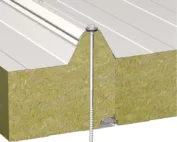
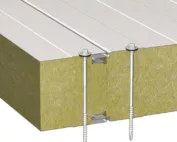
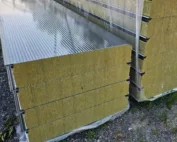
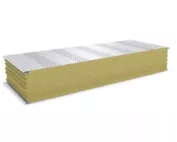
Mineral wool panels
What really determines the durability of an insulated wall panel with a mineral wool core?
Key points in brief
It is not possible to assign a single service life to all mineral wool panels. A dry studio wall performs differently from cladding next to a wet driveway and a frequently washed service area. Durability is determined by the coatings, the joints and how the building is maintained. Regular inspection allows a small problem to be caught before it affects a larger section of the wall. A change in the shade of the steel sheet does not automatically mean a loss of load-bearing capacity. A worn seal does not necessarily require replacement of the entire panel. Appearance, the condition of the steel protection, the adhesion of the facings to the core and the tightness of the joints must be assessed separately. Each of these elements has different signs of ageing.
The service life of the cladding is several different matters
The warranty period should not be equated with the safe service life of the building. The warranty has its own scope and conditions. The inspection result, in turn, concerns the actual condition of the wall. When the use of a room changes, it is worth checking again whether the chosen coating and jointing solutions still match the new conditions.
The environment begins right at the wall
Let us imagine a small pottery workshop. At the front, the façade is dry, but at the back there is a container of damp waste. There, the coating may stay wet and soiled for longer. Such local conditions matter more than a general description of the building as a commercial premises. Splashing of the plinth with water from the driveway works in a similar way.
The choice of coating should take into account both the interior and the surroundings. The description needs to include moisture, the cleaning agents used, any vapours and the frequency of cleaning. Choosing a colour is not enough. Removing the source of soiling is sometimes a simpler way of protecting the wall than continually repeating local touch-ups.
Water should not have a path to the core
The mineral wool is enclosed between steel facings. However, its condition also depends on the protection of the ends and joints. A gap at the window sill, poorly finished flashings or a leaking penetration can direct water into the interior of the panel. A wet core is not repaired by merely painting over the visible stain on the façade.
The inspection is worth starting from the plinth, the reveals and the points where services pass through. Check whether water drains freely and whether the sealant is not detaching from the substrate. Where there are signs of dampness, the cause and extent of the damage must be established. The decision on drying, repair or replacement should follow from an assessment of the specific element.
Cleaning helps if it does not damage the coating
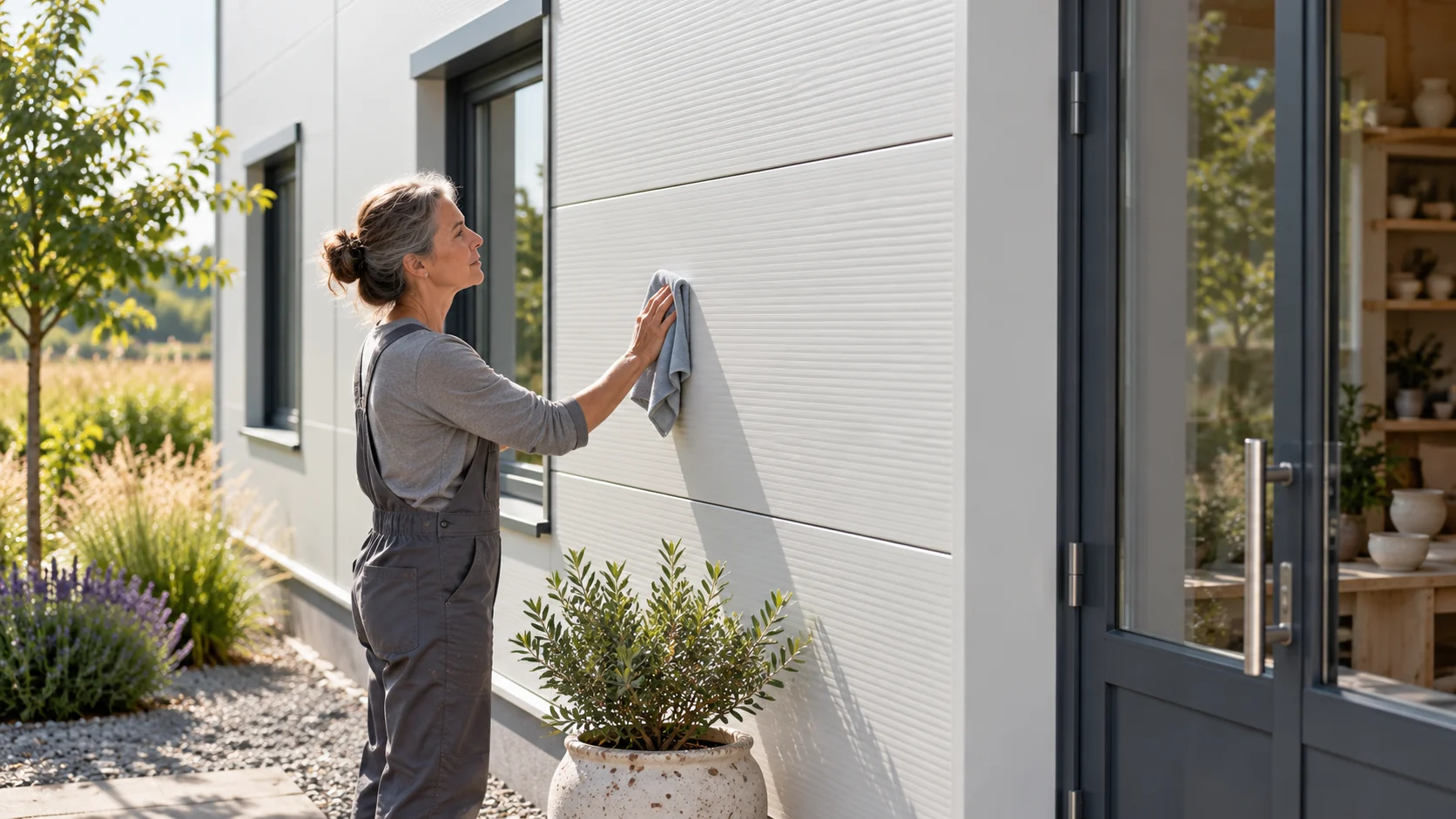
Dirt that retains moisture should be removed regularly. Use agents approved for the given coating and soft tools. Do not choose the pressure washer setting based on its maximum power. A jet that is too close can stress the seals and force water into the joints. A test on a small area allows the effect of the product to be assessed.
The maintenance instructions should specify the frequency of cleaning and inspections. In more soiled areas, more frequent inspections are needed. After cleaning, check the edges of the flashings and remove any leftover swarf. Do not cover unknown corrosion with random paint. The repair must be compatible with the panel’s coating system.

The workshop needs protection against impacts
A trolley, rack or tool holder can damage the sheet metal every day in the same place. In the movement zone, a bumper fixed to a suitable base is practical. It should not transmit random forces to the thin cladding. Also leave access to areas that require inspection and cleaning.
A change of equipment is a good moment for an inspection. A new shelf or extractor must not hang on random screws in the sheet metal itself. Additional holes mean both a change in load and a new path for water or air. It is worth determining the fixing and sealing solution before drilling, while correction is still simple.
Keep a short history of the wall’s condition
Photos of the same locations, inspection dates and a description of repairs are sufficient. Shots at the base of the wall, next to doors and under downpipes are particularly useful. Comparison shows whether a stain is growing or whether a flashing has started to come away. Such a record also makes conversation with the contractor or the person assessing the condition of the enclosure easier.
After severe damage, a leak or an impact, do not wait for the next scheduled inspection. First secure the area against further water ingress, then determine the scope of repair. The panel can serve for a long time when its condition is monitored. However, this does not replace a technical assessment where structural weakening is suspected.
It is good to designate a person responsible for reporting defects. In a small workshop, this may be the owner who opens the premises every day. A clear rule on whom to send a photo of a leaking window sill shortens the time from noticing the problem to its assessment and limits postponement of the repair.
Short answers
Does the panel need to be replaced after loss of gloss?
Loss of gloss alone does not determine replacement. The continuity of the coating, corrosion and the condition of the joints are what matter. It is worth comparing the change in appearance with the maintenance conditions for the given product.
Does a wet trace mean damaged mineral wool?
Not necessarily. It may come from condensation on the surface or from a leak. The path of the water must be established and it must be assessed whether it has reached the interior of the panel. Drying the visible stain alone does not explain the cause.
7 branches. Materials closer to your project.