Roofs and steel sheets
How much steel sheet is needed for a 100 m² roof and how do you calculate the order cost?
Key points in brief
A price enquiry for ‘100 metres of steel sheet’ needs clarification. One hundred square metres of roof surface is not the same as one hundred linear metres of sheet. The quote also requires the cover width, the lengths and the billing method. The example below shows the calculation for a simple roof with an actual area of 100 m². A square metre describes an area. A linear metre means the length of material at a specified width. If a sheet covers 1.10 m, then 100 linear metres corresponds theoretically to 110 m² of coverage. This does not yet indicate how that length is to be divided between roof slopes and overlaps.
Is it the roof area or the sheet length?
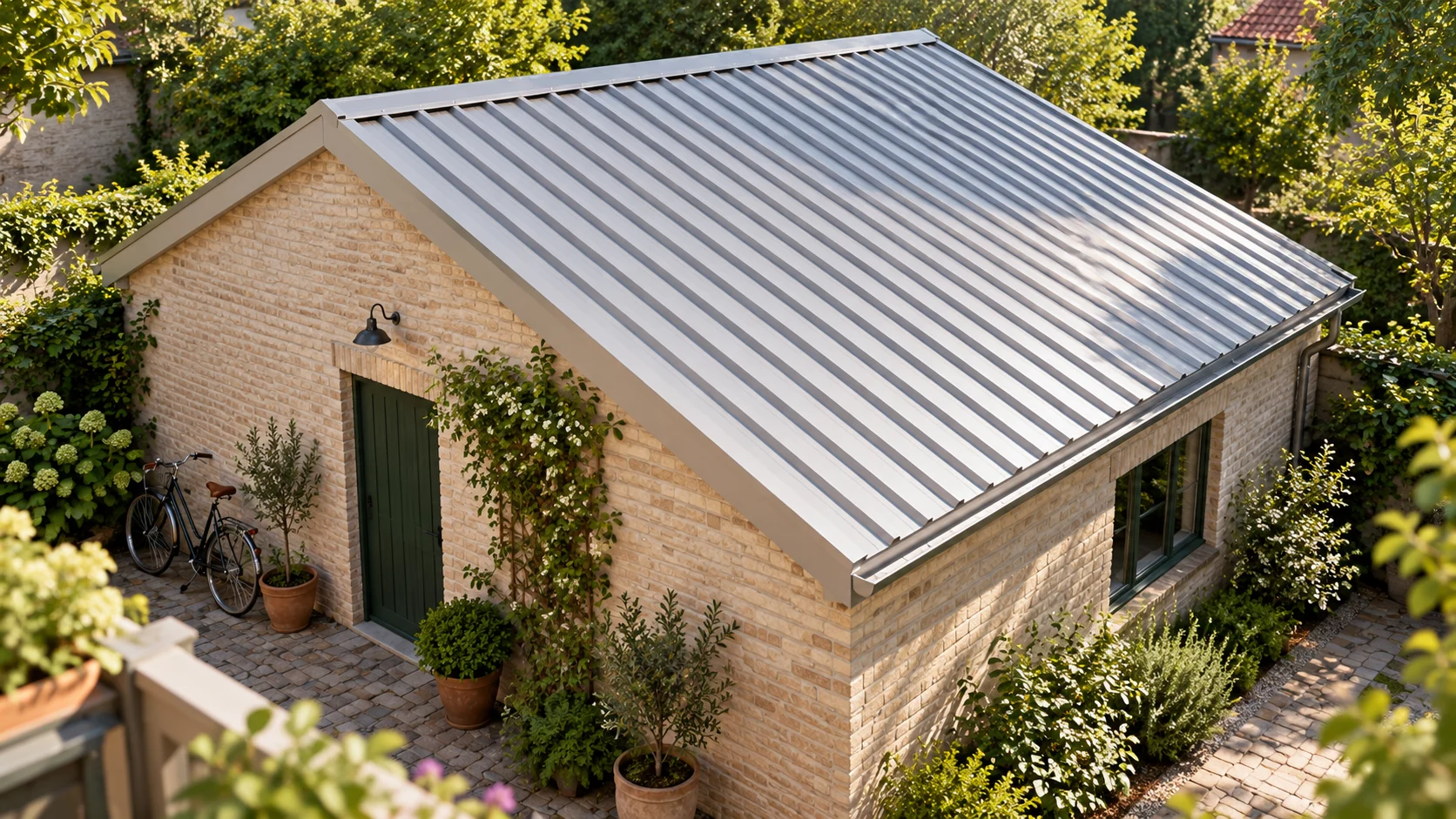
Equally important is the difference between the plan area and the sloped area. A building with a 100 m² footprint does not necessarily have a roof of that area. Cutting dimensions are determined for the roof slopes. Eaves and other overhangs must be included in the measurement, not added from memory.
What assumptions does the example make?
We consider two rectangular roof slopes. Each is 10 m wide along the eaves and 5 m long along the slope. The total area is 2 × 10 × 5 = 100 m². The 5 m length is taken here as the fixed length of the ordered sheet. There are no additional transverse joints.
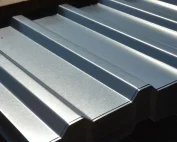
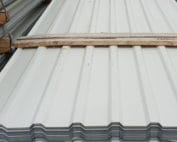
We assume a specific trapezoidal profile with a cover width of 1.10 m and an overall width of 1.137 m. This is one example cross-section. Other steel sheet may have different dimensions. We omit windows, chimneys and hips in order to explain the calculation method itself. The actual roof must be calculated separately.
How many full sheets need to be ordered?
Across the 10 m width there fit nine full cover strips and part of another. The result of 10 ÷ 1.10 is approximately 9.09. Ten sheets are therefore needed per roof slope. For two roof slopes this gives twenty pieces of 5 m length.
Their total length is 100 linear metres. The area according to the effective width is 20 × 5 × 1.10 = 110 m². The total material area is 113.7 m². The allowance at the side edges requires adjustment. It should not be treated as additional usable roof area.
How does the price unit change the calculation?
At an assumed €10.18 before VAT per square metre of effective cover, 110 × €10.18 gives €1,119.80 before VAT. If the price is based on overall sheet area, use 113.7 m² instead. The two areas are not interchangeable.
To reach the same €1,119.80 when billing on overall area, the rate would be about €9.85/m². A lower price per square metre therefore need not be a discount. These figures are calculation assumptions, not a current offer or a market average.

What should be added beyond the steel sheet?
The list covers flashings for the eaves, ridge and gable edges. The fixings to the substrate and the joining of sheets must be determined. Possible seals, penetrations and an anti-condensation layer are added. Transport, unloading and labour are priced separately.
If the building is to be heated, the cost of the entire building envelope is needed. The price of the sheets alone does not automatically include insulation or the layers responsible for airtightness. For a renovation, demolition and preparation of the structure may be added. Each of these items should have a clearly defined scope.
When will the result differ despite the same area?
Two roofs of 100 m² each may require a different number of sheets. The proportions of the roof slopes, roof valleys and penetrations matter. If the width fits the covering module better, there may be fewer cut-off pieces. With a roof having numerous hips and valleys, the cutting layout becomes more complex.
The length of the sheet also affects organisation. The material must be delivered, lifted and safely laid. Dividing into shorter sections may change the number of overlaps and accessories. It is not chosen solely to fit the order into the cheapest means of transport.
With two roof slopes, identical lengths should not be assumed automatically. The difference may result from the geometry or the eaves overhang. It is best to prepare a separate list for each side. In the example they are equal deliberately so that the calculation remains clear. Measuring the actual building may give a different set of sheets for a similar total area.
How do I request a quote that can be verified?
Send a drawing of the roof slopes with dimensions and a description of the planned sheeting. Ask for the number of pieces, lengths and the billing width. Establish whether the rate is net or gross. Sheets, accessories and services should be visible in one summary.
When comparing offers, check the steel thickness, coating and profile. The same colour does not mean the same product. The cutting layout should match your roof. Only then does the difference between totals make economic sense and allow a decision without guessing.
Short answers
Does 100 m² of roof mean buying 100 m² of steel sheet?
Full sheets and laps are usually required. The exact quantity is determined by the cutting plan, not by the roof area alone.
Do 100 linear metres always cover 110 m²?
Only at an effective width of 1.10 m, before allowing for waste and any transverse laps. A different width gives a different result.
7 branches. Materials closer to your project.