Roof coverings
How long do trapezoidal steel sheets last and what shortens their service life?
In brief
There is no single service life for trapezoidal sheet, because correct performance over time depends above all on matching the product to its specific environment. The name trapezoidal sheet covers many products that differ in steel thickness, metallic protection and organic coating. Before purchase, check the scope of application and the warranty conditions for the given coating, not just the longest declared period. Equally important is what counts as the end of service life: a change in gloss, a scratch and perforation are different phenomena, and a roof may need a detail repaired while the main sheets remain sound.
Why can’t a single number of years be given?
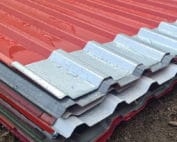
The name trapezoidal steel sheet covers many products. They differ in steel thickness, metallic protection and organic coating. The same profile may be used on a dry agricultural building or in a more demanding environment. The service conditions on the upper and lower face of the sheet will then be different.
It is also necessary to establish what the end of service life means. A change in gloss, a minor scratch and perforation are not the same phenomenon. The roof may require repair of a detail even though the main sheets remain functional. An answer based solely on the number of years would therefore be superficial. It is better to assess the factors that may realistically shorten the period of correct use.
How does the environment change the requirements for steel sheet?
Moisture, salinity and contaminants affect corrosion conditions. Near the sea or sources of aggressive deposits, a different protection system may be needed than in a calm environment. Conditions inside the building are equally important. A material suitable for the exterior does not have to be appropriate for a damp or aggressive environment from below.
Before purchase, it is worth checking the scope of application and the warranty. It is not enough to choose the longest declared period. The document may differentiate conditions by location or require special care. A good choice consists in matching the material to the environment. An overly weak coating will not become suitable thanks to a carefully selected colour.
What can damage the steel sheet even before installation?
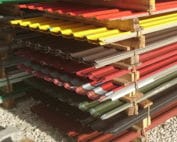
Moisture trapped in the pack and dragging sheets over one another are common sources of problems. Factory protection serves specific transport and storage conditions. The material should not be left unchecked for a long time. Changes in temperature, after which condensation may appear between the sheets, are particularly important.
On delivery, check the condition of the surface and edges. Long sheets require proper support during unloading. Permanent deformation of the lap may hinder a tight connection. If the delivery has become wet or the packaging is damaged, react in accordance with the instructions. Covering the problem with another layer of film will not provide the material with correct conditions.

How does workmanship affect later corrosion?
Cutting with a tool that causes excessive heating may damage the protective layers. Leftover swarf rusts and creates local marks on the surface. It must be removed promptly. Screws, their washers and the clamping pressure are also important. An incorrect connection may collect water or deform the profile.
Details should allow water to drain away and not create permanently damp pockets. Roof valleys, wall junctions and areas around chimneys require particular attention. Thicker steel sheet alone will not solve the problem of poorly profiled flashings. Surface protection performs best under the conditions intended for the product, with all roof components correctly installed.
What does a sensible inspection cover?
It is worth inspecting the edges, screws, flashings and places where leaves accumulate. The check should include gutters and the areas around installation outlets. Dirt can retain moisture or alter the effect on the coating. Safe access to these places should be planned in advance. Stepping on random, unsupported sections of sheet can cause new damage.
Cleaning is carried out using methods approved by the manufacturer. Aggressive scrubbing and unsuitable chemicals can worsen the condition of the coating. If you notice a scratch down to the metal or a corrosion spot, determine the repair method before painting. The touch-up should be limited to the area that needs it. An extensive problem requires an assessment of its cause, not just covering it with colour. It is worth recording inspection dates and photographing the places that require monitoring. Comparing photos helps determine whether a change is stable or growing between inspections.
How do you distinguish a warranty from expected service life?
The warranty defines liability for specified phenomena under given conditions. It may cover appearance and protection against specified material damage separately. It is not a promise that the roof must be replaced once it ends, nor that it requires no inspection beforehand. Its content should be read for the specific coating and method of application.
Keep the specification, purchase documents and inspection information. They make it easier to assess a problem and select repair materials. The best way to extend service life is to limit known causes of damage. The right product, good installation and a quick response to small irregularities are more useful than a general declaration of a specific number of years.
7 branches. Materials closer to your project.