Gutters and flashings
Installing gutters: where common mistakes occur
In brief
Success with gutter installation depends on sequence: first the cross-section, number and capacity of outlets, and position relative to the eaves; only then the brackets and remaining components. Check that the plan covers gutter and downpipe runs, the areas from which water flows, and the locations of outlets and corners. Choosing a pipe only where it is least visible can hinder proper drainage. Also settle the target eaves line and flashing shape, because water should neither bypass the gutter nor run behind it.

What to establish before fixing the first bracket?
A layout of gutter and downpipe sections is needed. The areas from which water flows in must be known, as well as the position of outlets and corners. The discharge must have adequate capacity. Choosing a pipe solely where it is least conspicuous can hinder proper drainage of rainfall.
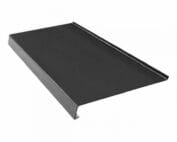
Also determine the target eaves line and the shape of the flashing. Water should not bypass the gutter or flow behind it. The position of the covering must be taken into account, not just the fascia board. If the gutters and the sheet metal are installed by different teams, they should agree this detail before work begins to avoid later rework.
How to select and position brackets?
The type of hook depends on the fixing location and the system. The substrate must carry the load from water, ice and other actions considered in the solution. The spacing and additional fixings at corners and outlets follow the instructions. A single spacing should not be assumed for all materials and sections.
Hooks are set so as to maintain the intended flow direction. A local low point can retain water and sediment. Before installing the entire section, it is worth checking the support line. Later bending of loaded elements is more difficult and can change the gutter’s position relative to the stream flowing from the roof.
How to connect gutters and corners?
Connections are made according to the rules of the chosen system. They may use seals, adhesive or other solutions. Methods should not be mixed based on the similar appearance of parts. Cleanliness of surfaces, correct seating and maintaining the intended clearances are important. Each connector should work as designed.
Gutters change dimensions with temperature. Too rigid a closure of a long section can cause deformation or damage to connections. All joints should not be filled with random sealant. If a component does not fit, the compatibility of parts and the installation should be checked rather than masking the problem with adhesive.

How to prepare the outlet for the pipe?
The outlet position should match the plan and the system instructions. The hole is made with the correct tools, protecting the coating and removing cutting residue. Sharp burrs and swarf can obstruct the flow. It should also be checked that the outlet component does not create a ledge that traps debris.
Bends and pipe sections must be fitted without forcing them into position. A stressed joint can work loose over time. Access to places where leaves may accumulate should be allowed for. The entire installation should be capable of being inspected and cleaned without damaging the façade or covers.
How should downpipes be fixed to the wall?
The brackets and their anchoring are selected according to the substrate and the insulation thickness. The fixing must reach the appropriate part of the wall where the solution requires it. The insulation layer alone is not a universal load-bearing substrate. The distance of the pipe from the façade and the ability of components to move are also important.
The position of the brackets should match the instructions. They should not be placed at random, only at convenient joints or edges. During renovation, the old fixings should be checked rather than assumed to be suitable for the new system. A different diameter, material or pipe run can change the requirements of the entire system.
What should be done at the lower termination?
The pipe should discharge water to the planned location. It may be connected to a rainwater gully, a tank or another solution for the property. The outlet should not be left directly against the wall without assessing the consequences. Effective collection of rainwater from the roof is not enough if it later causes the ground by the building to become damp.
The rainwater gully must be accessible for cleaning and matched to the connections. The level of the cover should take the final surface into account. A blockage in the downstream pipe can cause water to back up despite correct gutter installation. The acceptance therefore covers the entire flow path and does not end at the outlet by the façade.
How should the installation be handed over?
Check the position, stability and completeness of the components. A controlled flow of water helps to reveal leaks and ponding. However, the test should not be carried out in a way that deliberately overloads the system or floods the façade. It is also important to check that water from the covering actually reaches the gutter.
After completion, remove filings and swarf and keep the system instructions. Establish the rules for subsequent cleaning. During the first rainfalls, it is worth observing the corners, outlets and the connection to the eaves. A small correction made early can prevent prolonged dampening of the façade or damage to the joint during winter.
7 branches. Materials closer to your project.