Metal fence pickets and fences
Choosing metal fence pickets for a small plot
In brief
On a small property, the fence is seen up close. Its edges, fixings and rear side are visible. Metal fence pickets can create a calm backdrop for the garden, but too arbitrary a division can dominate the entire space. There is no single picket width that suits every small plot. What matters is the combination of height, gap, colour and distance from the windows. It is worth starting the choice with the view that the household members have in front of them every day. On a site plan, the fence is a thin line. From the kitchen window, it can occupy a significant part of the field of view. Mark the places where you spend most of your time. Then check whether the fence there is to be a backdrop or a screen. These two functions may require a different picket spacing. However, the entire boundary does not have to be resolved in the same way.
Look at the boundary from inside the house
Set the sample at its intended height. A piece of sheet metal held in the hand does not show the proportions of the bay. Several fixed pickets allow you to assess the rhythm and the width of the gaps. It is also worth viewing them from a seated position. In a small garden, it is often from this height that the boundary is seen. Assessing only from the street side omits the daily view of the occupants.
A narrow picket gives a different rhythm than a wide one
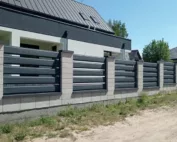
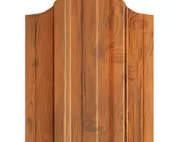
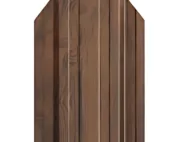
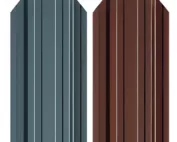
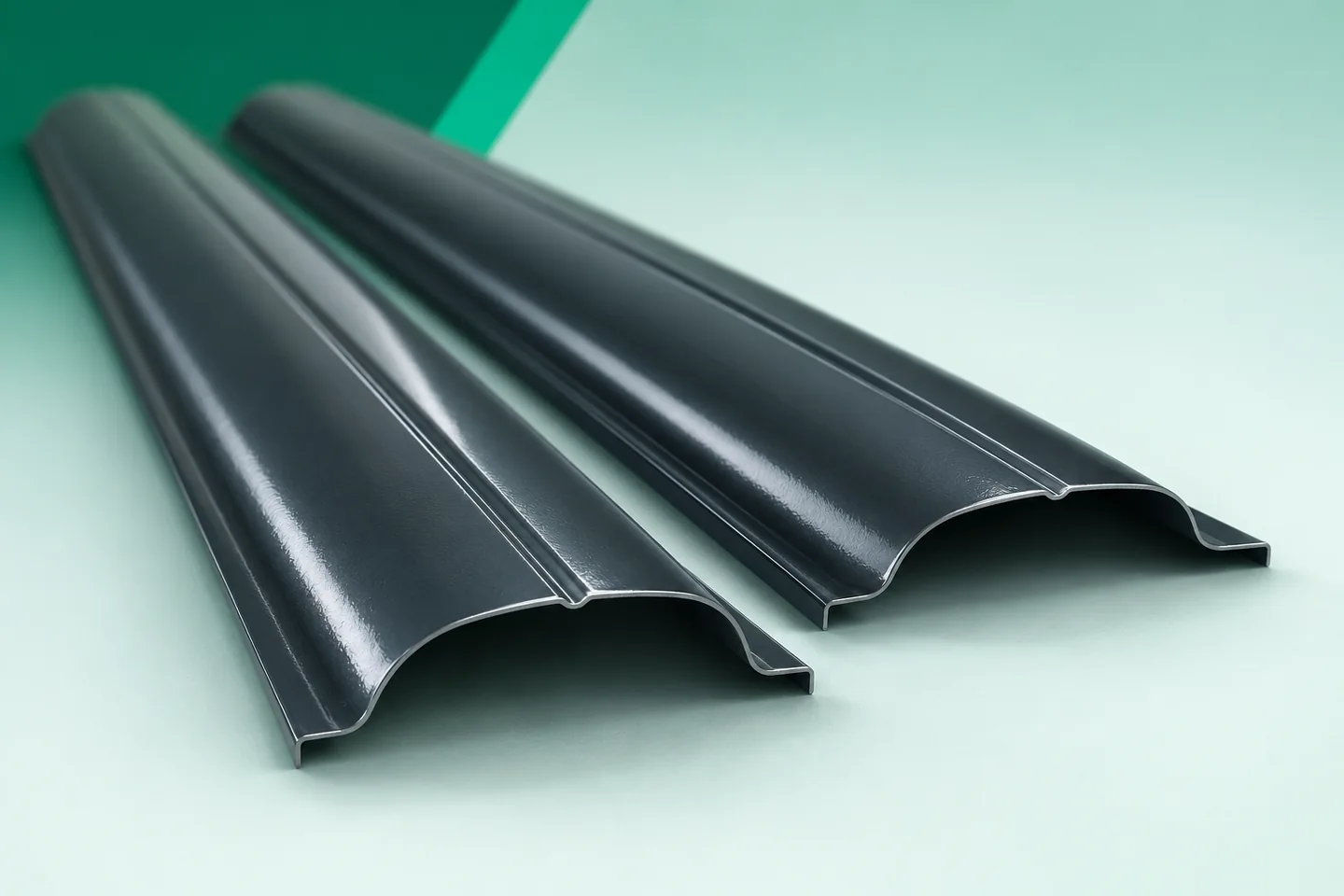
For the same bay length, narrower pickets usually mean more repeating elements. Wide panels give a calmer division but can look heavier with small clearances. This is not a defect of the product itself. It is a result of proportion. Actual sheet-metal pickets come in various widths and profiles. Their effect is best compared on a drawing of the whole bay.
For example, a rhythm consisting of a 100 mm wide picket and a 30 mm gap has a module of 130 mm. With a 115 mm picket and the same gap, the module increases to 145 mm. This simple calculation shows the difference in density. It does not yet determine the number of pieces. The edge spacings at the posts and the actual clear width of each bay must be taken into account.
Screen the places that need it
A small plot does not have to be surrounded by an equally dense barrier. More screening may be needed next to the terrace table. By a flower bed or path, a more open arrangement is often sufficient. Before reducing all the gaps, check where the seating area is actually visible from. The source of an unwanted view may be one specific direction.
Metal pickets do not automatically create a full screen. The surroundings are still visible through the gaps. In a two-row arrangement, visibility depends on the offset of the rows and the viewing angle. This solution must also be allowed for in the structure. A more densely built bay should not be created by randomly adding material to an old, unassessed frame.

Limit the number of strong contrasts
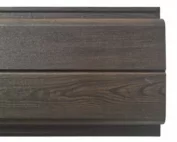
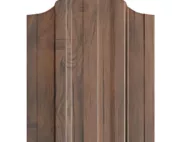
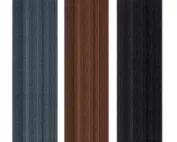
On a small area, several colours of posts, pickets and base can create unnecessary chaos. It is easiest to start with one colour for the infill. Let the second material serve as a calm background. Dark sheet-metal pickets can tie in with the joinery. Brown or wood-effect ones suit other combinations, but their compatibility must be assessed on a sample.
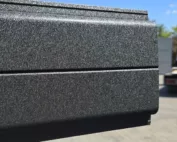
Matte and gloss change the perception of the same shade. A glossy surface shows reflections more strongly. Matte reduces gloss but does not make the fence disappear. The back of the sheet is equally important. When the distance from the terrace is small, its colour and the visibility of the crossbars become part of the everyday landscape. Check them before approving the variant.
Leave space for use and maintenance
The fence should not obstruct the opening of the gate, the passage of a lawnmower or access to the utility box. On a small plot, such conflicts are easy to overlook. The measurement takes into account not only the finished width of the bay. It also includes moving elements and access to places requiring maintenance. Where planting is dense, it is worth allowing access to the rear side of the metal fence pickets.
Sheet-metal pickets should not disappear into wet soil or mulch. Plants can also make it harder to notice scratches and accumulating dirt. There is no need to give up greenery. It is enough to allocate its place sensibly and plan pruning. Garden products must be chosen so that they do not reach the coating contrary to the manufacturer’s recommendations. This applies in particular to fertilisers and aggressive preparations.
Order after checking one section
Before a larger purchase, prepare a trial layout. Determine the height, cross-section, colour, spacing and visible side. Look at it in the morning and in the afternoon. It is not about finding one ideal light for a photo. It is about checking whether the fence will suit the household in normal use. On a small plot, even a minor adjustment to the spacing is clearly visible.
Once you have made your choice, list each bay separately. The narrow section by the gate does not have to have exactly the same arrangement of edge gaps as the long side. A clear order is more important. Well-chosen metal fence pickets allow visual contact with the surroundings where it is needed. At the same time, they organise the boundary and help to create a quiet place to rest.
7 branches. Materials closer to your project.