XPS insulation
XPS in an unheated warehouse: what does moisture resistance mean?
At a glance
An unheated warehouse can also have a damp floor and cold surfaces. Water enters through open gates, comes from the ground, or condenses from the air. XPS is considered in such buildings because of its low water absorption and mechanical properties. Before it is placed under the floor finish, however, the purpose of the insulation must be established. Extruded polystyrene does not dry the air and does not replace ventilation or protection against water. A wet surface does not always mean a leak from the ground. When a warehouse is opened on a warm, humid day, vapour can condense on the cool floor. Another cause is water brought in by vehicles or a leaking roof.
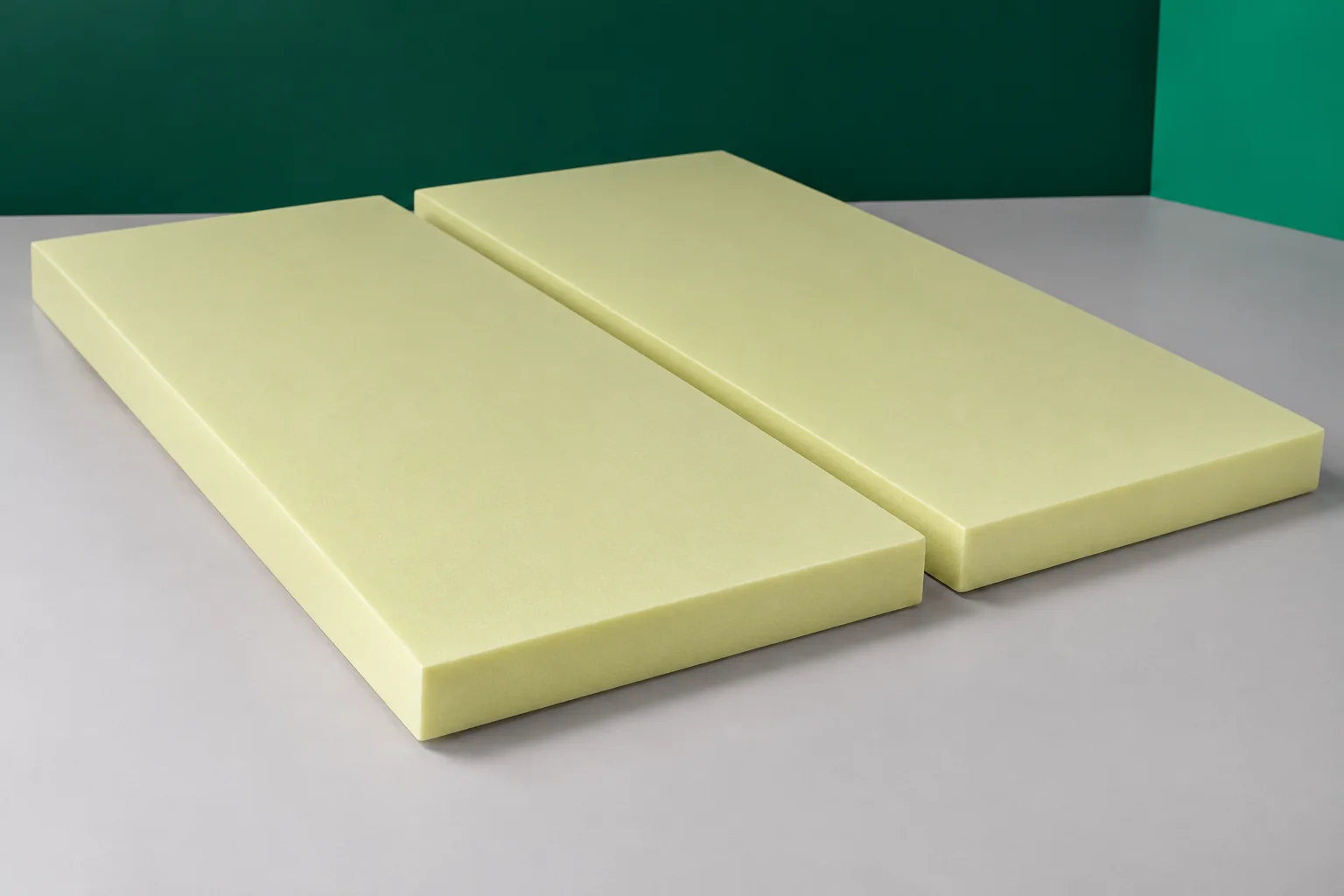
First, the source of the moisture has to be found
Before selecting XPS, it is worth observing when moisture appears and where there is most of it. The method of repair depends on the identified mechanism, not on the appearance of the stain alone.
If water reaches the underside, the ground conditions and the integrity of the protective layers should be checked. If the problem is condensation, the surface temperature, humidity and air exchange are analysed. XPS can change the temperature distribution within the building element, but the result depends on the entire system. There is no basis for regarding the purchase of the boards alone as a guarantee of a dry floor all year round.
Low water absorption is a specific property
Extruded polystyrene has a structure with a high proportion of closed cells. This limits the penetration of water into the material. However, XPS documents state results for specific test methods. Water absorption by long-term immersion and by diffusion do not describe the same phenomenon. A comparison of two products should cover an identical parameter and the same board thickness.
The phrase “moisture-resistant” does not mean zero water absorption. Nor does it describe the tightness of the joints between XPS boards. Water can move alongside the insulation even if the material itself absorbs little of it. That is why the floor still needs a waterproofing solution, drainage and service penetrations. These elements are designed for the conditions of the facility, regardless of the colour and name of the thermal insulation.
Why insulate a building without heating
In an unheated hall, the justification for XPS may arise from a later change of function, storage requirements or a specific building element solution. However, the same savings as in a constantly heated warehouse cannot be promised. Heat flow depends on the temperature difference. Without identifying the actual pattern of use, it is difficult to assess the benefit of an additional layer.
Extruded polystyrene is worth including at the outset when the investor is planning future heating of part of the hall. Subsequent thermal insulation of the floor usually involves greater intervention than changing the installation. However, the XPS must be designed for the target conditions and loads. Merely leaving an accidentally thin layer ‘for the future’ may not meet expectations after the building’s use is changed.
Frost does not affect the air alone
At gates and external floor edges, conditions can differ considerably from those in the centre of the warehouse. If damp insulation is to perform under freeze-thaw cycles, the data for the selected XPS must be checked. This resistance is not derived automatically from its compressive strength. The relevant property should follow from the documentation for the material used.
A distinction must also be made between the durability of the board itself and the protection of the entire substrate. Extruded polystyrene will not solve the problem of frost-heave-susceptible ground without a design. Such a risk requires an assessment of the ground and water conditions and of the temperature regime. XPS can be a component of the adopted solution, but a frost-resistance claim in the commercial description is not enough.
The floor still transfers loads
The absence of heating does not reduce the weight of the goods or the pressures from wheels. The XPS in the floor must correspond to the warehouse loads. The arrangement of the racking, the transport and the load-distributing layer must be known. The compressive parameter at a specified deformation is not a ready-made limit for permanent use. For long-term loads, creep data are also relevant.
Even support for the boards is also needed in a simple storage building. A loose substrate or a void beneath the XPS can cause uneven displacement. Before concreting, the condition of the substrate, the continuity of the insulation and the position of the conduits are checked. It is not worth postponing this check until cracks appear in the finished floor. By then, access to the layers below is already limited.
Documents allow the suitability to be assessed
Among XPS manufacturers are Synthos, HOCH and swisspor. When choosing, you should consult the documents for the specific product instead of comparing sales descriptions alone. The name styrodur is used colloquially, but it does not indicate how the material behaves in water. More important are the declared water absorption, the mechanical properties and the conditions of the permitted application.
Properly selected extruded polystyrene can provide thermal insulation in demanding moisture conditions. It still needs suitable support and protection as part of the complete assembly. In an unheated industrial building, identify the water sources and planned use before choosing XPS. This ensures that the insulation meets the actual need without expecting it to perform a function it cannot provide.
7 branches. Materials closer to your project.