XPS insulation
Level support beneath XPS: why boards must not bridge voids
At a glance
Even an XPS board with a high declared compressive strength does not replace proper substrate preparation. If it rests on a hump or over a void, the load is not distributed as assumed in the design cross-section. Extruded polystyrene should perform within the system for which it was selected. That is why, before concreting, not only the insulation thickness is checked but also the bearing support, the joints and the routing of services. Once covered, these places become difficult to assess. A surface that looks smooth may be weak or locally loose. A sound substrate, in turn, may need levelling. Both characteristics matter for XPS, but they are checked in different ways.
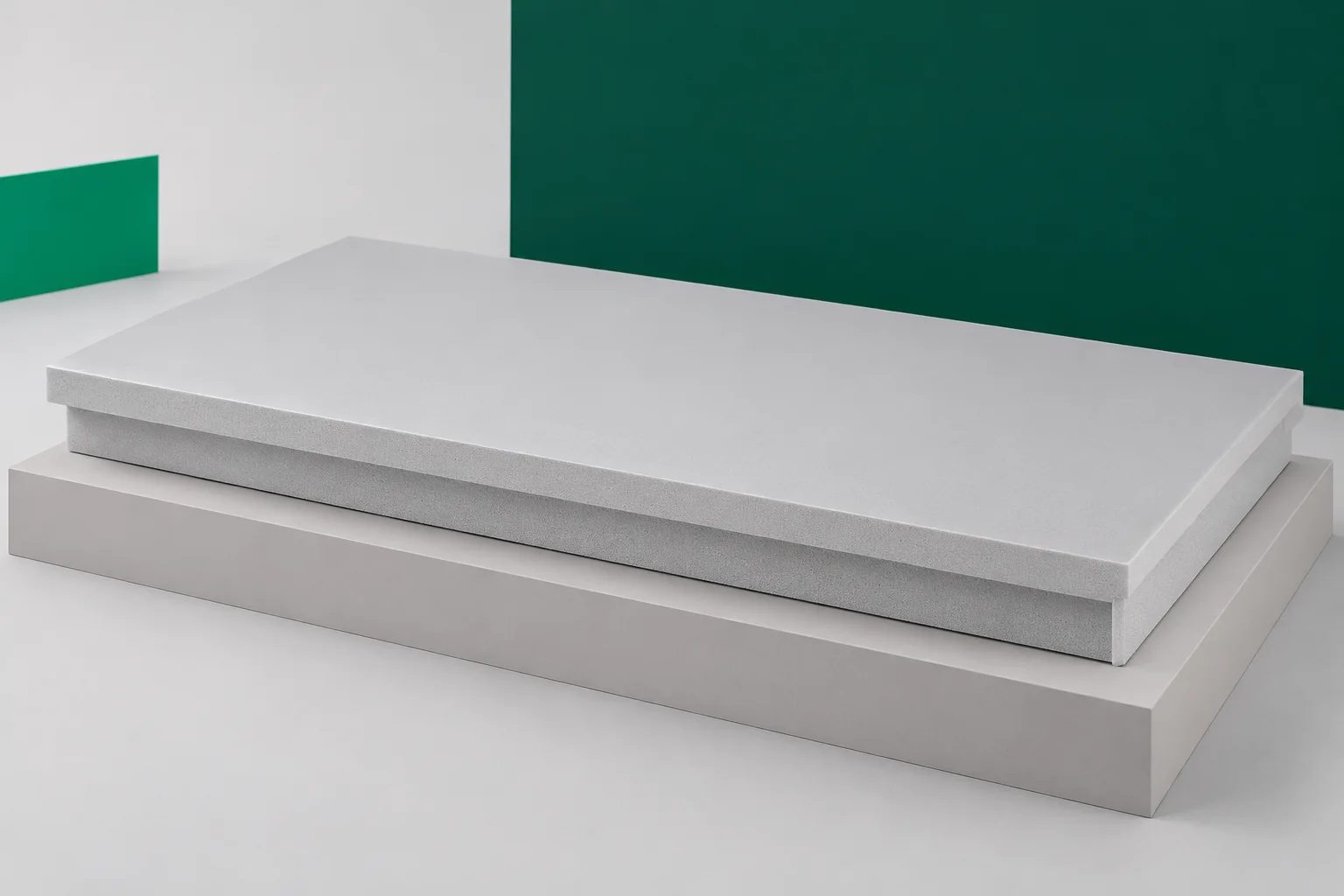
Evenness and load-bearing capacity are separate properties
The scope of inspection follows from the design and the type of supporting structure. It is not worth replacing it with a general impression that the surface looks good from a distance of a few metres.
On a concrete substrate, loose contamination, protruding fragments and residues from previous works are removed. In the case of a base course of loose material, compaction and conformity with the adopted technology are important. Extruded polystyrene is not intended to conceal a weak spot. If the XPS deflects under pressure during trial laying, the cause must be established before further layers are installed.
A hump changes the load transfer path
A board resting on a small protrusion may not be in contact with the substrate over the remaining surface. Under load it behaves differently from what was assumed for uniform support. It cannot be assumed that the weight of the floor will press the XPS into all irregularities without damage. Such a method of repair is uncontrolled and may leave local deformations or varying support conditions.
The problem also concerns dried residues of mortar, stones and elements left behind from other works. Removing them usually costs little before the XPS is laid. Once the concrete has been placed, access would require demolition. Cleanliness of the substrate is therefore part of the quality of the works, and not merely a matter of aesthetics. Acceptance should cover the entire surface, including the areas next to walls and columns.
A recess is not a reserve for services
Voids under the board may appear after conduits have been laid or local repairs carried out. Extruded polystyrene should not form an accidental bridge over a groove. The method of filling and levelling must correspond to the floor design. It is important that the repaired area provides predictable support, and not merely covers the opening for the duration of laying the insulation.
If the installation runs within the XPS layer, the thickness of the remaining material and the sequence of the individual layers must be checked. Loose offcuts should not be left as the only infill beneath a loaded floor. Precisely fitted elements and the specified supplementary materials help to maintain continuity. A doubtful detail is worth clarifying before the works are closed, when it can still be corrected without great cost.
Board joints also affect the execution
XPS should be laid with the edges properly matched. A cracked rebated edge or an uneven cut can make it difficult to maintain a uniform layer. Not every minor scratch disqualifies a board, but damage requires assessment in the context of the application. Elements with large losses are worth excluding from particularly loaded areas instead of relying on them disappearing later under the concrete.
Extruded polystyrene can be laid in various configurations if the design and the product documentation permit this. With several layers, the specified joint arrangement must be maintained. It must not be assumed that any arbitrary offset automatically repairs a void in the lower layer. XPS must have correct support at every level provided for in the given solution. What counts is the actual contact between the elements.
There is no single tolerance for every floor
The permissible unevenness must be determined for the specific technology. Different requirements may apply to the substrate beneath the insulation, the upper surface of the XPS and the finished floor. The measurement result for one layer must not be transferred to the others. The method of inspection and the acceptance criterion should be recorded before the works. Then the contractor knows when repair is needed, and not merely additional levelling of the next layer.
In a loaded hall, the inspection also covers the zones by shelving, machinery and transport routes. Stronger XPS does not relieve you of the need to pay attention to these places. Differences in support can interact with point loads and the behaviour of the floor edge. The insulation acceptance should therefore be linked to the usage plan and not limited to counting the delivered packs.
How to organise acceptance before covering
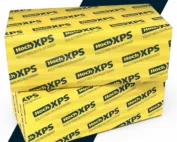
Well-known XPS manufacturers include HOCH, Austrotherm and Synthos. The parameters of a specific product must comply with the specification, but documents will not replace an inspection of the completed layer. The term Styrodur describes neither the substrate tolerances nor the installation rules. The crew should use the instructions relating to the material actually delivered to the construction site.
Before covering, it is worth walking over the entire surface in line with safe work organisation and checking the places that raise doubts. XPS, the support, the joints and the protection of installations are assessed. Extruded polystyrene remains invisible later, which is why photos and a record of acceptance help preserve knowledge of the layout. The best moment to remove a void is the moment when a single board can still be lifted.
7 branches. Materials closer to your project.