PIR insulation
termPIR WS and waterproofing: choosing a compatible flat roof build-up
At a glance
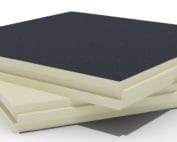
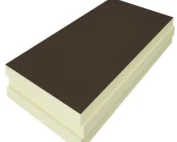
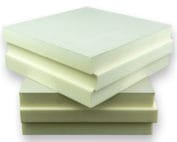
What comes into contact with the membrane or the adhesive affects how the roof system performs. In termPIR WS this is the glass fleece. For this reason, the thermal parameters must be read together with the requirements of the waterproofing, the method of fixing and the documentation of the relevant system. termPIR WS consists of a PIR core with a gas-permeable glass fleece facing on both sides. This is a different surface from a gas-tight aluminium laminate. When selecting PIR boards for a system, draw the surface of the flat roof on which the board facing is to work together with the covering in the actual cross-section. The termPIR WS fleece must be linked to the layers and the fixing method of the adopted roof covering, because the remaining layers must match the same solution.
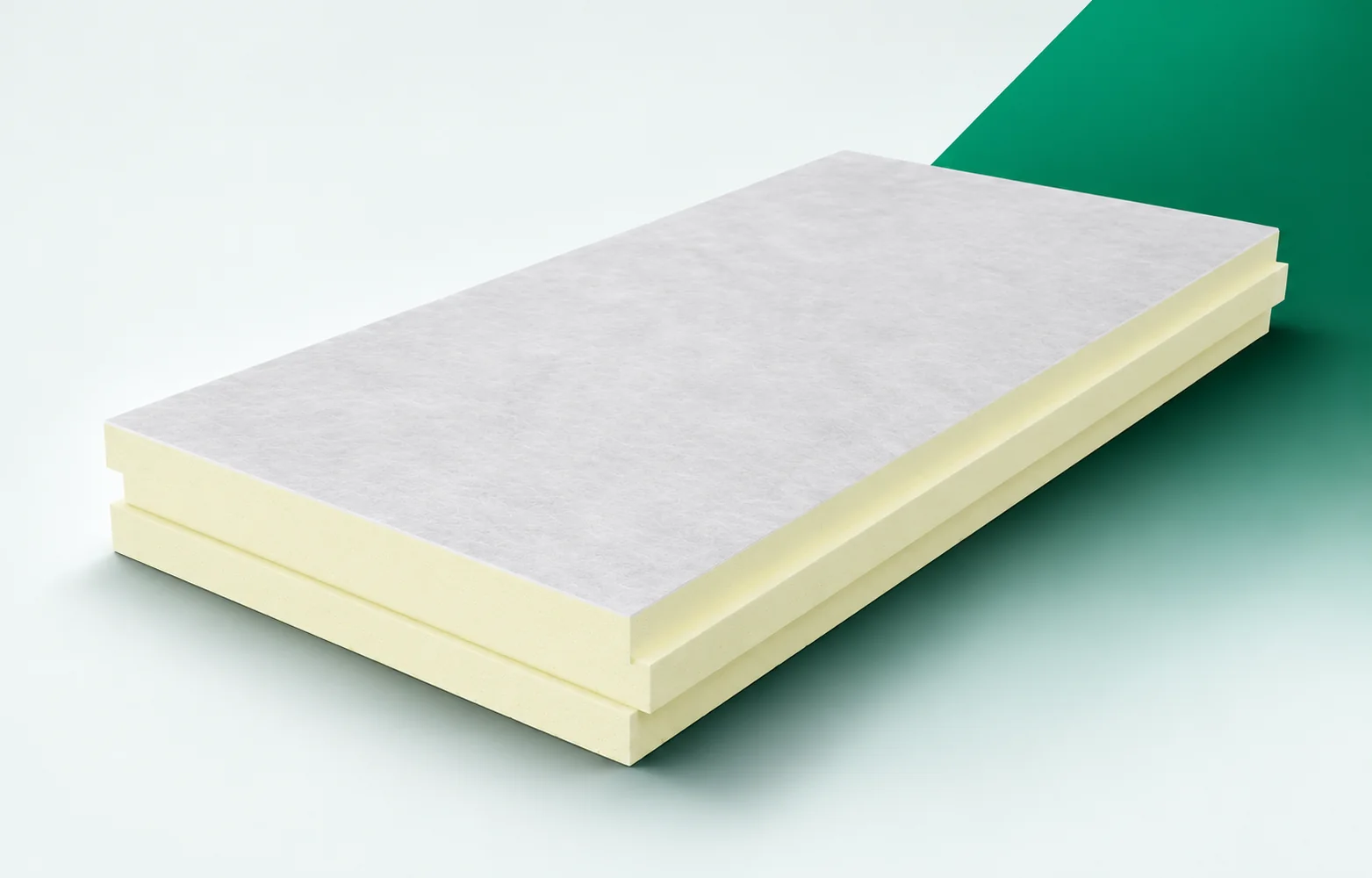
Product construction in the context of the system
The individual layers must work together, because an identical PIR core does not mean identical adhesion for every facing. The adopted set should allow the interaction of the materials to be agreed before laying begins over a large area. Add the approval for the specific combination of board, fastening layer and waterproofing to the description of the solution, so that the complete set of layers can be verified.
Fastening matched to the substrate
For termPIR WS, a straight edge and milling depending on the order are provided. The choice of edge variant is linked to the layer arrangement and the method of fixing the covering, which is why the boards are laid on a stable substrate with precise butt-jointing so that the joint does not create a gap in the insulation.
Continuous polyurethane insulation requires a correct detail; in the description, include the arrangement of the last rows around the roof outlet and the adjacent installation enclosure. Cut-offs around the outlet need stable support and space for correct execution of the flashing before the layout is considered ready for execution. The instructions for the full field do not cover all terminations, because the milled edges of full boards do not solve the connection to an element of a different shape. The installation drawing should allow a stable substrate for the waterproofing to be laid at the water drainage points. Before you accept a substitute, check the arrangement of cut-offs, the condition of their sides and the feasibility of executing the outlet flashing in relation to the adjacent layers.
In the termPIR WS system, it must be clearly stated what the fleece will be in contact with. This determines the choice of intermediate layers and the method of fixing the covering. The description “PIR roof” does not provide this information. This also applies to later proposed changes on site. Equivalence of the core in terms of thermal conduction does not automatically mean equivalence of the surface in a specific material joint.
Air, vapour and water tightness
The termPIR WS glass fleece alone does not seal the assembly against water. The PIR core therefore requires a separate waterproofing layer, and the laid insulation must be protected during the works until this covering is installed.
When selecting the protective layers, discuss the exposed fleece of the boards in the work zone interrupted before the covering is installed. The end of the day’s work section must be protected against water reaching the open system, because tightness must also be achieved at the connections between different parts of the system. In the finished assembly, the polyurethane foam needs protection, because the gas-permeable facing is not protection against rain entering the open system. The adopted detail must allow the day’s work front to be closed without leaving a path for water under the installed insulation. In the description of the installation sequence, indicate how the working area is to be protected and the condition of the boards before they are covered with the membrane; this information should be consistent with the documentation for the entire set.
Thickness matched to the assembly
The thermal conductivity of termPIR WS depends on thickness: below 80 mm it is 0.027 W/(m·K), in the range of 80 to less than 120 mm it is 0.026 W/(m·K), and from 120 to 250 mm it is 0.025 W/(m·K).
In the calculation of the system, include the roof section with a local reduction in insulation thickness at the low parapet. In the narrowing at the parapet, use the lambda appropriate for the local insulation thickness, so as not to combine parameters from different material variants. A change of material name alone does not provide equivalence, since the average thickness of the roof field does not automatically describe the thinnest point at the termination. When combining polyurethane boards in alternative arrangements, correct thermal data must also be retained in the narrowing required by the geometry of the detailing. In both variants, compare the actual thickness and the thermal conductivity assigned to it in each analysed cross-section for the same function of the building element.
What the assessment of the whole solution covers
The thickness of termPIR WS must be taken into account when reading the reaction to fire: boards of 20–49 mm have class F, and those of 50–250 mm have class E. The mechanical properties are described by a separate declaration CS(10/Y)120, relating to compression at 10% deformation. Such data on the board do not constitute a classification of the roof with its substrate, covering and fixing.
The summary of requirements for the system should clarify the service zone around equipment installed above the roof layers with termPIR WS. In the service zone, the loads must be considered together with the supporting structure and protective layers, and the scope of the assessment must correspond to the actual configuration of the assembly. The significance of the parameters changes with the scope of the assessment, because the CS120 result does not on its own describe the performance of the system under the constant load of the support. Before approving the structure, the load and fire requirements must be considered without confusing the properties of the board with the classification of the roof. In the application documents, find the solution for the service access point and the conformity of the substrate and covering with the assessed system, and compare them with the designed layers.
Purchase in line with the adopted system
Ordering termPIR WS requires specifying the thickness, format, edge and method of connection with the covering, because some systems require a specific adhesive or fixing. Without this data, the board cannot be matched to the adopted set of layers.
When pricing the item “polyurethane insulation”, analyse the quotation for the bonded and fixed variant in the manner envisaged for the specific roof. The roof costs must include the preparation of the substrate and the work at the perimeter and penetrations, so that the scope of purchase corresponds to the complete specification of the solution. An omitted item may come back as additional work, because the lack of agreement on the fixing method may change the quantity and type of auxiliary materials needed. A well-described scope allows the insulation to be ordered together with an unambiguous scope of work needed to close the covering. On acceptance of the delivery and the works, confirm the number of boards according to coverage, the consumption of fixing materials and the scope of flashings on the roof, so that they match the agreed system.
7 branches. Materials closer to your project.