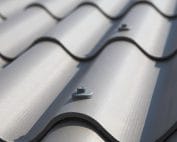
Fibre cement coverings
Rain and snow on farm roofs: why the details matter
At a glance
Rain and snow load a farm roof in different ways. Fibre cement sheets are meant to protect the building, but they need correct laps, supports and drainage. Asbestos-free fibre cement will not be watertight simply because the material itself withstands the weather well. It is often the places that look inconspicuous from the ground that determine how a covering performs. The corrugations form a drainage path towards the eaves. Their arrangement must match the roof pitch and the system’s specifications. An obstruction in the valley of a corrugation can hold back water or direct it onto a lap. That is why waste is removed after installation and the details around service penetrations are checked. Too low a pitch can lengthen the time water remains standing and increase the significance of rain driven in by wind.
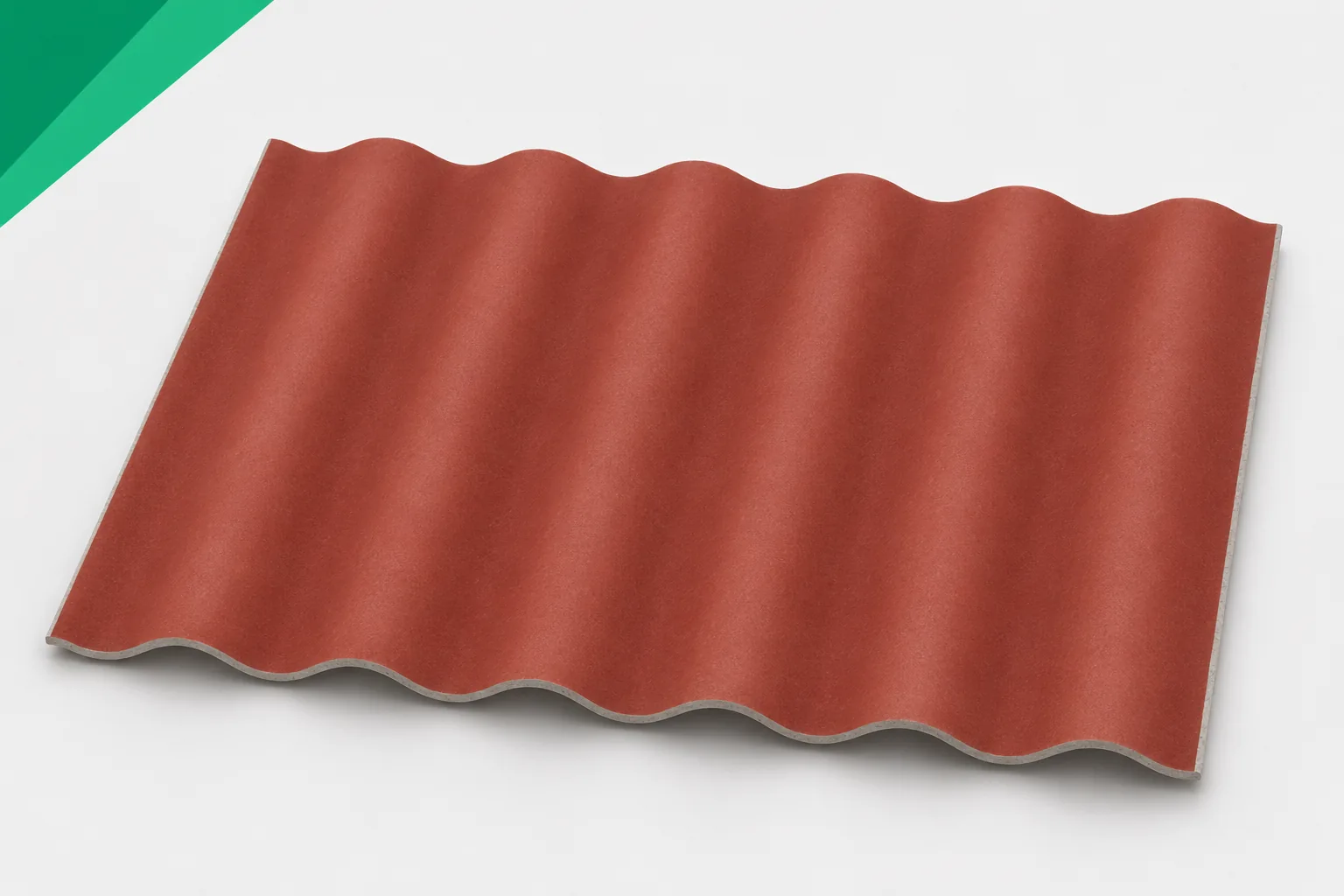
Water should drain in line with the geometry of the roof slope
The minimum pitch is not chosen from a random catalogue. Fibre cement sheets from different systems have different requirements. The length of the roof slope, the exposure and additional seals also matter.
The overlap is part of the solution, not a reserve to be recovered
The effective dimensions take into account the part of the sheet covered by the adjacent element. Shortening the overlap to achieve greater coverage changes the sealing conditions. A measurement error or a missing row should not be corrected in this way. The correct layout is determined before ordering, together with the arrangement of the supports.
Fibre cement sheets may require additional sealing of the joints at certain pitches and exposure conditions. This does not mean that every roof slope needs the same solution. The rules are system-based. A well-made overlap must also preserve the required geometry and the movement of the material.
Corners must not form an accidental thickening
Where four sheets meet, additional thicknesses may overlap. The system provides a method for preparing the corners so that the panels lie correctly. Overlooking this detail can cause part of the covering to lift and induce stresses. Such a situation is not remedied by tightening the screw more firmly.
Asbestos-free fibre cement is also available in versions prepared at the factory for installation. However, the correct direction and place of use of the panel must be maintained. Holes and mitres do not mean that every sheet can be turned around at will. The correct laying sequence follows from the documentation of the selected system.
Snow requires the structure to be checked
The weight of snow is a load on the covering, the supports and the entire roof structure. Fibre cement panels must not have a purlin spacing chosen solely for ease of installation. The design takes local conditions and the building geometry into account. Places where snow can accumulate can also be important.
With an extension, a higher wall or a roof-mounted installation, the conditions need not be the same as in the open middle of the roof slope. Not every part of the roof should be treated identically. A change in neighbouring development may require a reassessment. Additional loads are not determined by the panel thickness alone.
Wind puts edges and fastenings to the test
Strong wind acts on the entire roof, but the edge zones may require particular attention. The layout of the fixings results from the design and the system guidelines. Fibre cement sheets must be connected to suitable supports. A heavier sheet is not in itself a safeguard against uplift.
Fasteners and seals should be correctly selected and tightened. Excessive pressure can damage the sheet, while insufficient pressure can impair tightness. The connection requires the clearance provided for. Proper execution checks should not be replaced by another layer of random sealant.
Gutters must take away what runs off the roof slopes
Water from the roof needs an unobstructed eaves, gutters and downpipes. A blockage can cause overflow even though the sheets are intact. The drainage should direct water away from sensitive areas of the building. Before a period of intense rainfall, it is worth checking for leaves, deposits and residues from construction work.
Asbestos-free fibre cement will not solve the problem of a badly positioned gutter. The overhang of the sheet edge and the position of the drainage must be coordinated. A sheet projecting too far may work beyond the permissible support. One that is too short does not necessarily direct all the water where it should. The detail requires measurement, not assessment from a distance.
After precipitation, distinguish between a leak and condensation
A damp patch on the underside may come from rainwater or from condensation. During diagnosis, the circumstances are recorded. A comparison of photographs taken during rain and after a cold, dry night is helpful. Fibre cement can absorb some moisture, but it does not guarantee that condensate will never appear.
Water can travel along a support before it drips down. The position of the patch in the room does not always indicate the damaged lap. It is worth checking the penetrations, fixings and flashings above. A repair based on identifying the source usually makes more sense than randomly sealing the visible mark.
Inspect the roof without loading the fragile covering
An inspection after a storm begins from a safe place. A loose fitting, a crack or a damaged skylight require assessment by a suitably prepared contractor. Do not step onto the sheets to check them by hand. Snow removal should also have an established method and safeguards.
Fibre cement sheets perform correctly when the material, structure and details form a coherent whole. In the documentation, it is worth keeping the fixing plan, the profile and photographs of the finishes. This makes it possible to compare the condition of the same places after another season. The inspection becomes specific rather than based on a general impression from the ground.
During an inspection after rainfall, record the location, time and conditions in which the water appeared. Such information makes it easier to find the cause and to plan the right repair.
7 branches. Materials closer to your project.