PIR insulation
Therma TR27 and waterproofing: choosing insulation for a roof system
At a glance
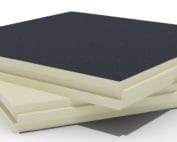
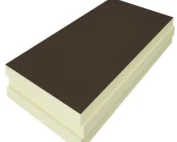
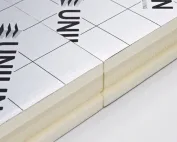
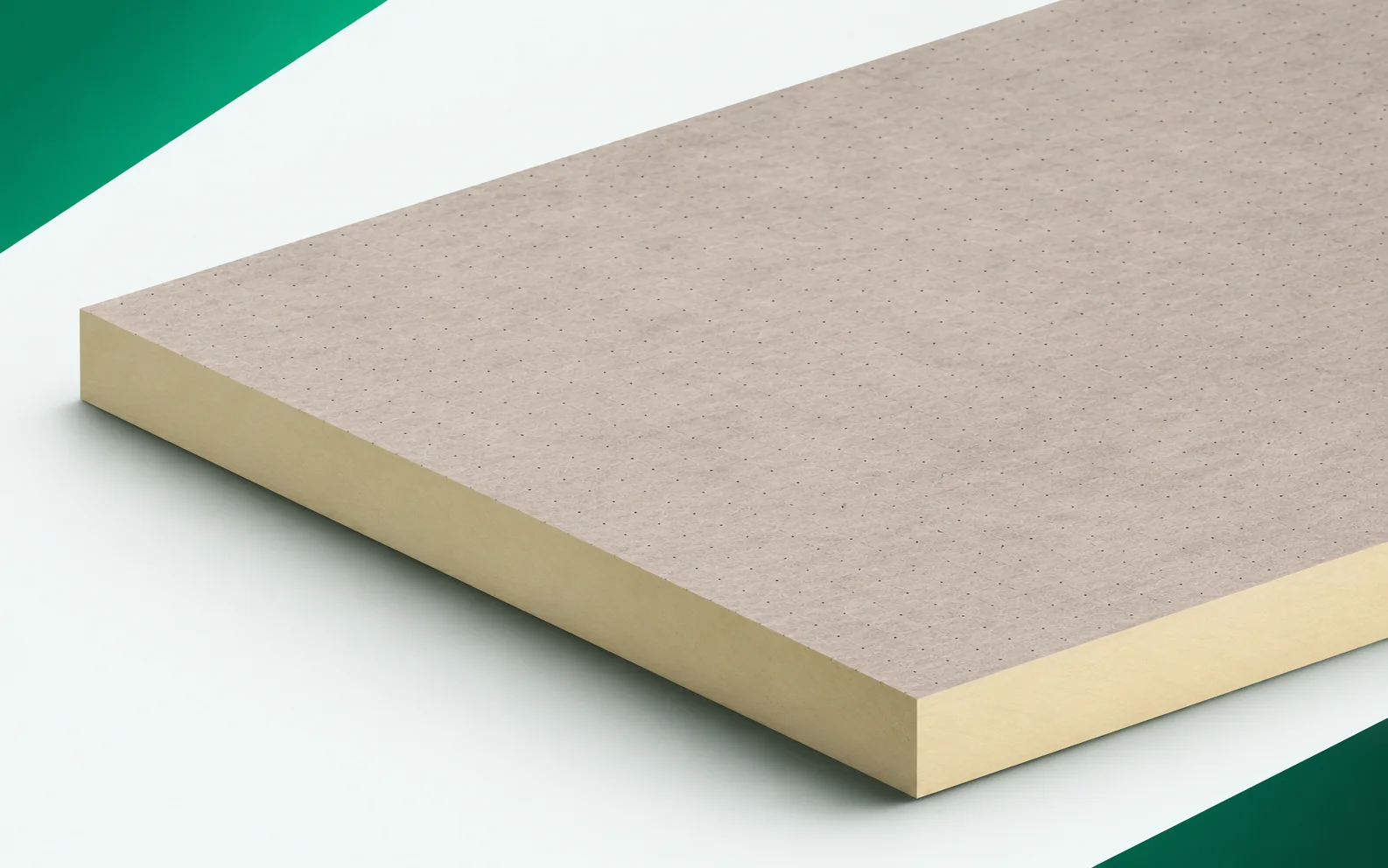
Kingspan Therma TR27 is a PIR board with glass fibre facings on both sides. This surface forms the interface with the covering layers, so the selection covers material compatibility, substrate preparation and the way the joint is made. The catalogue describes flat roofs and terraces that are mechanically fixed, bonded or ballasted, in accordance with the system documentation. This does not mean that any adhesive is approved or that it can be swapped for any PIR board. The thermal parameters of TR27 also depend on the thickness. In the following, we separate the requirements relating to the facings, the cut pieces, the loads at equipment and the cost of the complete solution, so that the cross-section corresponds to the actual roof layers.
The role of the board in the assembly
For TR27, state the type of substrate, the specific membrane and the documentation of their bond. The fleece is a surface characteristic, not a general approval for every bonded system. The selection must confirm the compatibility of all materials in contact.
Interaction with adjacent layers
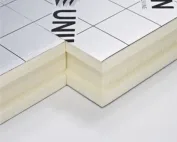
TR27 has a standard format of 1200 × 600 mm; the catalogue provides for square edges or rebated edges. Before planning the corner and the termination of the flashing, confirm the geometry and the coverage of the variant being ordered.
At the roof perimeter, match the last rows of TR27 to the support and the run of the flashings. A cut may remove the side profile that was intended to join adjacent elements. Therefore check not only the covering of a full board but also the termination of the new edge after cutting.
In TR27, the glass fibre facing is part of the material solution. When selecting the covering, it is necessary to state how the connection to this surface will be made. The mere presence of a PIR core does not determine the suitability of the adhesive. The system documentation also specifies the conditions for preparation and application. Only such determinations allow the variant to be assessed as a complete assembly rather than a collection of similarly described products.
Behaviour of the completed building element
In a bonded assembly with TR27, identify precisely the area of the glass fibre facing intended for connection to the covering. The preparation of this surface and the choice of adhesive follow from the documentation of the set, and not merely from the presence of a PIR core.
Before bonding the covering to TR27, check the cleanliness and condition of the surface and the required application conditions. Also establish how the finished joint will be inspected. A compound with a similar name does not replace the product intended for the correct insulation and waterproofing set.
A shared thermal objective
For TR27 with a thickness of 100 mm, the catalogue states a lambda value of 0.027 W/(m·K) and an RD of 3.70 m²K/W. At 120 mm the values are 0.026 and 4.60 respectively. Changing the thickness therefore requires the correct set of data to be used, rather than a single lambda value for the whole family.
When comparing TR27 100 mm with the 120 mm variant, use the declared resistances RD 3.70 and 4.60 m²K/W. Recalculating both thicknesses with a single lambda value distorts the difference. The thermal effect must be checked for the same function of the building element and for precisely designated variants.
Material parameters and the sequence of work
Therma TR27 has a declared compressive stress of at least 120 kPa at 10% deformation and fire reaction class E. The loads and fire requirements of the entire roof covering are assessed separately. The compilation of requirements for the system should clarify the local pressure at the service access to equipment installed above the TR27 boards.
In the service zone above TR27, specify the area of the supports, the method of protecting the insulation and the load-transfer path. A result of 120 kPa at 10% deformation does not permit arbitrary point loads. Compare the traffic conditions at the equipment and the classification of the entire covering with the designed assembly.
What changing the product changes
When pricing TR27, agree the required thermal resistance and the scope of covering. Only then compare the cost of bonding with another permitted fixing method. Include auxiliary materials and details that a general line item ‘polyurethane insulation’ does not describe.
Changing the fixing method for TR27 affects surface preparation and material consumption. At acceptance, compare the type of joint, the insulation thickness, the auxiliary layers and the flashings with the offer. Both cost variants must lead to a roof with the same thermal resistance and scope of completion.
7 branches. Materials closer to your project.