Costs and formalities
Which Polish VAT rate applies to roofing materials and roof renovations?
In brief
First establish whether you are buying goods or a service. Buying metal sheets, sandwich panels or insulation on their own is a supply of goods taxed at the standard rate. The reduced rate may cover construction or renovation in a qualifying residential building, depending on the scope of work and the type and floor area of the property. A note on the invoice alone is not enough. Also check who purchases the materials, arranges transport and carries out the installation – this affects the Polish tax classification.

When is material taxed at 23%?
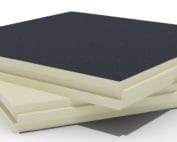
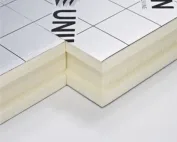
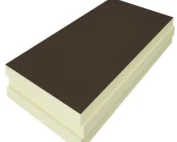
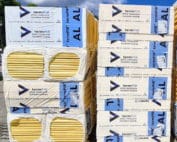
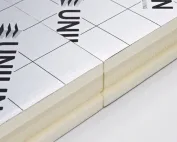
Buying tile-effect metal roofing sheets from a wholesaler is a supply of goods. It does not become a renovation service merely because the sheets will end up on a detached house. The same applies to buying trapezoidal steel sheet, PIR insulation boards, screws and flashings separately. The standard rate applies to the typical sale of these products. The customer should receive clear information on the net price, the tax and the amount payable.
A different situation arises when the contractor is responsible for the actual service together with the materials. The entire order, its purpose and its terms must be assessed. It is not enough to combine two independent purchases into a single item. Nor can the rate be chosen freely according to which option produces the lower invoice.
When can roof renovation benefit from 8% VAT?
The reduced rate covers the activities specified in the Polish VAT Act relating to construction covered by the social housing programme. These include, among others, construction, renovation, modernisation and thermal modernisation. Replacing the roof covering of a house may fall within this scope. First, however, the character of the building and exactly what the service provider performs must be established.
A production hall, a warehouse or a standalone commercial unit does not gain the preference applicable to residential construction merely because a similar roof panel has been used. The same product may appear in transactions settled differently. Its colour, thickness or trade name do not determine the tax.
What do the 300 and 150 m² limits mean?
For a detached house, the limit of 300 m² of usable floor area is relevant. For a residential unit, it is 150 m². These are not the dimensions of the roof slope or the area of the sheets purchased. A roof with an area of 320 m² therefore does not mean that the limit for the house has been exceeded. The data must be read from the correct building documentation.
When the statutory limit is exceeded, the preference does not always disappear entirely. The reduced rate applies to the relevant part of the tax base, in accordance with the proportion of the qualifying area. The apportionment should be documented. In a building with an unusual function or mixed use, it is not advisable to transfer the rules from a simple house renovation without a separate assessment.

What should the quote and invoice look like?
A good quote describes the property, the scope of work and how the materials are settled. It should indicate who buys the covering, organises transport and is responsible for installation. It is worth establishing separately the dismantling, waste removal, scaffolding, flashings and substrate repairs. The cost estimate items help to compare quotes, but the actual content of the transaction still determines the tax classification.
The invoice should correspond to what was actually carried out. A general description of ‘construction service’ does not cure incorrect classification, and a detailed list of materials does not by itself determine the split of the supply. The contractor should explain the rate applied. In cases of serious doubt, they may obtain a binding rate ruling for the specific supply.
How do you compare two prices with different tax rates?
A sample net amount of €4629.00 gives €5693.67 at 23% VAT and €4999.32 at 8% VAT. This is purely a demonstration of how the tax works. It does not prove that a given order may be taxed in two ways. The comparison only makes sense once it has been checked whether both offers cover the same scope and whether each rate is justified.
A materials-only offer may not include a lift, seals or unloading. An offer with installation may in turn be reduced by the repair of the roof structure, which will only become apparent after the old sheet metal is removed. For a person without the right to deduct tax, the full gross cost is key. The company should additionally establish with its accounting department to what extent it can deduct VAT.
What should be established before paying a deposit?
Prepare a document confirming the intended use and usable floor area of the building. Agree with the contractor the scope of the service and the rules for settling additional works. Ask for an offer including tax and for an explanation of the differences between the variants. The buyer’s own declaration of a ‘residential roof’ does not replace a proper tax assessment.
Also check whether the order covers the roof of the building or a separate roof structure, carport or garage. Not every structure on a house plot is subject to the same rules. If the scope changes during the works, the consequences for the settlement must be assessed. Such determinations are worth making before purchasing materials, while the cost estimate and contract can still be calmly corrected.
When comparing offers, record the net value, the tax rate and the gross amount separately. Two similar final sums may cover a different scope of works. Also establish how the deposit and the subsequent settlement of the service performed will be documented.
7 branches. Materials closer to your project.