Façades and fences
What are the benefits of metal fence pickets?
In brief
The advantages of a metal picket fence depend above all on matching the gaps to the needs of the property, not on the material alone. It is worth checking what picket rhythm will provide the desired privacy from the street and garden, whether the chosen system allows a layout on both sides of the rails, and how dense infill will affect wind loading. Repeatable geometry of components and the ability to replace individual parts also matter, though this requires keeping records of the profile and coating. On uneven ground, the method of stepping panels must be established and corners planned.
How can the gaps be adapted to the property?
Picket spacing affects how much is visible from outside and from the garden side. A looser rhythm gives a more open space. A denser one screens the terrace or seating area more strongly. In some systems, an arrangement on both sides of the crossbars is possible. Its requirements must be checked rather than assuming any profile can be mounted in every configuration.
Privacy should also be assessed diagonally, not only straight on. The picket width, the shape of its sides and the distance between rows change the view. A sample section of a bay shows this better than the number of centimetres in the design alone. Dense infill, however, increases the wind effect on the structure. Reducing the gaps therefore requires checking the posts, foundations and connections.
What does the repeatable geometry of the elements provide?
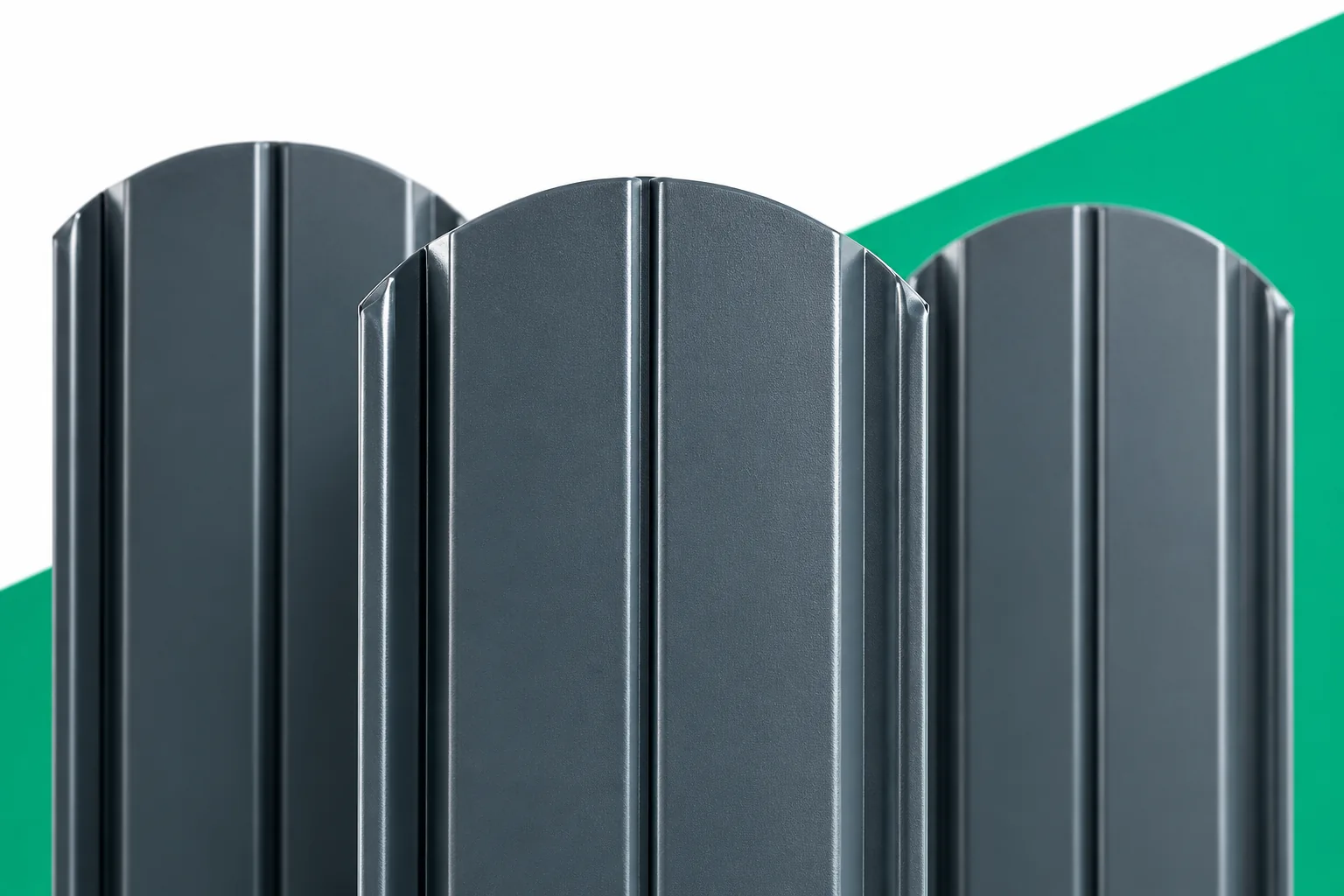
Metal pickets have a defined profile and end treatment. This allows an even rhythm to be maintained over a long run. A calm straight line or another arrangement permitted by the system can be chosen. The sections between posts should be drawn out in advance. This prevents the end gaps from accidentally becoming much wider than the others.
On uneven terrain, it must be determined whether successive bays will be stepped or another solution used. Pickets do not replace a fence layout design. The bottom line, the distance from the ground and the treatment at the gate matter. The repeatability of the material only gives a good effect once the corners and shorter sections of the property have also been planned.
Does metal reduce the scope of maintenance?
Coated pickets do not require periodic impregnation like suitable wooden products. This does not mean they are completely maintenance-free. The surface must be inspected and cleaned in accordance with the recommendations. Deposits by the road, areas in contact with plants and lower parts exposed to mud require particular attention. Retained moisture is not without consequence for durability.
Soiling should not be scraped off with a sharp tool or treated with random chemicals. Damage to the coating requires proper assessment and repair. Minor garden work can also matter: impacts from a lawnmower or leaning wet materials against a bay increase the risk of problems. The advantage is a predictable scope of care if the user knows the instructions for the chosen finish.

How can the fence be combined with the appearance of the house?
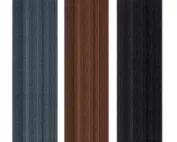
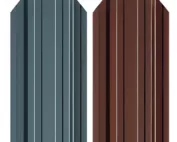
Colour and texture can be matched with the roof, joinery or gate. Not all elements need to be identical, but random differences should be limited. View the sample from both sides. The picket may have a different finish on the garden side than on the street side. This matters especially for a house where the inner surface of the bay is what is seen for most of the time.
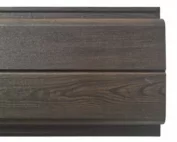
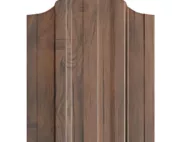
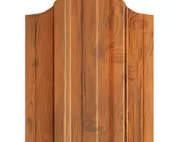
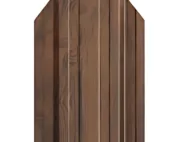
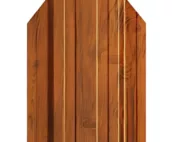
Wood-effect finishes need to be assessed on a larger section. Pattern repeatability is a feature that a small sample will not show. Equally important is the colour of the rails and posts. On an open fence, the structure remains visible. A good set of samples allows the whole to be assessed before ordering several dozen linear metres.
When is replacing a single picket an advantage?
In a suitably designed bay, a damaged element can be replaced with a new one. The scope of work depends on the type of fixing and access to it. It is worth asking about this possibility before purchase. Keeping the profile, length and coating markings will make this easier. After a few years, the colloquial colour name alone may not be enough to select a part.
The possible difference in shade between new and used material must also be taken into account. Ageing and deposits affect the appearance of the surface. The possibility of replacement is therefore not a promise of a perfectly invisible repair. It still helps to limit the scope of work, especially when the structure remains in good condition and the elements have not been joined in a way that makes dismantling difficult.
How to assess the benefits in a full cost estimate?
Count the number of pickets for the actual bays, not just per metre of plot length. Include the spacing, corners, gate and wicket gate. Add the rails, posts, foundations and connectors to the infill. A quote with a low price per piece may relate to a different profile width. A comparison only makes sense for the same degree of screening and height.
Also check the possibility of using the existing structure during renovation. This requires an assessment of its condition and compliance with the new load. It is worth comparing the initial cost with the expected maintenance and the availability of parts. Metal pickets are practical where they meet the needs of the property and the installation conditions. Their advantages result from a well-thought-out layout, not from the mere replacement of wood with metal.
7 branches. Materials closer to your project.