Maintenance and renovation
How to restore the appearance of a metal roof
In brief
Start by washing a small section of the sheeting to see whether cleaning alone will do or whether a local coating repair is also required. Assess the kind of soiling and the state of the finish, since dust, plant debris, coating ageing and corrosion each call for different treatment. Pay particular attention to spots beneath trees, beside the chimney and in the valleys, where dirt may be concentrated. If you notice flaking, detachment or rust, determine whether it involves just the top layer or the steel beneath as well.
What actually worsened the appearance?
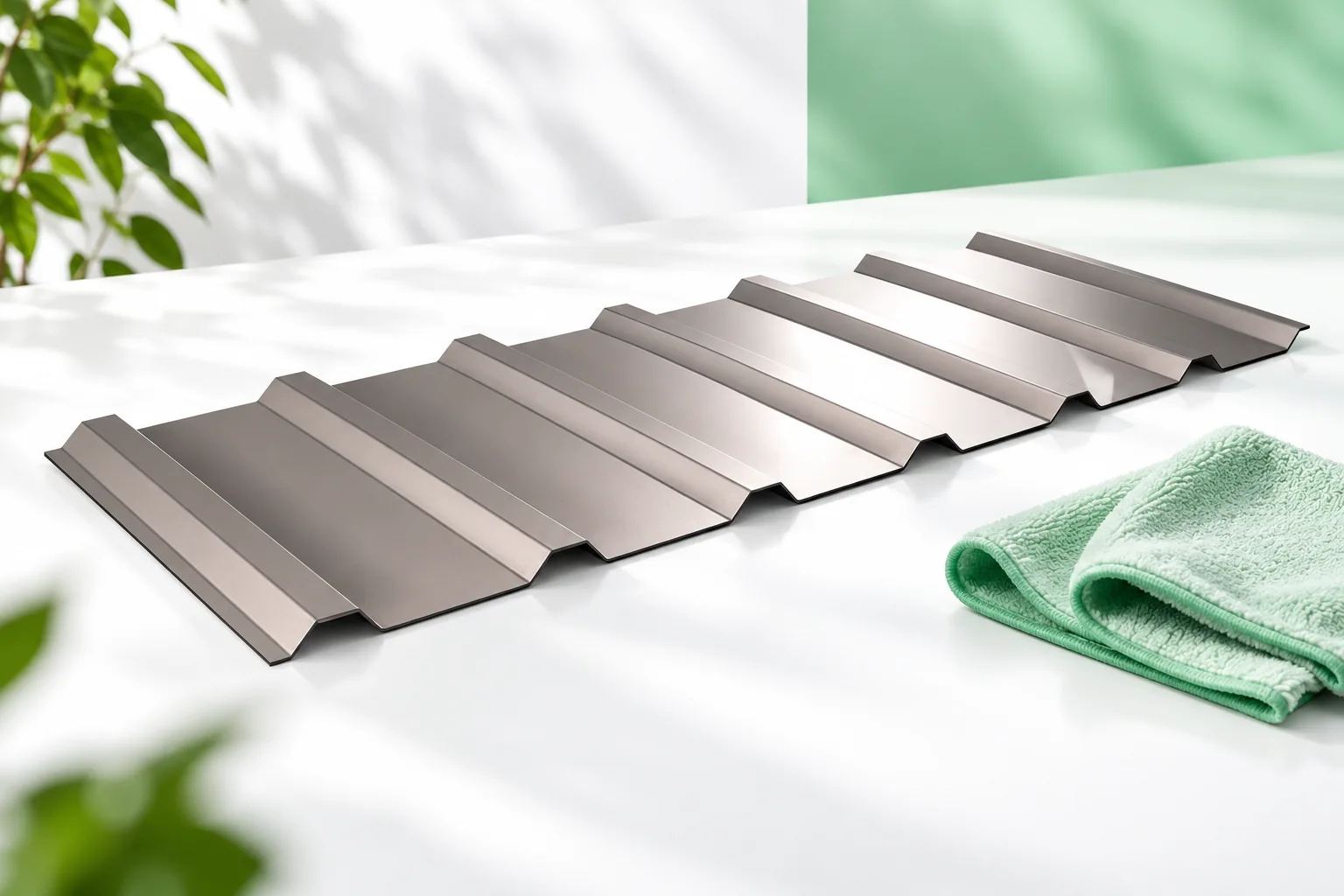
Dust, pollen, soot, plant deposits or water marks may be visible on the roof. Ageing of the coating looks different from corrosion. Before choosing a method, it is worth cleaning a small section and assessing the surface. Not every uneven colour means the entire roof slope needs to be fully painted.
Also check the areas under trees, near the chimney and in the roof valleys. Soiling is often localised, so a full renovation may be unnecessary. If there are chips, delamination or rust, a more detailed assessment is needed. It must be established whether the problem affects only the surface layer or also the steel substrate.
How to start with safe washing?
The cleaning method should correspond to the coating instructions. Usually one starts with mild methods and the removal of loose soiling. Aggressive chemicals, hard brushes and too strong a jet can damage the surface. A product is not chosen solely on the basis of its effectiveness as demonstrated on another material.
Water is directed so that it is not forced under the laps and flashings. It is worth carrying out a test in a less visible place. During the work, the façade, plants and installation components must be protected in accordance with the properties of the product. A safe working position is necessary even when the work appears to be merely simple washing.
When are minor touch-ups sufficient?
Minor damage to the coating may qualify for local repair. A solution compatible with the material must be used, and the scope limited to the damaged area. Too large a patch may be more noticeable than the original scratch. The colour and gloss of the old surface may already differ from the new product.
Before the touch-up, the cause of the damage must be removed. If the sheet is being scratched by a rubbing branch or a loose flashing, the paint alone is not enough. The same applies to corroding metal filings. Their removal and an assessment of the substrate should precede painting, so that contaminants are not sealed under the new layer.
When should full painting be considered?
Renovation can make sense when the sheets are still sound and the problem is extensive surface wear. First, the adhesion of the old coating and the compatibility of the new system must be checked. A paint that looks good once dry does not necessarily bond permanently with every type of factory finish.
The scope of preparation may include washing, degreasing, removal of loose layers and local repairs. The exact technology follows from the recommendations of the renovation system manufacturer. It is not worth skipping the preparation stage to achieve the colour faster. The durability of the later result depends largely on the substrate.

Can the colour be changed at the same time?
A change of colour affects the appearance of the building form, but it should be consistent with the paint system used. It is worth assessing a sample in daylight and from a greater distance. On a large roof area, the gloss and texture may look different than on a small sample. Flashings, gutters and adjacent elements must also be taken into account.
Seals, ventilation openings and elements requiring movement should not be painted at random. Renovation must not impair the function of the roof. In the quote, it must be clearly specified which surfaces the colour change covers. Painting only the main sheets may leave clearly different flashings at the chimney and eaves.
When is it better to replace a section of the covering?
Perforation, extensive corrosion or permanent deformation may rule out a sensible renovation of a given element. Paint does not restore the thickness of the steel or the load-bearing capacity of a damaged connection. In such a case, it is worth comparing the cost of replacing a section with the costs of preparation and painting. The assessment should also include the underside of the sheet.
When replacing, the profile, module and laps must be matched. A similar appearance does not guarantee compatibility. Sometimes the colour difference between the new and old material will be visible. It is worth discussing this before ordering, so that an aesthetic repair does not end in another disappointment despite correct technical execution.
How can the refreshed effect be maintained?
After the work is completed, keep a description of the products used and the maintenance recommendations. Subsequent cleaning must be compatible with the new surface. Regularly remove accumulated contamination and check areas of previous damage. A small problem noticed early is usually easier to repair than extensive detachment after several seasons.
It is also worth checking that the gutters and outlets are clear. Standing water and wet sediment worsen the operating conditions of the coating. Refreshing the roof should therefore include not only the colour but also the removal of the causes of accelerated soiling. This way, the effect does not end with a good appearance on the day the work is completed.
7 branches. Materials closer to your project.