Roof coverings
Choosing the shape and depth of a tile-effect roofing profile
In brief
The choice depends primarily on how well the profile matches the roof geometry and the conditions of use for a given model, not on wave height alone. Check whether the data sheet lists profile height, pitch and transverse rib separately, and what the module length and effective cover width are. Also consider how the shape works with valleys, openings and flashings. Only then compare samples for building proportions and the shadow effect you want. Bear in mind that a taller profile does not guarantee better coverage or approval for a lower pitch.
Which dimensions describe the profile?
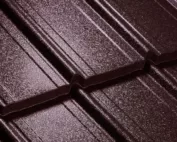
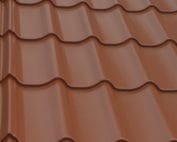
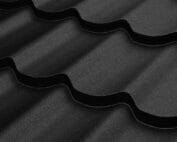
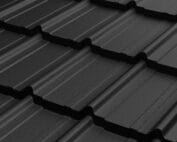
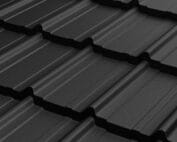
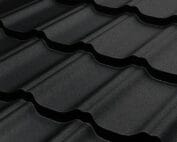
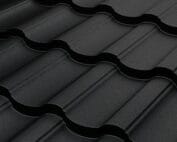
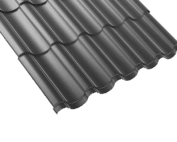
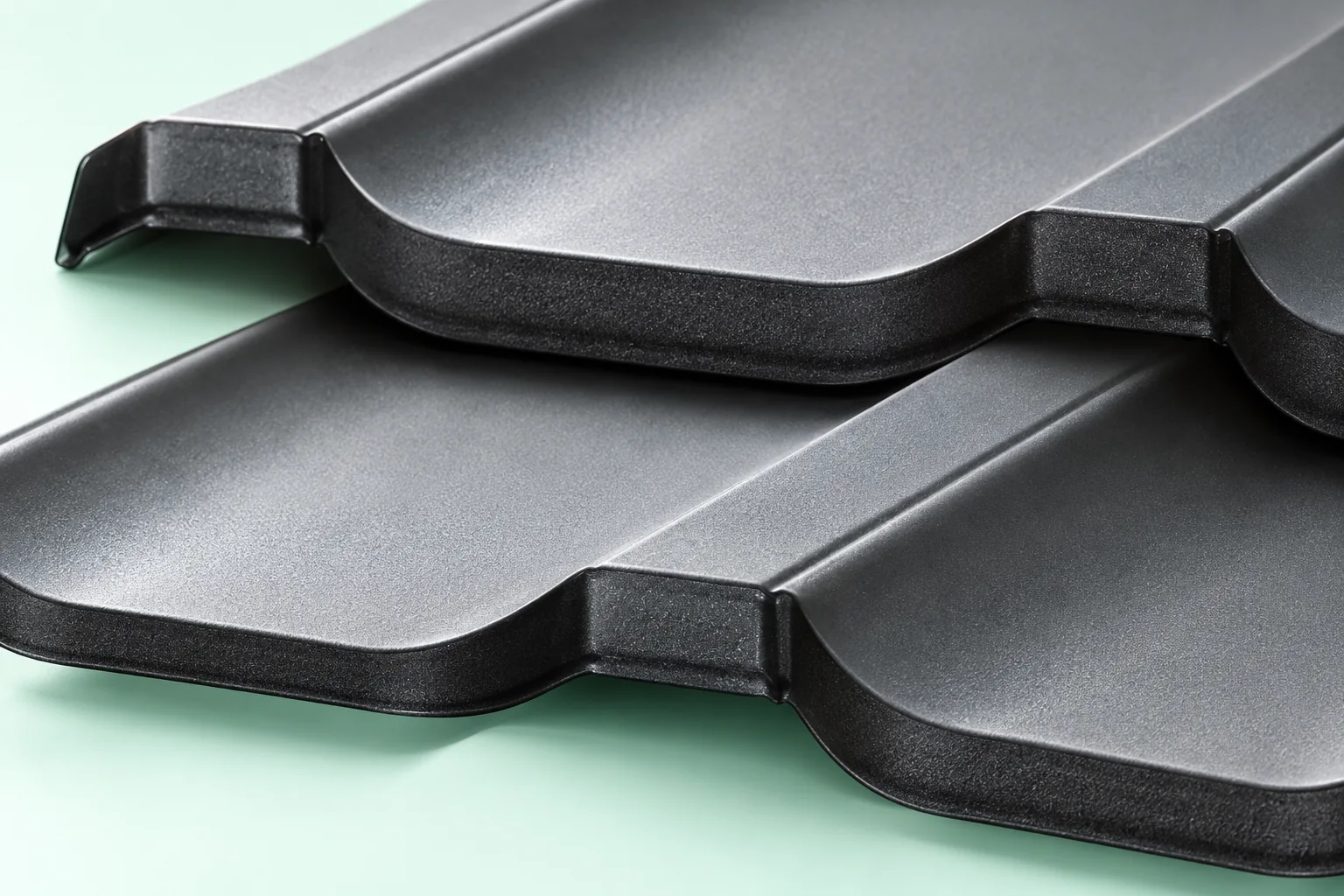
Tile-effect metal roofing has a cross-section with waves and a longitudinal rhythm reminiscent of rows of tiles. The data sheet may list the profile height, pitch or pressing separately. The names must be read together with the drawing. A single figure taken from a table does not show what the whole sheet looks like. Both cross-sections and the effective cover width are needed for comparison.
What matters is the module length, i.e. the distance between successive repeating pressings. It should not be confused with the total panel length. A panel may comprise more than one module and have additional overlap sections. This dimension affects the rhythm of the battens and the appearance of the rows on the roof. On a small roof slope the difference can be visible even without close inspection.
How does a higher wave change the appearance of the roof?
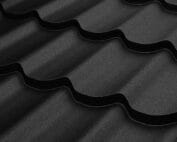
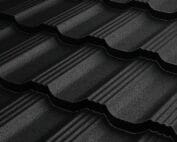
A more pronounced pressing creates a stronger shadow. The roof may look more three-dimensional, especially in side light. A gentler wave gives a calmer surface. The effect also depends on colour and gloss. Height cannot be assessed without taking these features into account, because reflections can strongly change how the shape is perceived.
On a large steep roof slope the profile is an important part of the view of the whole house. On a roof concealed by a parapet it may matter less than the eaves line. It is worth viewing a larger sample from a distance similar to that on site. A catalogue close-up emphasises detail that is barely visible from the street. Comparing the same profile in a matt and a glossy finish also helps.
Does a higher profile always mean better covering?
There is no single height that is best for all roofs. Geometry affects how the sheet performs, but it does not replace data on the material and support. The batten spacing must not be increased independently just because the wave looks rigid. The instructions refer to the whole model. Sheet thickness, the shape of the overlap and the fixing method all contribute to its properties.
Roof pitch should be treated in the same way. A higher pressing alone does not confirm suitability for a lower pitch. The data sheet and instructions may set additional conditions for the layers beneath the covering. It is not enough to compare two profiles by eye. If the roof has a low pitch, this must be clarified before the aesthetic choice and ordering of material.

How does the profile work with roof valleys and openings?
At the chimney, window and roof valley, the wave height and the course of the pressings matter. The flashing or collar should be matched to the chosen covering. A similar colour does not indicate compatibility. It is worth checking the available accessories and installation details, especially when the roof slope has many interruptions. The more such places there are, the greater the role of good cutting.
The module rhythm can affect the position of cut pieces at the ridge and openings. This does not mean that every cut is a problem. However, you need to know how to fix and finish the remaining fragment. A narrow strip without proper support does not become the right solution just because it matches in colour. The installer should check the layout before approving the order.
Can the same look be achieved in different formats?
Cut-to-size and modular tile-effect metal roofing can have a similar visual character. The format describes primarily the delivery method and the division into elements. It does not guarantee identical wave dimensions or overlaps. Therefore, sheets from two systems are not combined solely on the basis of similarity. The compatibility specified in the documentation is required.
Long sheets can be convenient on straight roof slopes. Modules can facilitate transport and work organisation with more complex geometry. Waste must be calculated for the specific cutting plan. Not every cut-off fragment is suitable for turning and reusing. The profile has defined connection edges, and the direction of water drainage remains more important than using every offcut.
How can samples be compared before ordering?
Set them at an angle similar to the roof slope and view them in natural light. It is good to have a fragment showing more than one wave and a transverse pressing. Place a sample of the flashing and the façade next to it. Assess the proportion of shadow, the rhythm and the appearance of the edge. However, do not draw conclusions about permissible load or service life from such a viewing.
Assign the full specification to the chosen appearance: section model, format, thickness, coating and colour. Keep the technical drawing together with the cutting plan. This ensures that the order refers to a specific solution and not just to a “high wave”. Combining a well-chosen shape with correct detailing matters more than choosing a profile on the basis of a single impressive number.
7 branches. Materials closer to your project.