Metal fence pickets and fences
Metal picket fencing on a plinth: coordinating sheet steel and the base
In brief
The plinth forms the lower part of the fence and strongly influences its proportions. The same picket looks different above a low base than above a high, massive base. Metal fence pickets can be combined with various plinth solutions if the structure has been properly designed. However, appearance must be separated from the method of fixing. The mere presence of a concrete plinth does not mean that the infill can be attached to it arbitrarily or that the steel sheet can be supported on it. When choosing the picket length, take into account the plinth height and the clearance above its top surface. The picket length is not the same as the total fence height. Overlooking this distinction can result in a bay higher than intended. On the sketch, also show the target ground level on both sides. The ground in the garden is not always at the level of the pavement.
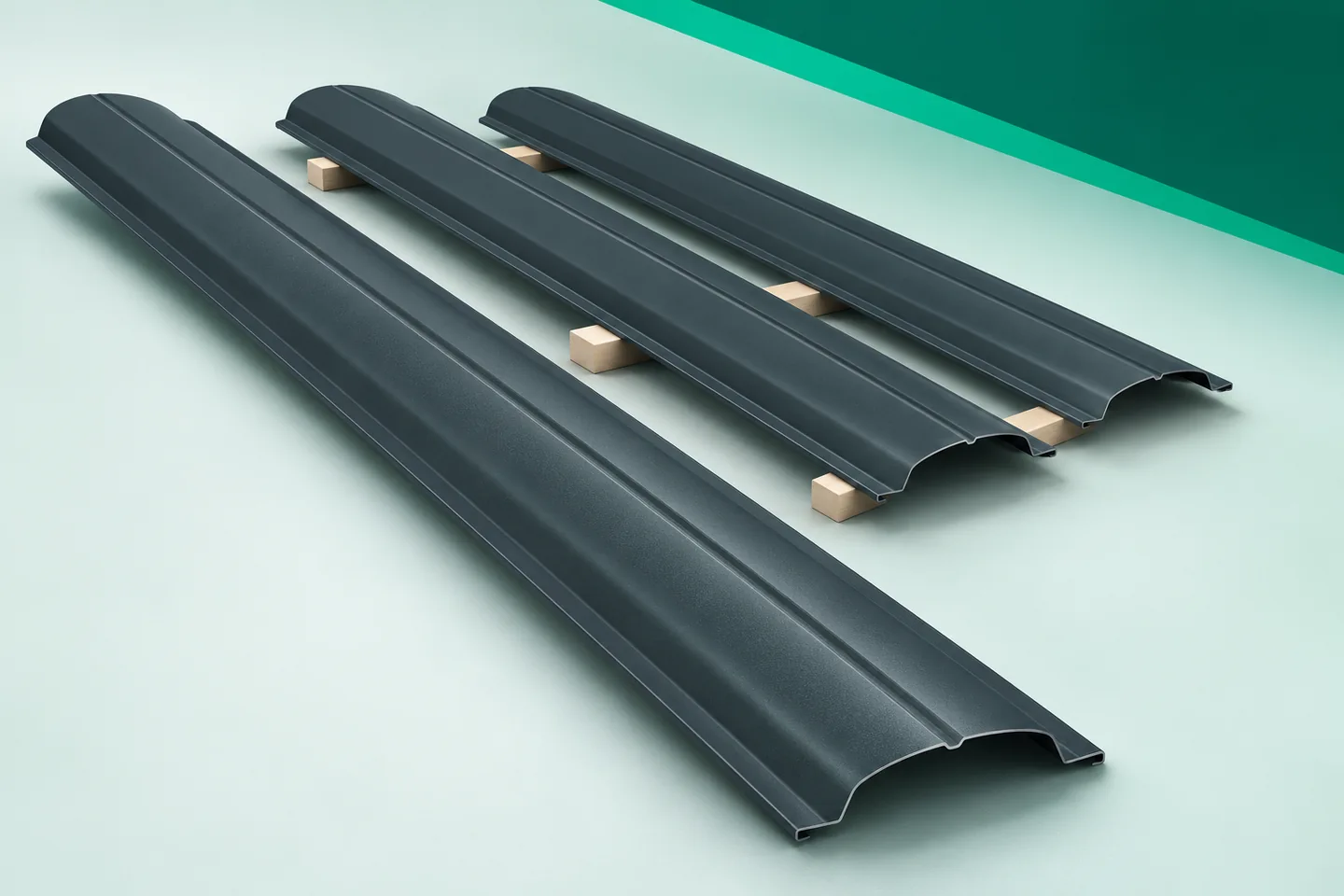
Calculate the height of the entire fence
On uneven ground, the plinth may be built in steps. The metal pickets should then form a planned top and bottom line. This cannot be determined without measuring the individual sections. It is worth first deciding how the fence should respond to the slope. Only then should the material lengths be ordered. At the gate and pedestrian gate, the movement space of the leaves must be checked separately.
Keep a distance from the plinth surface
The bottom edge of the pickets should not rest on the concrete. A clearance resulting from the design and the rules of the specific system must be left. This helps avoid permanent contact between the metal and damp surfaces and dirt. There is no single value suitable for every plinth and every location. The geometry of the plinth, ground levels and the material instructions are significant.
Before installation, check that the top surface of the plinth has been executed in accordance with the design. Places that retain water and accumulated dirt can make fence maintenance difficult. It is not worth hiding them by lowering the pickets further. The infill should not mask defects in the plinth. Easy access to the bottom zone is useful during washing and coating inspection.
Determine what carries the loads
In a typical arrangement, the metal pickets are fixed to crossbars or frame elements. The loads then pass to the posts and their foundations. The method of execution depends on the adopted system. It should not be assumed that the heavy plinth alone will ensure the stability of the entire fence. The connections and the actual condition of the structure are equally important.
When modernising, it is worth checking the posts set in the existing plinth. Cracks, tilting or corrosion require assessment before new pickets are fitted. Denser infill can change the working conditions of the bay. This also applies when changing from one row to two. An aesthetic replacement of material does not release you from adapting the supports and fixings to the target solution.

Choose the proportions of two different materials
Concrete and coated metal have a different texture. Their combination can look calm if the heights and colours are well considered. A low plinth leaves more space for the rhythm of the pickets. A high plinth becomes a strong element of the composition. In such a case, particular attention should be paid to additional decorative finials and several competing shades.
The metal pickets do not have to be exactly the colour of the plinth. A neutral base can be combined with a dark infill. However, the sample should be viewed against the actual concrete, not just on a screen. The appearance changes once the surface dries and in different light. Also check the colour of the structure visible from the garden. This is the third element of the composition that is easy to overlook when ordering.
Protect the pickets during wet works
The new infill is best installed once work on the plinth will no longer soil the finished surface. Cement, mortars and other building materials can be harmful to the coating. If the works must overlap, effective protection of the material is needed. Accidental deposits must not be allowed to dry on the metal fence pickets.
The cleaning method must be matched to the specific coating. A product intended for removing dirt from concrete need not be suitable for sheet metal. Aggressive preparations and scrubbing can worsen the condition of the surface. It is better to limit soiling in advance than to try to remove it later by any method. After installation, it is also worth thoroughly collecting the filings produced during fixing.
Plan easy access to the bottom edge
The flower bed and decorative aggregate should not bury the gap that has been left. Once the garden has been landscaped, check that the metal fence pickets are still isolated from the ground. Leaves and other debris collect in this spot. Removing them is part of ordinary care. The coating reduces the need to renew the surface but does not eliminate the need to check its condition.
A well-executed connection between the plinth and the metal fence pickets creates an orderly property boundary. Correct lengths, a clear gap and a sound structure are important. It is worth paying attention to the details of the lower zone, even though they are often barely visible in photographs. They are precisely what determines ease of cleaning, noticing damage and maintaining the aesthetic appearance of the fence in everyday use.
7 branches. Materials closer to your project.