Installation and construction
Mineral wool wall panel weight: what it means for handling and installation
Key points in brief
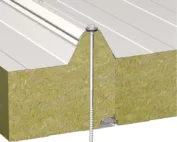
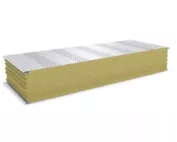
For a mineral wool panel, it is worth knowing both the weight per square metre and the weight of the entire piece. These figures serve different decisions. The first helps assess the load on the structure, the second helps prepare transport and installation. A long panel may require special equipment even when the calculated weight seems small compared with the whole pack. The weight consists of the mineral wool, the steel facings and the other components of the product. A change in core density or sheet thickness changes the result. Profiling and edge construction also matter. Therefore, two panels of the same nominal thickness do not necessarily weigh the same.
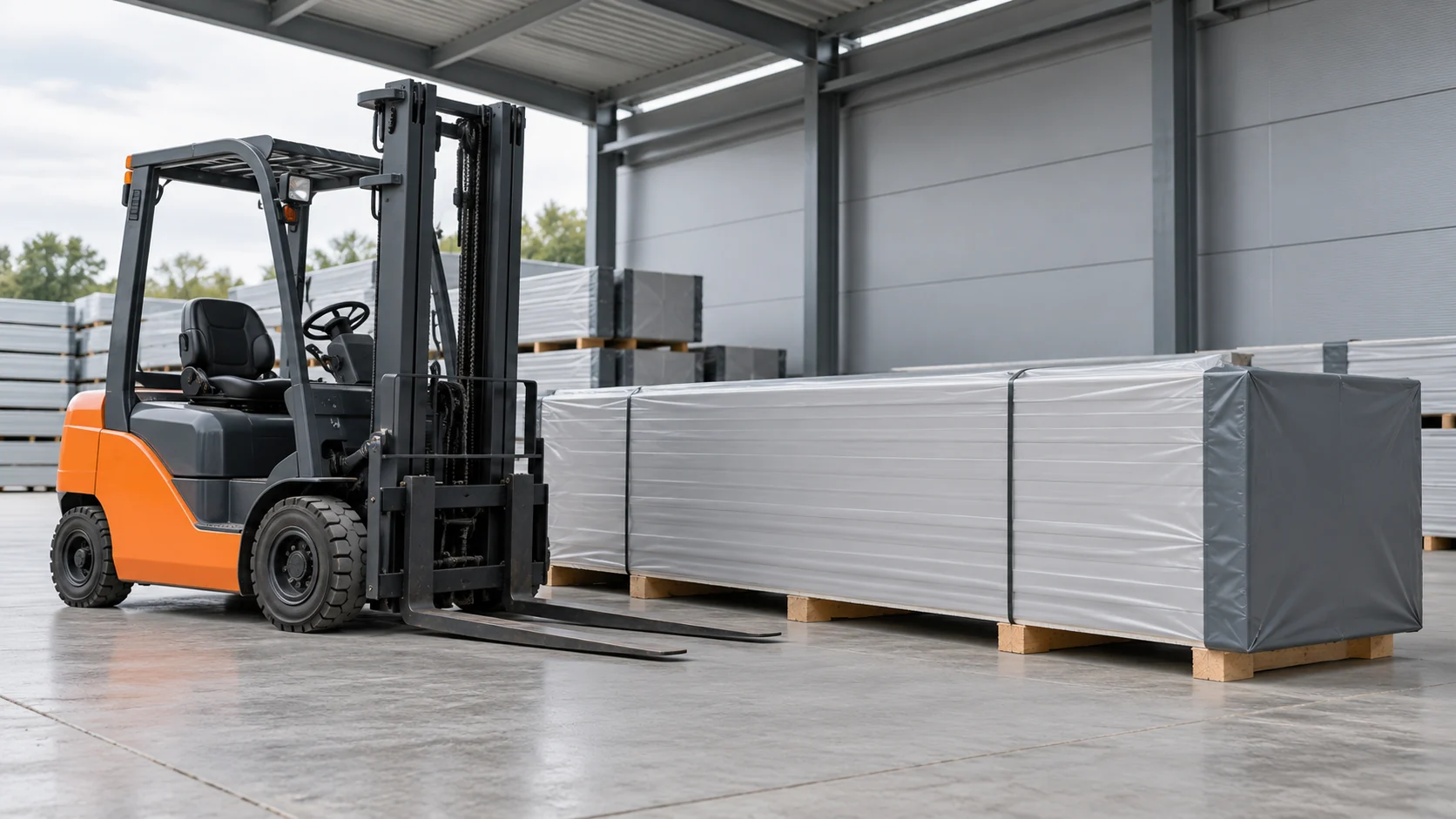
Weight depends on more than core thickness
For an example wall configuration with 100 kg/m³ mineral wool and 0.5/0.5 mm facings, the stated average weight is 18.1 kg/m² at 100 mm and 23.1 kg/m² at 150 mm. These are values for a specific variant including product tolerances. They are not a general table of all panels with mineral wool.
Convert square metres to actual pieces
Assume a panel 3.8 m long with a cover width module of 1.0 m. Its area is 3.8 m². If the specific data sheet states 23.1 kg/m², the approximate weight per piece is 3.8 × 23.1 = 87.78 kg. Planning uses the data of the supplied configuration and takes into account the handling recommendations.
This calculation does not include packaging or lifting equipment. It also does not determine whether the element can be carried by hand. A long panel has a large surface exposed to wind and requires deflection checks during handling. The appropriate method is specified by the instructions and the conditions of the specific installation.
The pack needs its own unloading plan
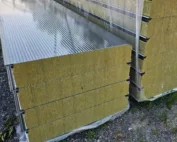
The device’s load capacity is checked for the actual centre of gravity position and the equipment used. The highest number on the machine’s rating plate is not sufficient. A long bundle requires proper support that will not crush the edges or deform the elements. The lifting method should correspond to the delivery instructions.
On a small site, access can be the limiting factor. The parking position, the ground and the possibility of turning the bundle must be checked. Panels should not wait in a random place from which they cannot be safely collected. Agreeing this in advance saves unplanned rehandling of material.
When several bundles are delivered, establish the order in which they are to be unloaded and set down. The material needed first should not end up underneath other elements. Such organisation reduces the number of additional lifts. The storage location should allow protection from water and inspection of the packaging without stepping on the panels or moving weight across their surface.
The structure takes the weight through the connections
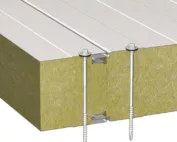
The weight of the cladding is transferred to the supports through the designated fixings and details. The method of supporting the lower part of the wall matters in the adopted system. It should not be assumed that any starter strip will support every arrangement. The design must account for loads and actual geometry.
In a warehouse being renovated, replacing lightweight cladding with mineral wool core panels may increase the load on existing purlins. Their connections to the columns also require assessment. The fact that the old frame has stood for years does not confirm reserve capacity for the new material. The check should cover the entire load path to the foundations.

Installing a single panel is a separate task
The gripper must be suitable for the type of surface and the panel construction. Not every vacuum lifter is intended for every profile. The number of gripping points, their position and the condition of the facings are important. Holes for lifting must not be improvised without a confirmed solution.
In a small workshop, work often takes place close to a neighbour’s wall or fence. Then a manoeuvre that is simple on an empty site becomes difficult. The sequence for placing the panels and the access for equipment must be established together with the installer. Weight is an important parameter, but it does not describe all spatial constraints.
Don’t slim down the order without comparing again
The lighter variant may facilitate logistics, but its other properties must be checked. A change of core or facings may affect load-bearing capacity, fire resistance and thermal parameters. It is not enough to ensure that the product looks the same. The comparison should relate to specific data sheets and project requirements.
In the order, record the approximate weight and the configuration from which it results. The weight of the entire load is also needed in the transport documentation. Agree who provides unloading and the appropriate storage location. This ensures that the decision on the mineral wool core panel covers the entire process, from delivery to the safe placement of the last unit.
Short answers
Can I calculate the exact panel weight from the mineral wool density?
No. You can estimate the core alone, but the steel facings, adhesives and product geometry remain. The weight specified for the specific configuration is needed to prepare the works.
Do shorter panels always make installation easier?
They can make handling easier, but increase the number of connections and supports. Logistics must be compared with the cost of additional details and their impact on airtightness and the appearance of the wall.
7 branches. Materials closer to your project.