

Building basics
Sandwich-panel.pl explains the basics of choosing sandwich panels, PIR insulation boards and metal roofing. Learn how the core differs from the facings, what the thickness describes and how the sheet dimensions relate to the effective cover area. The guides are intended for people planning a garage, industrial building, workshop or farm building. They explain which details to collect before ordering, how to identify accessories and what to inspect when the goods arrive. Use the articles to compare materials and prepare the questions that need to be resolved for your project.

What is tile-effect metal roofing made of and what protects its steel core?
Tile-effect metal roofing is thin steel sheet formed to create a repeating tile pattern. However, its strength and durability do not come from the pattern alone. The steel core, surface protection and the way the roof is installed are what matter. It is worth separating these elements, because a colour description and a long warranty do not replace technical data. The basis is steel of a specified thickness and properties. Pressings give the thin sheet its shape and influence how it performs. Popular products often have a 0.5 mm core, but other variants also exist. The order must state the specific thickness, not just the term “strong sheet”.
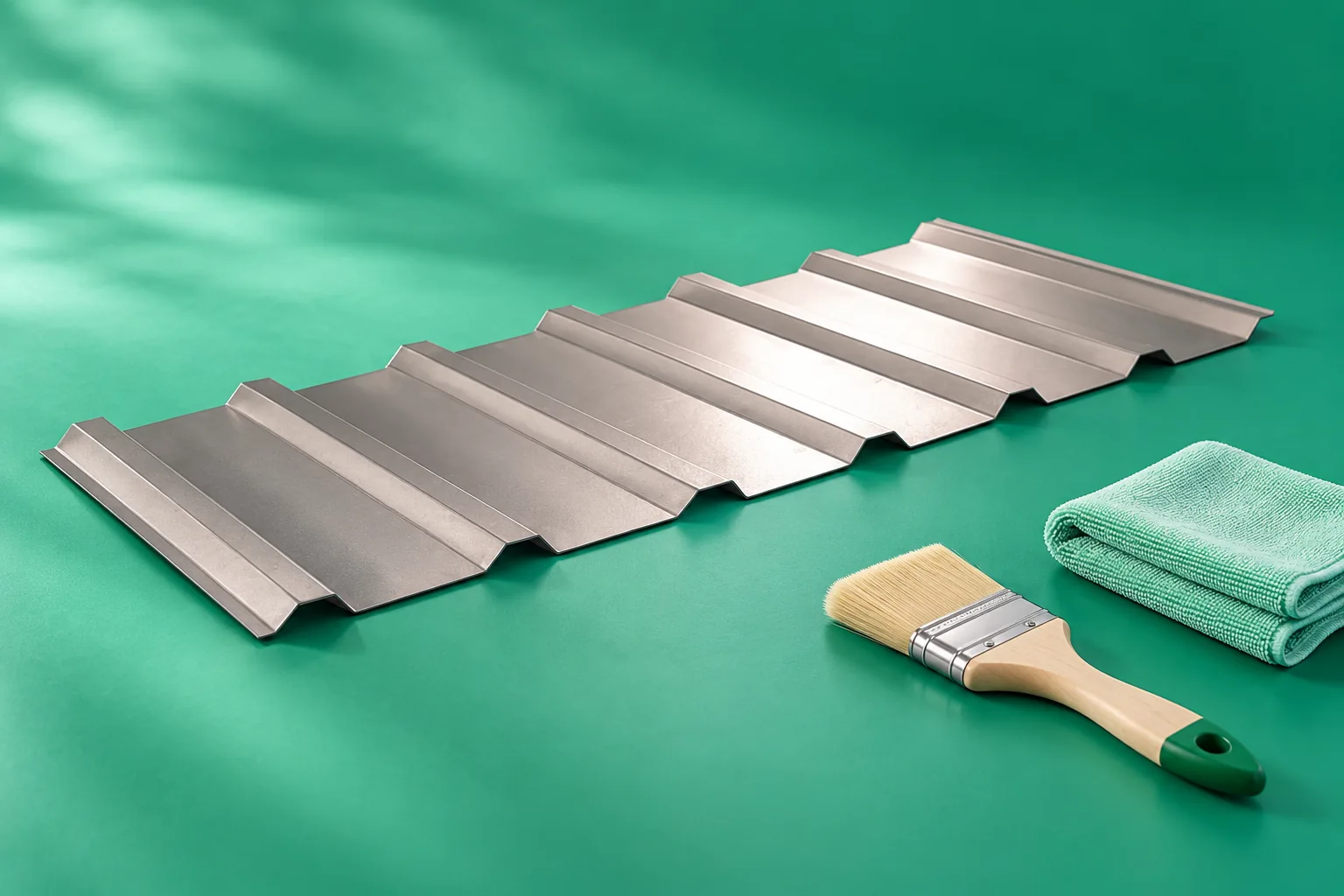
Before repainting a metal roof: checking the coating, corrosion and surface condition
Before painting a metal roof, check whether the substrate will still do its job once prepared. Inspect the sheets, flashings and fixings, and look underneath the covering where you can reach. Perforation, deep corrosion or permanent deformation may mean an element needs replacing, since a new coating will not restore sheet thickness or correct a faulty lap. Identify the existing coating, assess corrosion and clean the surface. Fresh colour will not mend a leak or lost steel, so remove the causes of damage first and choose a compatible paint system. Weather and adhesion to the old surface affect how long the work lasts.
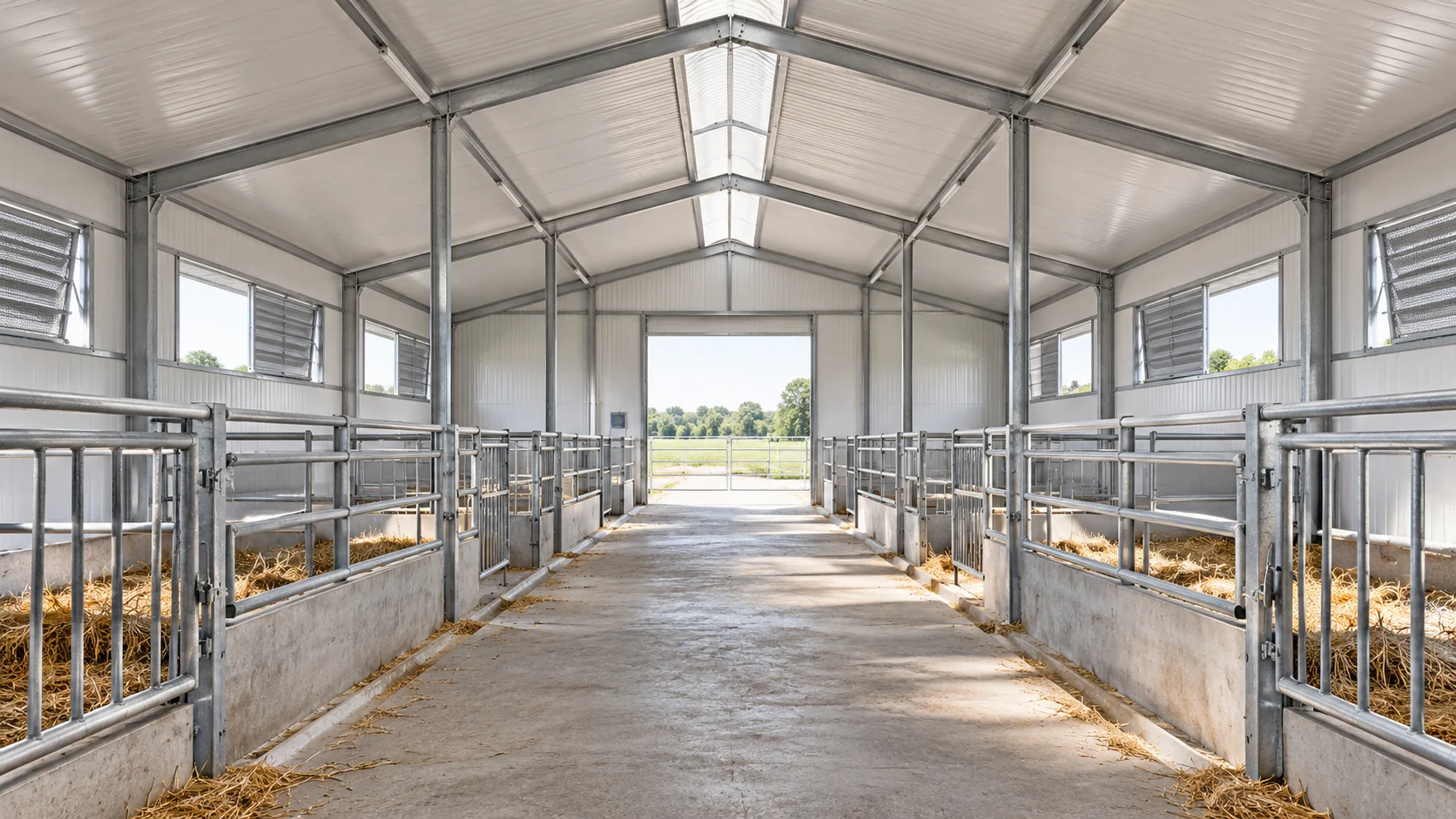
How to choose an insulated panel for a cattle shed, poultry house or piggery?
In an animal building, the panel performs differently than in a dry warehouse. It must work together with the ventilation, withstand moisture and suit the cleaning method. The requirements of a cattle shed, poultry house and piggery also differ. It is worth starting the selection with a description of daily use, and only then comparing the core, thickness and price of the individual variants. Selection requires information on temperature, humidity, type of livestock farming and ventilation operation. The frequency of cleaning, the agents used and areas of prolonged dampness are important. Two buildings called a cattle shed may have completely different conditions at the wall and roof surfaces.
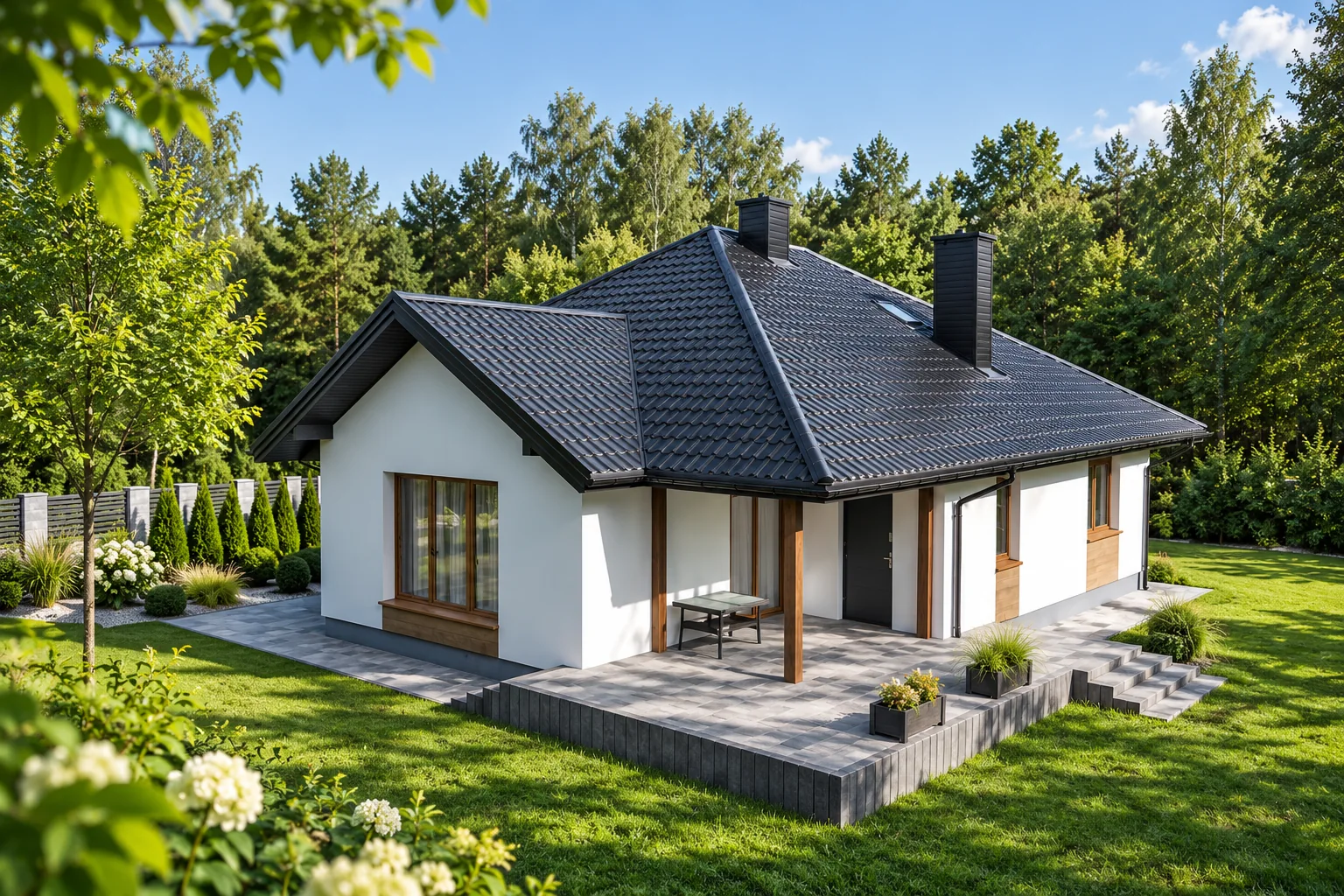
Moss on tile-effect metal roofing: choosing a cleaning method that protects the finish
Begin by establishing why the surface stays damp for long periods, rather than reaching straight for the strongest preparation. Check whether organic material accumulates in shaded areas and whether water drains freely around the flashings. Match the method to the type of coating, since sharp scraping and strong chemicals can damage the protective layer. Before cleaning the whole slope, carry out a gentle trial on a less visible section and assess the result once dry. Remember the gutters and outlets too, so that loosened debris does not block the drainage.
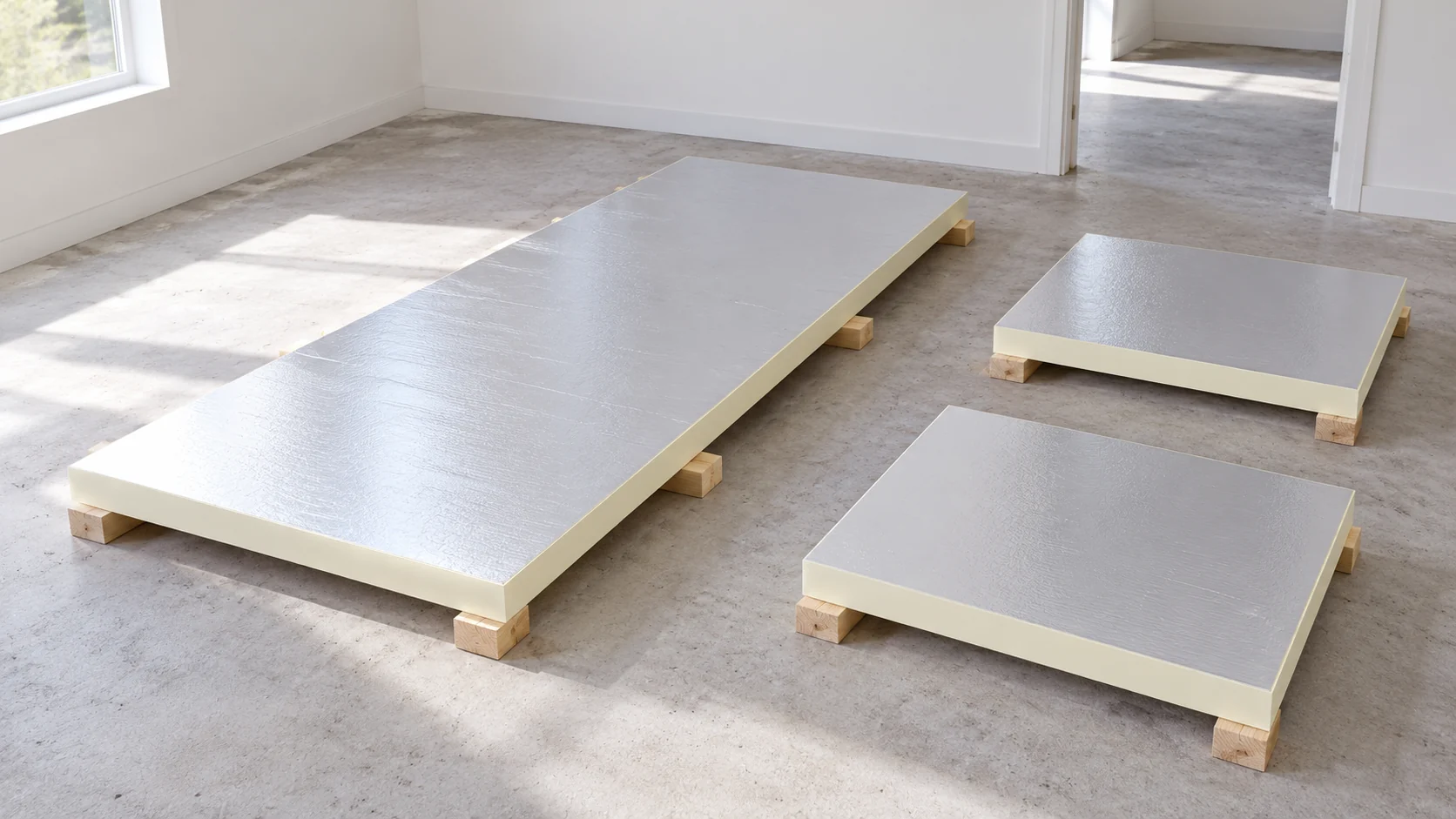
Which PIR board format will make your renovation easier: 120 × 60 or 120 × 240 cm?
A large board means fewer joints, but in a small flat it can be difficult to bring in and position. A smaller format is easier to fit into recesses, although it creates more joints. When choosing PIR, check more than just the dimensions stated in centimetres. The edge type, the actual coverage area and the way the board is finished also matter. A board with nominal dimensions of 120 × 60 cm has 0.72 m², while 120 × 240 cm has 2.88 m². The large element therefore has four times the nominal area. This does not mean installation is four times faster: it must be carried, fitted and supported in line with the chosen solution.
Why a price per square metre tells only part of the cost of a metal tile roof
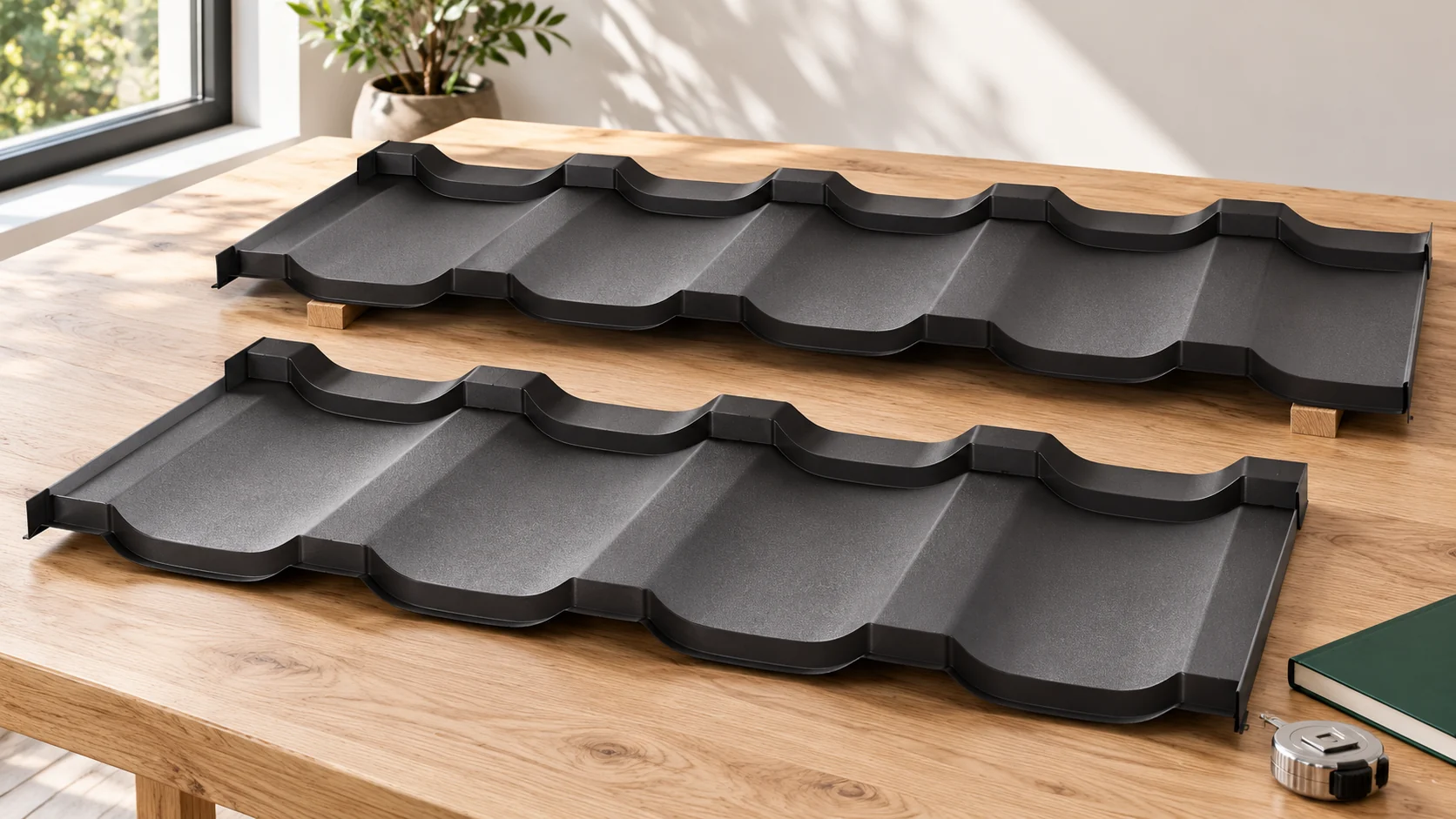
Two tile-effect metal roofing products can have a similar headline price in the quote, yet a different cost for covering the same roof slope. The reason may be the unit of sale, the number of modules required or the scope of extras. It is therefore worth starting by converting the price to usable surface area. Then check what is actually included in the stated amount. The price may relate to a full sheet metre or an effective covering metre. Part of the sheet is concealed in the laps. It does not create new roof surface, although it is still part of the material purchased. A lower rate per full metre is therefore not necessarily more favourable.