PIR insulation
EPS, XPS or PIR: how to match insulation to the location in the building?
Key points in brief
No single insulation material is best for every part of a building. On the façade, compatibility with the system and the finish matter; at ground level, contact with water; and in the floor, loads. EPS, XPS and PIR must be compared as specific products for a specific location. The name of the plastic alone or a favourable lambda does not complete the selection. Insulation under the floor of a workshop performs differently from that in the wall of a room. In the first case, pressures from the floor slab and equipment matter; in the second, continuity of insulation and the finish. The plinth and inverted roof also bring contact with water.
First assign the task to the given layer
Therefore start with the cross-section and a list of loads. Note whether the material will be dry, sheltered from the weather and compressed continuously or periodically. Only then can the variants be compared. Choosing a single board for the whole house may simplify purchasing, but it does not have to match the actual conditions.
EPS covers many grades for use
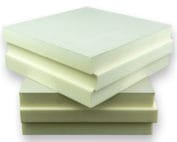
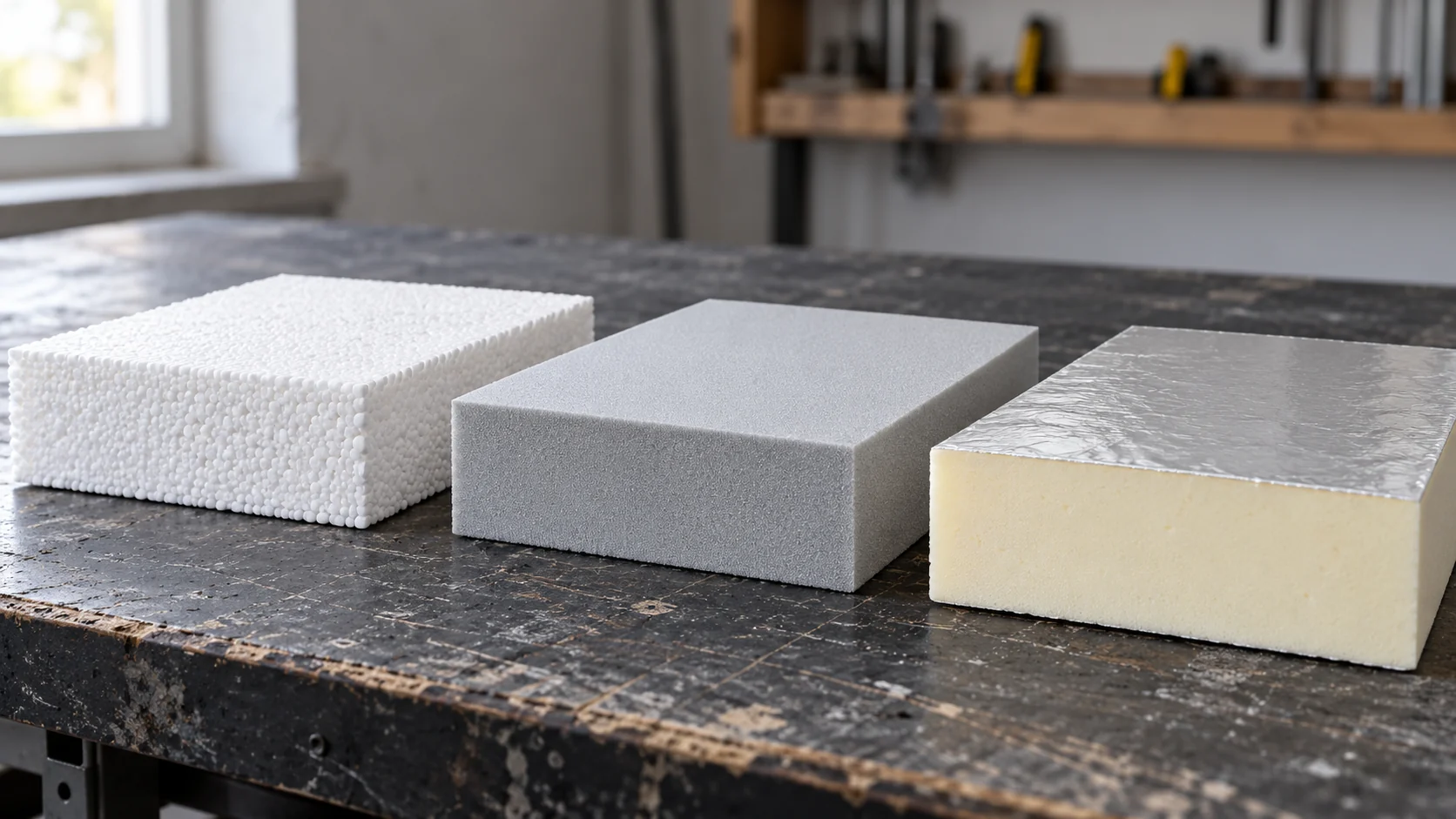
EPS polystyrene has a structure of bonded expanded granules. Products differ in thermal conductivity and mechanical properties, among other things. A façade variant should not automatically be used under a heavily loaded floor simply because it has the right thickness.
In the façade it is selected as part of a compatible system. In the floor, parameters specific to the anticipated load are required. The colour of the board may indicate the technology, but it does not replace the product declaration. Compatibility with adhesives and materials in contact with the insulation is also important.
Consider XPS where water and pressure matter
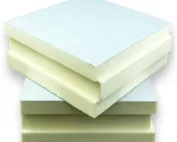
Extruded polystyrene XPS has a different structure from EPS. Certain variants are intended for perimeter insulation and inverted roofs, among other applications. In these applications, water absorption, conditions of contact with water and behaviour under load are important.
This does not mean that XPS replaces waterproofing. The water-retaining layer is designed separately. A smooth surface and a surface prepared for bonding may also have a different application. Before replacing a board, check not only its hardness but also its compatibility with the entire system.
PIR helps to reduce thickness but requires the right facing
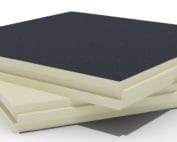
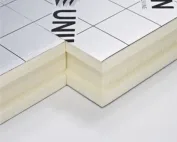
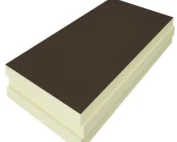
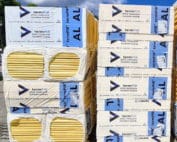
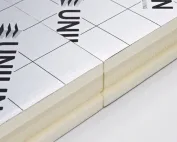
PIR has a rigid foam core with a fine cell structure. Depending on the variant, it is covered with foil, fleece or combined with a finishing layer. These surfaces serve different purposes. A board for plaster and a board for a roof membrane are not the same product in a different colour.
A low lambda can be valuable where floor height is limited or the reveal is narrow. However, the full assembly must be calculated. The centimetres saved do not exempt you from checking moisture, fixing and fire requirements. Insulation in foil is not itself a finished roof covering or a usable wall.

Compare parameters that have the same meaning
Lambda describes heat conduction, while R-value also takes thickness into account. The U-value relates to a building component or a declared panel in a specific assembly. You should not compare the U-value of one wall with the lambda of another material and choose thicknesses on that basis.
Compression ratings must be read in a similar way. The value at 10% deformation is a test result, not a permissible long-term pressure under a cupboard or machine. Selecting a floor requires the appropriate properties and the way loads are distributed by the layers above the insulation.
Selection for a small workshop will reveal different needs
Imagine converting a building for garden equipment repair. There is water at the entrance, a heavy table stands on the floor, and there is little space on the wall under the reveal. Each of these locations may lead to a different product choice, even though the overall aim is simply to ‘insulate the workshop’.
You do not have to use three materials by force. However, it is worth checking the requirements separately. A correct connection between floor insulation, plinth and wall may matter more than a small difference in lambda in the middle of one layer. Details determine actual comfort.
Assess fire and cost for the whole solution
EPS, XPS and PIR should not be described as non-combustible solely on the basis of additives in the formulation. The classification of a single board may differ from the classification of a covered system. Requirements depend on the building element and how it is constructed.
A comparison price should include the required thickness, finish, fixings and waste. If one material requires a different detail or an additional layer, include this in the budget. The cheapest board per square metre does not necessarily create the cheapest finished building component with the required properties.
Short answers
Is XPS simply harder EPS polystyrene?
This is a different type of polystyrene product, manufactured in a different process. Individual variants have their own properties and applications. It should not be selected solely by assessing hardness by hand.
Is PIR always the best choice wherever space is limited?
It may be thermally advantageous, but its intended use, facing, moisture and loads must be checked. A small available thickness does not remove the other requirements for the layer.
7 branches. Materials closer to your project.