Roofs and metal sheets
How much does a metre of trapezoidal steel sheet cost and what must a fair price comparison include?
Key points in brief
The price per metre of trapezoidal steel sheet only makes sense once it is clear which metre is being billed. A price list may refer to the total area, the covered area or the length of the sheet. The profile, thickness and coating must also be known. Two seemingly similar quotes may relate to a different material and a different scope of delivery. The profile designation, the thickness of the steel substrate and the type of surface protection are needed. The roof or façade variant is important. Only such a description identifies the material being compared. The wording ‘graphite trapezoidal sheet’ alone does not explain its properties.
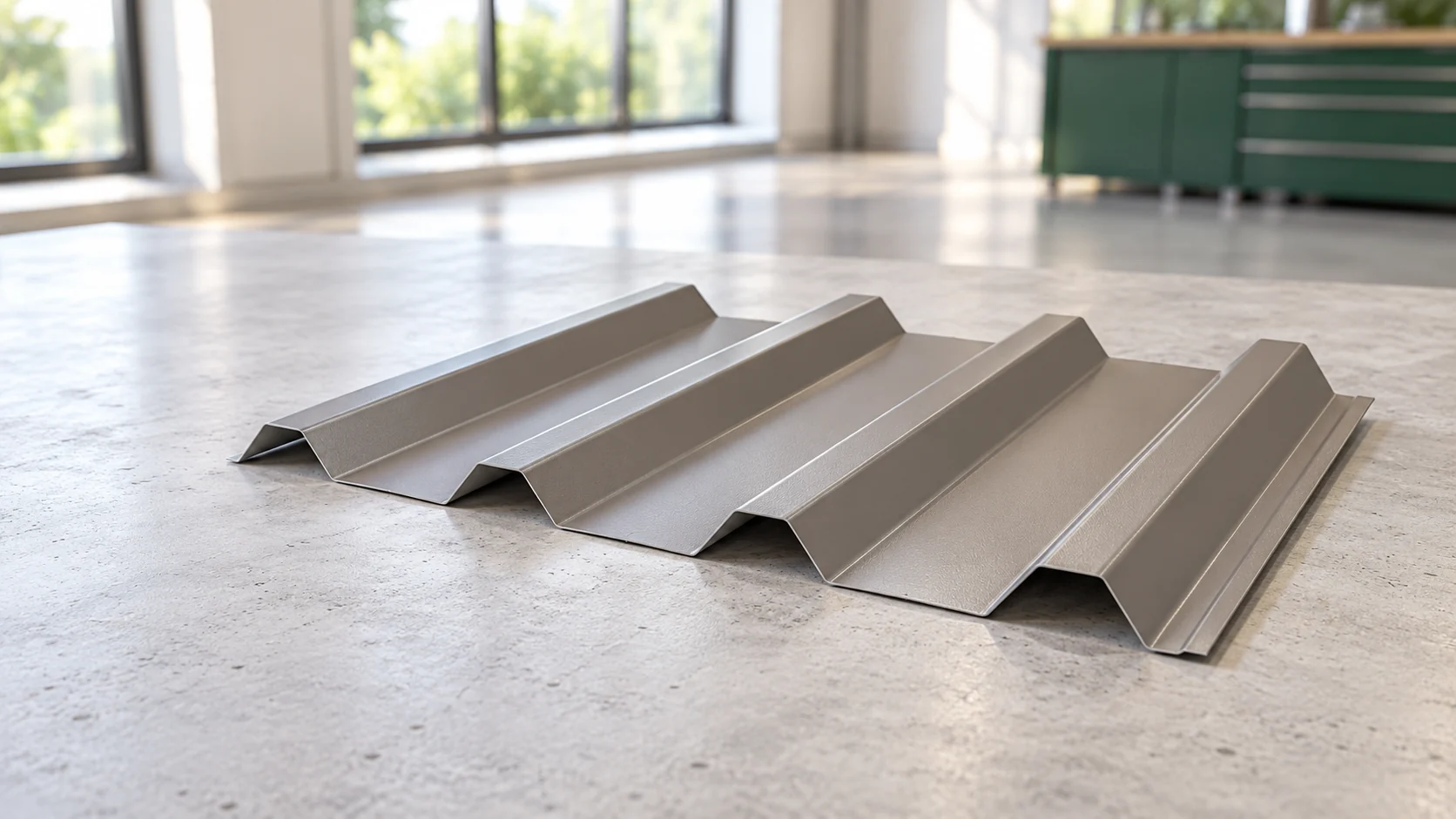
What information should appear alongside the price?
Also check the quality grade, the sheet lengths and any minimum batch. The price of a short offcut available from stock may differ from material made to measure. This does not have to mean a promotion on the entire range. The terms should apply to exactly your order.
How does a total metre differ from an effective metre?
The overall width covers the entire sheet. The effective width describes the strip it covers once the specified side lap is made. For a single trapezoidal profile with a height of 35 mm, these values may be 1.082 and 1.035 m respectively. They are not common to all T35 profiles.
A sheet of 3 m length then has 3.246 m² of overall area and 3.105 m² of effective area. Both values are useful. You just have to multiply the price by the correct figure. Mixing the bases understates or overstates the cost without any change to the physical material.
How do you convert the rate from a simple example?
For illustration, assume €10.88 before VAT per square metre of overall sheet area. One sheet measures 3.246 m² on that basis: 3.246 × €10.88 rounds to €35.32. Spread over its 3.105 m² effective cover, this is about €11.38 before VAT per square metre covered.
This is not the price of a current offer. The example shows the method of conversion. For a larger batch, it is worth calculating with full data and only then rounding the total. Rounding each item may give a slight difference compared with the calculation for the entire order.
Why do thickness and coating change the cost?
Thicker steel means a different amount of metal and weight of the product. The coating system is responsible for protection under specific conditions and for the surface appearance. Two sheets in the same colour can have a different protective build-up. That is why the comparison should not be reduced to a shade number.
When selecting, the environment on both sides of the sheet matters. A roof over a damp back room requires an assessment of the internal conditions. The surcharge value alone does not say whether a given variant will be suitable. First define the requirements, then look for the most favourable offer that meets that scope.

Does the price include the underlay felt and accessories?
Anti-condensation fleece can be a separate line item. The same applies to flashings, screws and penetration elements. Establish how each surcharge is calculated. The cost of a sheet with fleece is not comparable with the price of the coated steel alone if the difference in equipment has been omitted.
However, do not choose additives solely to standardise the bill. Fleece makes sense under suitable conditions and requires the ability to dry out. It does not replace insulation. The scope of accessories should result from the roof and the design, not from the desire to achieve a specific price in the table.
How does transport affect a small order?
The delivery cost usually does not decrease proportionally with each metre of material. With a small number of sheets, it can account for a large share of the total. Therefore, compare the final amount including delivery and establish what unloading covers. Delivering the vehicle to the building alone does not always close this stage.
On a hypothetical order for 24 m², a delivery charge of €83.32 before VAT adds about €3.47 to each square metre bought. This is not a freight quote. It illustrates why the material rate alone says little about the cost of a small repair or of cladding a recess.
How do you prepare a comparison of two quotes?
Record the profile, thickness, coating, colour, length and number of sheets in one line. Next to it, give the price unit and the total amount. In the following items, include the additives and services. Make sure all values are on the same net or gross basis.
Finally, check the deadline and the scope of the available batch. A price list describes the conditions of a specific document, and an order requires confirmation. Do not assume that an archived rate applies unchanged. The most useful is a complete quote for a defined cutting plan and material parameters.
Also check the rules for rounding the lengths of ordered sections. The list should reflect the actual quantity of material intended for settlement. With many short elements, even small differences between the intention and the order can affect the total.
Short answers
Does a lower total price per square metre mean cheaper steel sheet?
Not necessarily. Convert both offers to the same scope and the same unit. Only then compare the totals.
Can a roof be priced from its area alone?
An initial budget can be prepared. The exact amount requires a cutting plan, material selection and a schedule of flashings, fixings and services.
7 branches. Materials closer to your project.