Roofs and insulation
PIR or polystyrene in a roof panel: how to compare ready-made variants?
Key points in brief
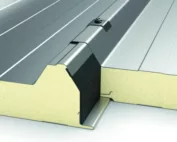
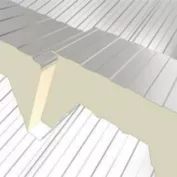
Two panels of the same thickness can restrict heat loss differently. Variants with a similar U-value may differ in height and mass. It therefore makes sense to base the choice between PIR and polystyrene on ready-made roof panels with specified facings. Comparing pieces of insulation alone is not enough to choose the covering over a workshop or warehouse. This comparison concerns panels with a core between two steel facings. They should not be confused with loose PIR or EPS boards laid under a membrane. A finished panel performs a different function and has specified joints, profiling and support rules.
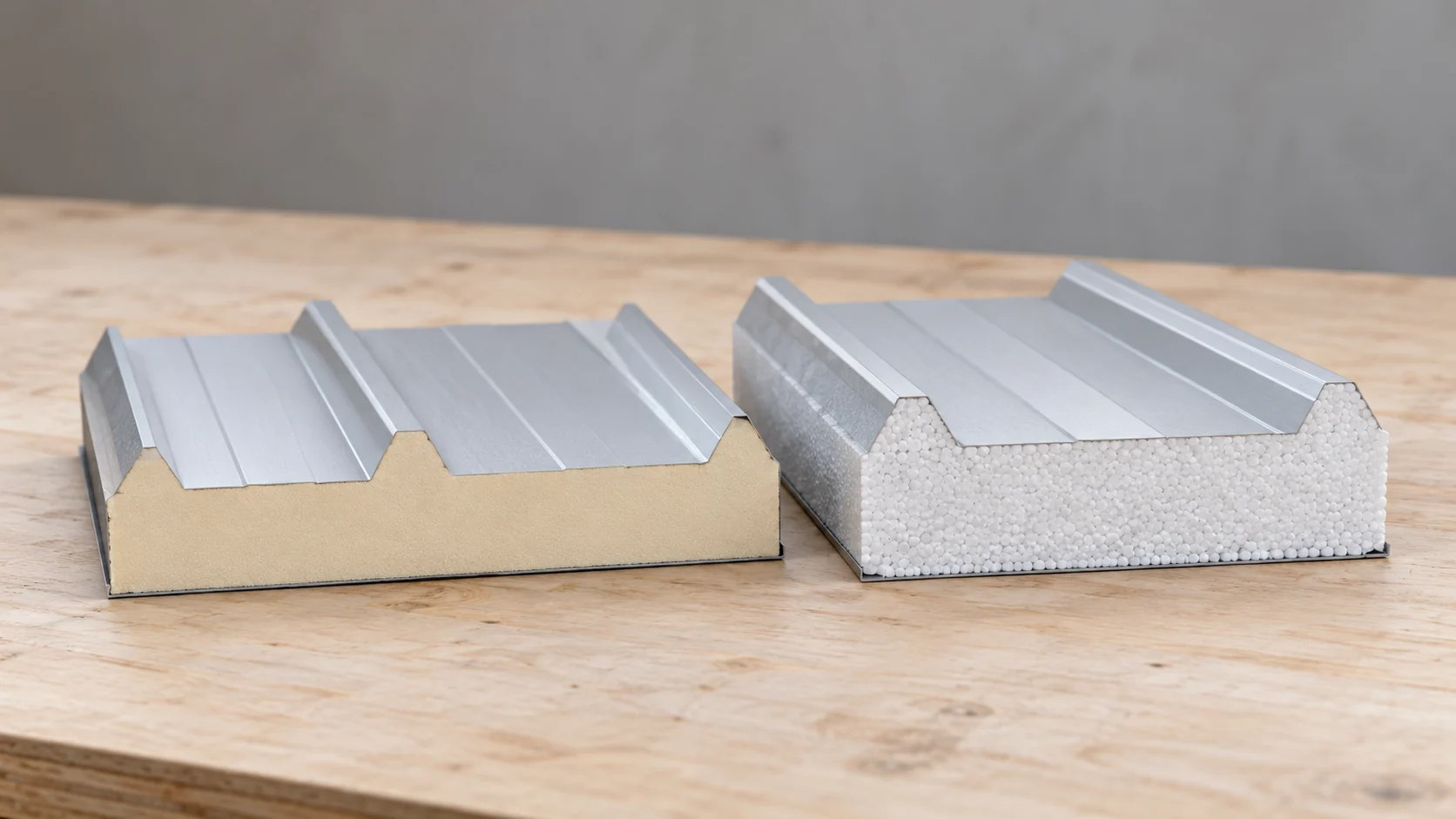
Compare roof panel with roof panel
For both variants, the same building use, loads, geometry and expected internal conditions must be established. Only then does the comparison concern solutions capable of meeting a common brief. The core name is important information, but it does not describe the whole panel or the quality of the roof construction.
With a similar U-value, thicknesses can differ markedly
In selected roof panel families, the 80 mm PIR variant has a U-value of around 0.26 W/(m²K), and the 150 mm EPS variant around 0.25 W/(m²K). This is a comparison of specific products with similar thermal performance, not a universal conversion factor for all products on the market.
The difference in thickness may matter above a gate or at a junction with an old wall. On its own, however, it does not prove which roof will be better across the whole project. Permissible span, fixings and fire requirements need separate verification for both configurations under consideration.
Mass does not depend solely on core thickness
For these example variants with 0.5/0.5 mm sheets, the mass of the 80 mm PIR panel is around 11.8 kg/m², and the 150 mm EPS panel around 10.6 kg/m². A thicker product therefore does not have to be heavier. The data relate to the specified facings; changing their thickness changes the result.
Self-weight is only part of the load on the structure. Snow, wind, flashings and equipment are additional. A lower panel mass does not automatically mean a greater permissible span. Such a relationship is verified in calculations for the specific support arrangement, not on the basis of comparing kilograms.
In a heated interior, assess heat together with operating time
A workshop used five days a week has a different balance from an equipment store opened occasionally. With heating, U-value, roof slope area, temperature and usage time all matter. There is no single savings figure resulting from the choice of core without knowing these conditions.
In an unheated building, condensation and the requirements of stored items must also be assessed. Insulation does not generate heat and does not remove moisture. Choosing a thinner variant only because no heater was planned may overlook a later change in the room’s function.

Check fire performance in the documentation for the complete product and assembly
The reaction to fire of a complete panel is not the same as the behaviour of the foam alone. The roof’s fire resistance and its classification under external fire exposure describe further, separate properties. One parameter must not be substituted for another, nor must all panels with a given core be assigned the same class.
The design may specify conditions that a given variant will not meet. Thickness, steel sheets, support spacing, fixings and connections covered by the classification must be checked. If a different solution is needed, comparing the price of PIR with EPS should not obscure that requirement.
Compare geometry, available lengths and installation method
Variants may differ in length range, minimum slope in a given system and lap detail. A longer element may avoid a joint on the roof slope but requires appropriate transport and lifting. Installation rules for one panel must not be transferred to another.
Also check the coating suited to the surroundings and conditions from below. With moisture, cleaning agents or aggressive air, the core alone does not determine surface durability. The choice may be decided by the available cladding and the detail that can be correctly executed in the specific building.
Price two complete roofs with a comparable brief
Include in the costs the panels, supports required by the design, fasteners, flashings and installation. Add the effects of different heights, for example a change of detail at the parapet. A cheaper metre of panel purchased does not necessarily mean a lower cost of the finished roof.
Choose the variant that meets the requirements of function and structure, with a clear scope for subsequent maintenance. If a warehouse is currently planned and later a heated workshop, both stages should be described to the designer. The selection then becomes an informed decision based on the actual usage plan.
Short answers
Will PIR always be lighter than EPS?
No. The weight of the finished panel depends on the thickness and density of the core, the steel sheets and the profile. Compare data for specific variants, preferably with similar thermal performance and identical facings.
Can an EPS panel be considered for a heated roof?
It can be one of the variants if the specific product and the complete solution meet the project requirements. The required thickness, fire properties and load-bearing capacity require independent verification.
7 branches. Materials closer to your project.