

Building basics
Sandwich-panel.pl explains the basics of choosing sandwich panels, PIR insulation boards and metal roofing. Learn how the core differs from the facings, what the thickness describes and how the sheet dimensions relate to the effective cover area. The guides are intended for people planning a garage, industrial building, workshop or farm building. They explain which details to collect before ordering, how to identify accessories and what to inspect when the goods arrive. Use the articles to compare materials and prepare the questions that need to be resolved for your project.
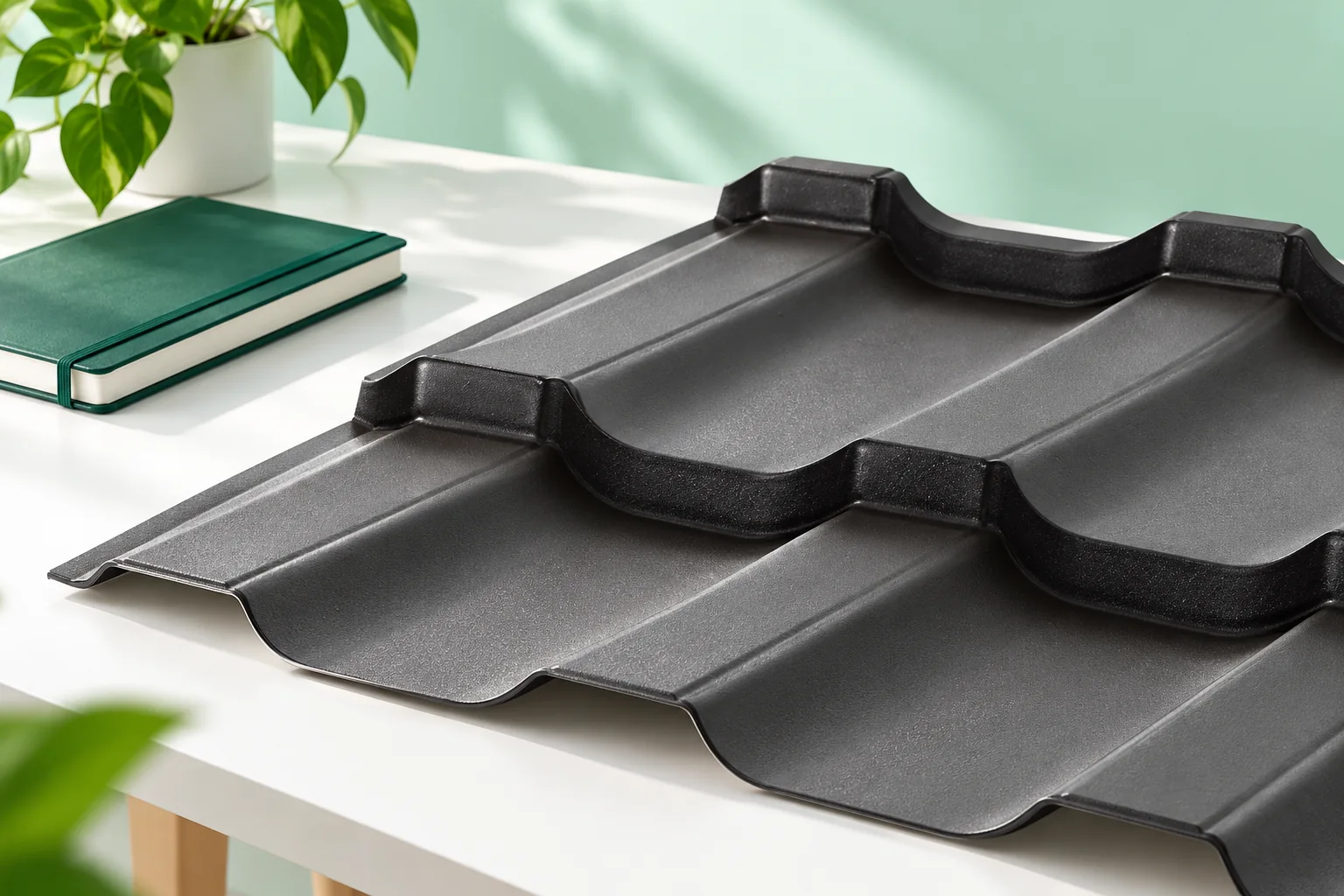
Tile-effect metal roofing or bitumen shingles: how to choose
The choice between metal roofing tiles and bituminous shingles depends primarily on whether the substrate and roof geometry meet the requirements of the specific system. Shingles require a level, stable deck of boards or panels, whereas metal tiles are usually fixed to a designed batten grid. Before deciding, check the scope of substrate, underlay and labour in the offer, not just the covering price. Also compare the cutting plan, permissible pitch and how valleys, dormers and service penetrations are detailed. Only a complete comparison will show the difference between the options.
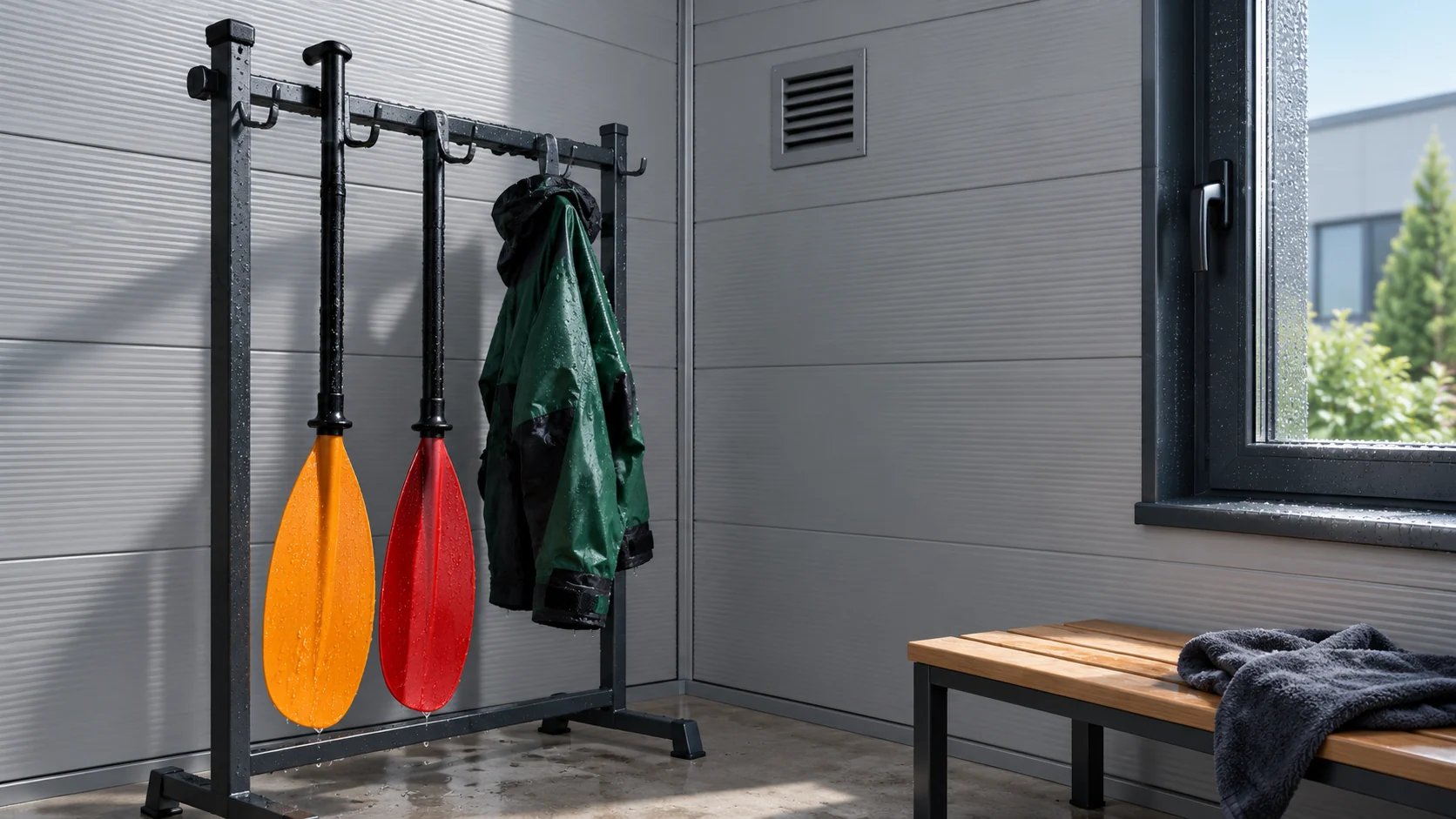
Why do droplets appear on an insulated wall panel?
Droplets on the steel sheet do not prove that every sandwich panel is defective. Most often you need to check the air humidity, the surface temperature and the tightness of the details. In an equipment drying room, a workshop or a store that is only occasionally heated, conditions change quickly. Before you add another layer of insulation, establish where the water comes from. Note whether the droplets appear after rain, after the heating is switched on or after wet items are brought in. In a kayak store, moisture can come from clothing and equipment. In a workshop, the source is often washing or a wet floor. Observing when it occurs helps to distinguish condensation from a leak.
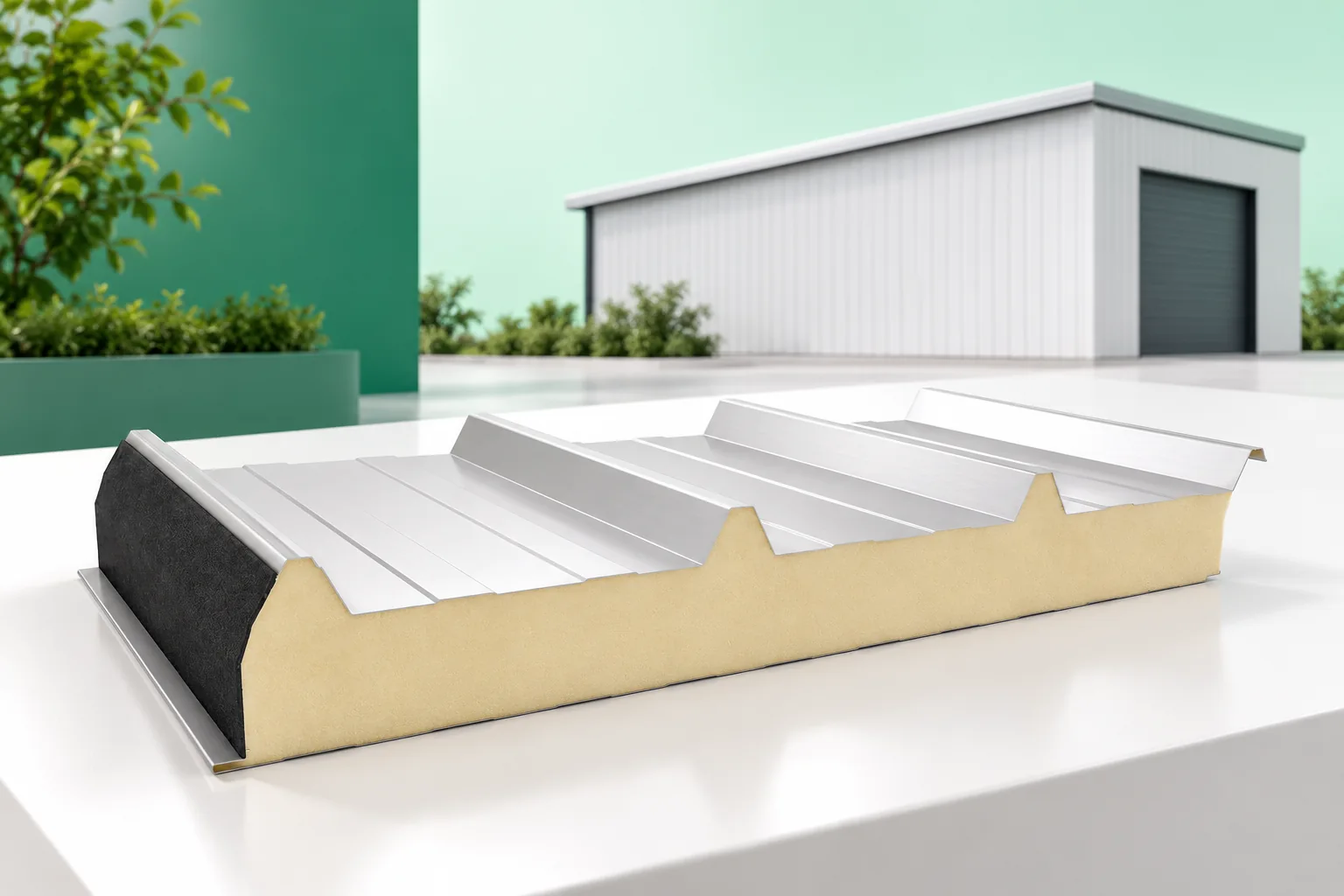
When is a mono-pitch roof a good choice?
A mono-pitch roof is worth considering when a simple building form and a single slope genuinely simplify the whole undertaking, not just the drawing. Readers should first check the permissible pitch for the specific product, the load-bearing capacity of the supports, drainage of the entire slope and the detail where it meets a higher wall. These parameters, rather than the roof shape alone, determine watertightness and cost. It is also worth establishing whether the chosen geometry falls within the requirements of the system specified in the design.
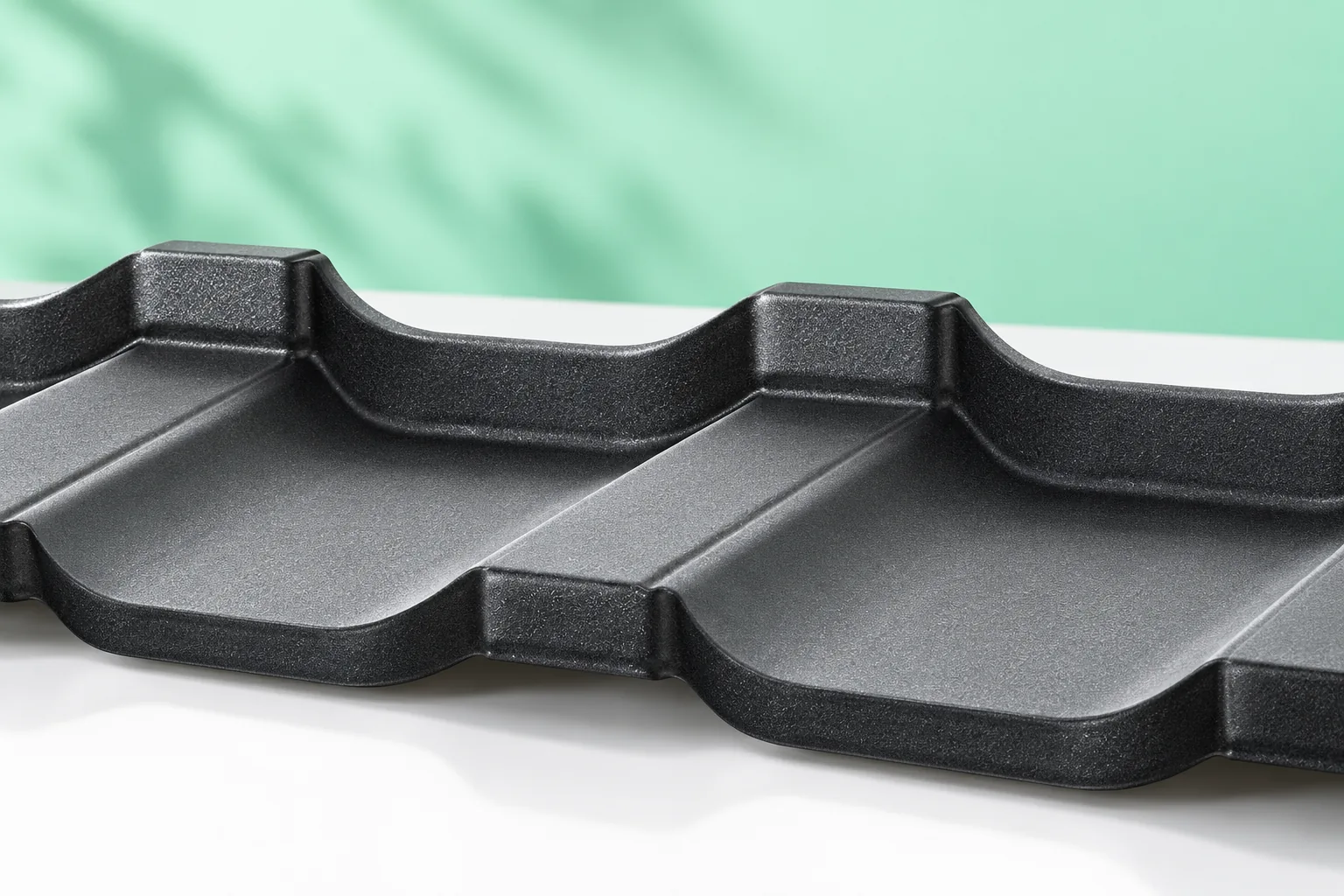
When are single-module metal roofing sheets worth considering?
A single-module metal roof tile is worth considering where the roof has dormers, valleys or tight passages and the priority is handy handling and precise fitting. Readers should check not only the price of an individual panel but the whole project: where packs will be placed, the sequence of work and how material will be passed up. The key decision variable is a roof-slope drawing with a covering grid, which shows whether narrow strips will appear at the edges and how the last row under the ridge will lay out. Only then can you judge where the small format really helps and where it brings no benefit.
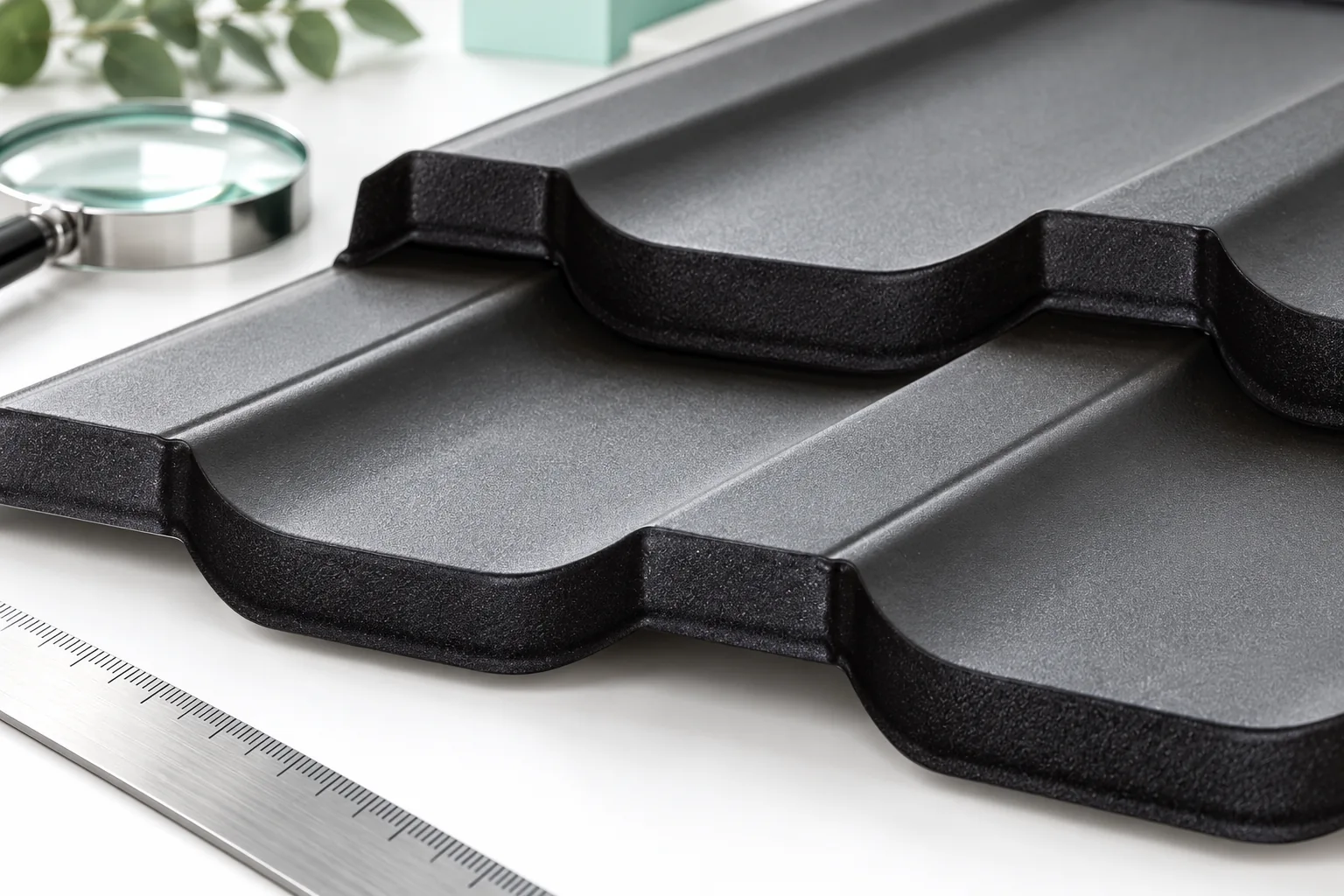
Buying tile-effect metal roofing: how to check the specification and finish
Assessing the quality of a metal roofing tile is best based on how well the specific variant matches its intended use, not on price or the number of warranty years. Check whether the documentation clearly identifies the model, thickness, type of substrate and coating, and whether it can be linked to the delivered batch. Before ordering, ask for the data sheet for the chosen product, the installation instructions and the warranty terms; with a sample, examine the wave geometry and the overlap edge. Also check the complete set of accessories and its suitability for the roof pitch, substrate and ventilation.
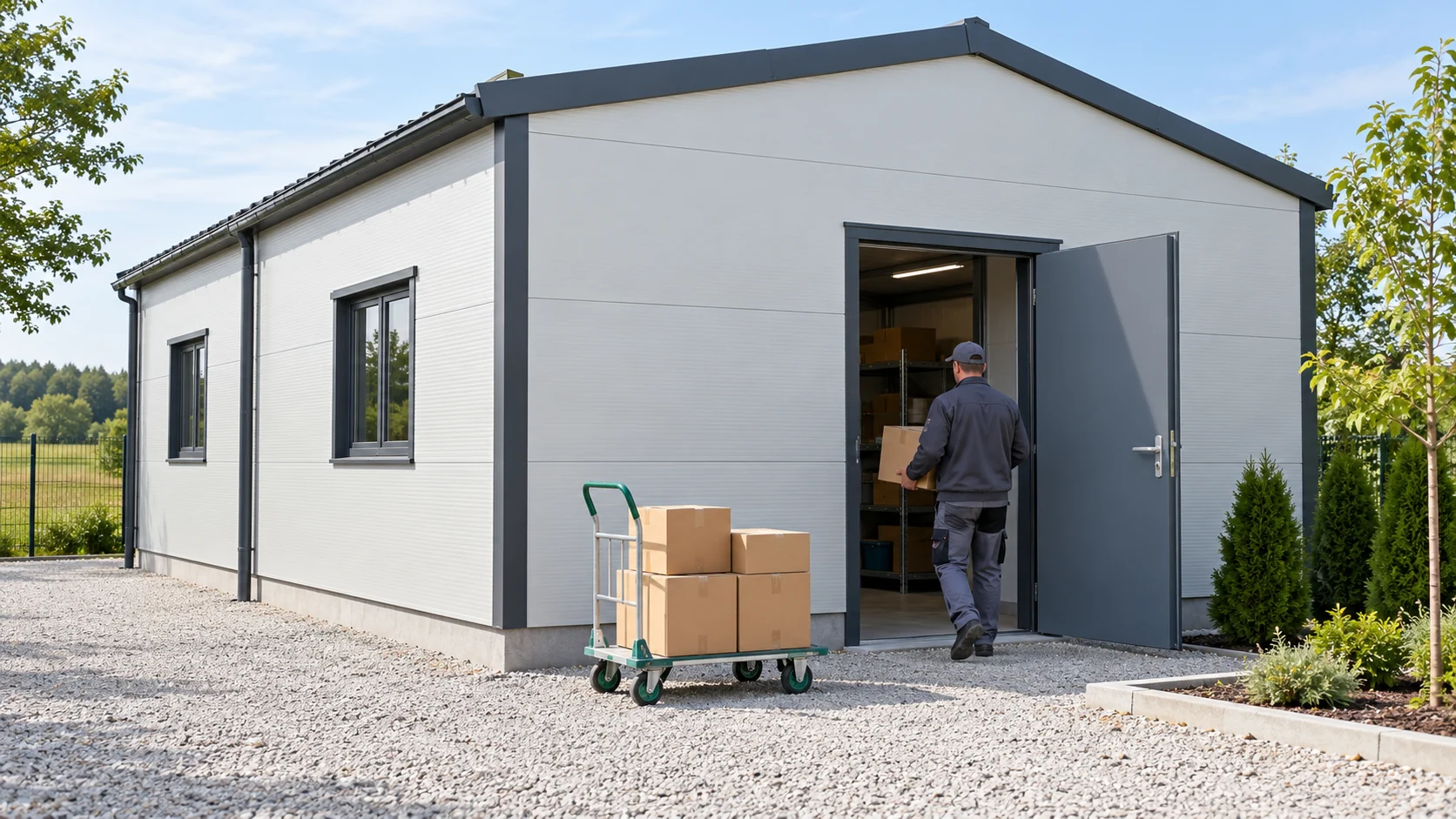
What does płyta obornicka mean and how can you compare its types and cost?
The term “płyta obornicka” can refer to various insulated sandwich panels. The name alone does not indicate whether the product is for a wall, a roof or a temperature-controlled chamber. It also does not specify the core or the price. When purchasing, it is worth moving from the colloquial name to a precise description of the application and configuration. The colloquial name is convenient in conversation but insufficiently precise in an order. The intended use, core type, thickness and facings are required. Lengths and cover width are also needed. This makes it clear which element is to be delivered to the construction site and with what documentation it should be compared.