

Building basics
Sandwich-panel.pl explains the basics of choosing sandwich panels, PIR insulation boards and metal roofing. Learn how the core differs from the facings, what the thickness describes and how the sheet dimensions relate to the effective cover area. The guides are intended for people planning a garage, industrial building, workshop or farm building. They explain which details to collect before ordering, how to identify accessories and what to inspect when the goods arrive. Use the articles to compare materials and prepare the questions that need to be resolved for your project.

When do tile-effect metal roofing sheets offer good value?
Buying a metal roofing tile is worthwhile when its format, coating and fixing method suit the particular roof, not when the sheet alone is cheap. Before deciding, check the cutting plan, which shows the actual material use, where overlaps fall and which pieces must be cut. Also compare the full delivery scope: accessories, flashings, fasteners, transport and the installer's work. For a renovation, assess the condition of the roof structure and substrate. Any saving should come from good fit rather than from omitting necessary layers or details.
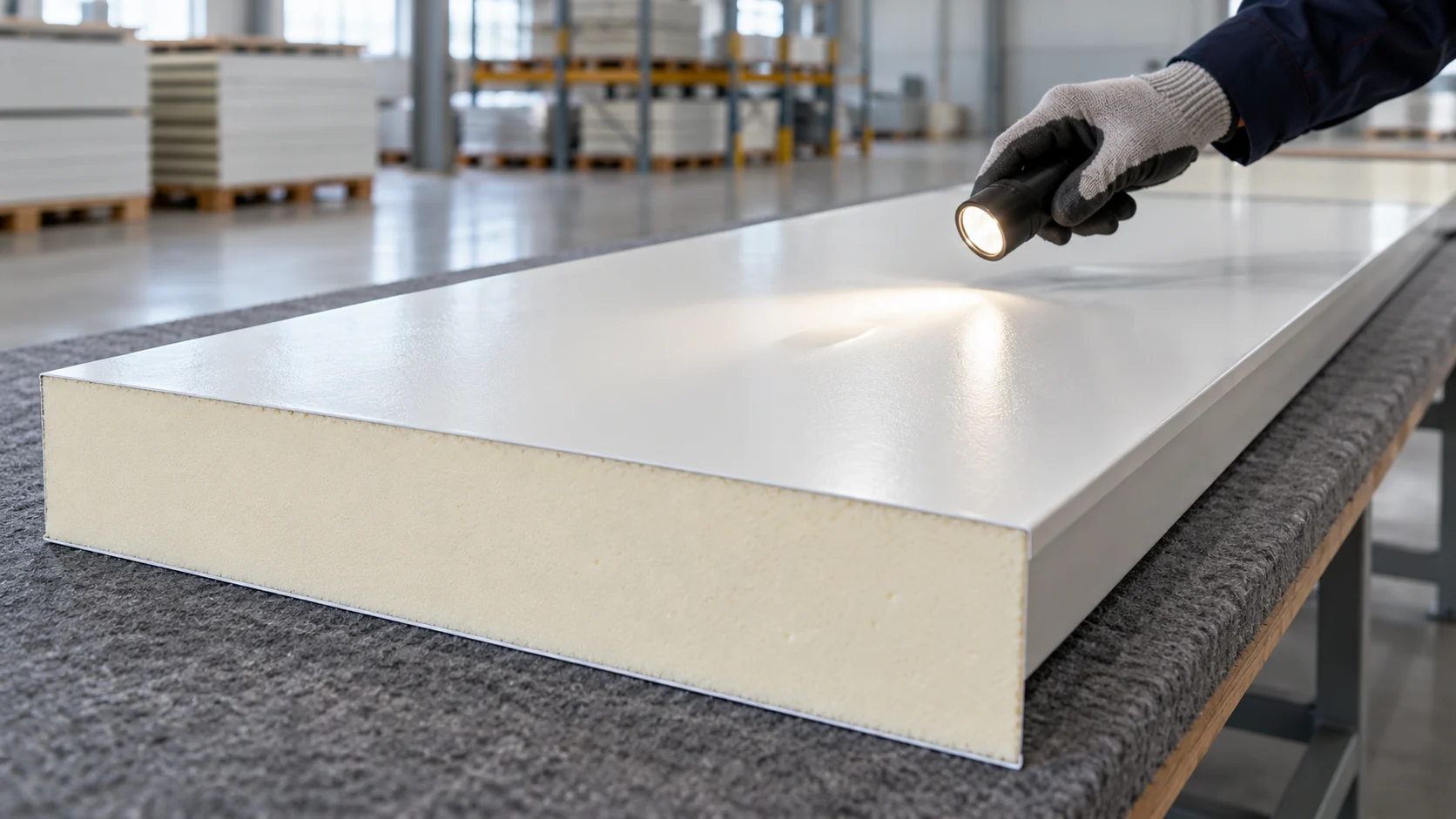
How to assess a 100 mm second-grade sandwich wall panel
A thickness of 100 mm is only one of the parameters of a wall panel. With second grade, the cause of the downgrade and its effect on the application must also be identified. An even surface visible in a photograph does not give a complete picture of the material. The assessment should proceed from the function of the room to the specific piece, taking the entire joint into account. A panel of the same nominal thickness may have a PIR core, mineral wool or EPS. The facings and the joint profile may also differ. Thermal parameters, mass and fire properties do not follow from the number of millimetres alone. Product identification and documentation specific to the offered batch are required.
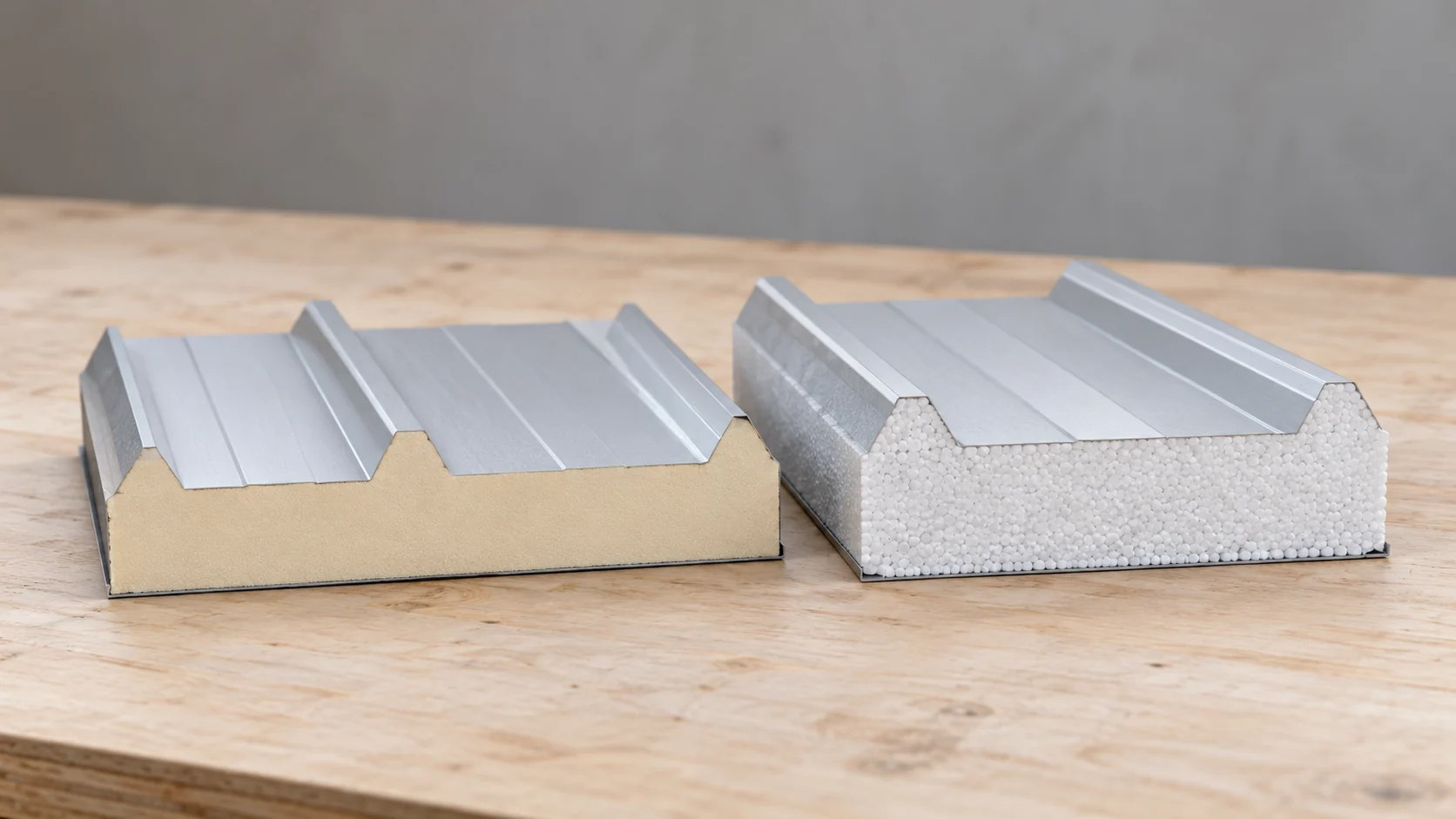
PIR or polystyrene in a roof panel: how to compare ready-made variants?
Two panels of the same thickness can restrict heat loss differently. Variants with a similar U-value may differ in height and mass. It therefore makes sense to base the choice between PIR and polystyrene on ready-made roof panels with specified facings. Comparing pieces of insulation alone is not enough to choose the covering over a workshop or warehouse. This comparison concerns panels with a core between two steel facings. They should not be confused with loose PIR or EPS boards laid under a membrane. A finished panel performs a different function and has specified joints, profiling and support rules.

Which Polish VAT rate applies to roofing materials and roof renovations?
First establish whether you are buying goods or a service. Buying metal sheets, sandwich panels or insulation on their own is a supply of goods taxed at the standard rate. The reduced rate may cover construction or renovation in a qualifying residential building, depending on the scope of work and the type and floor area of the property. A note on the invoice alone is not enough. Also check who purchases the materials, arranges transport and carries out the installation – this affects the Polish tax classification.
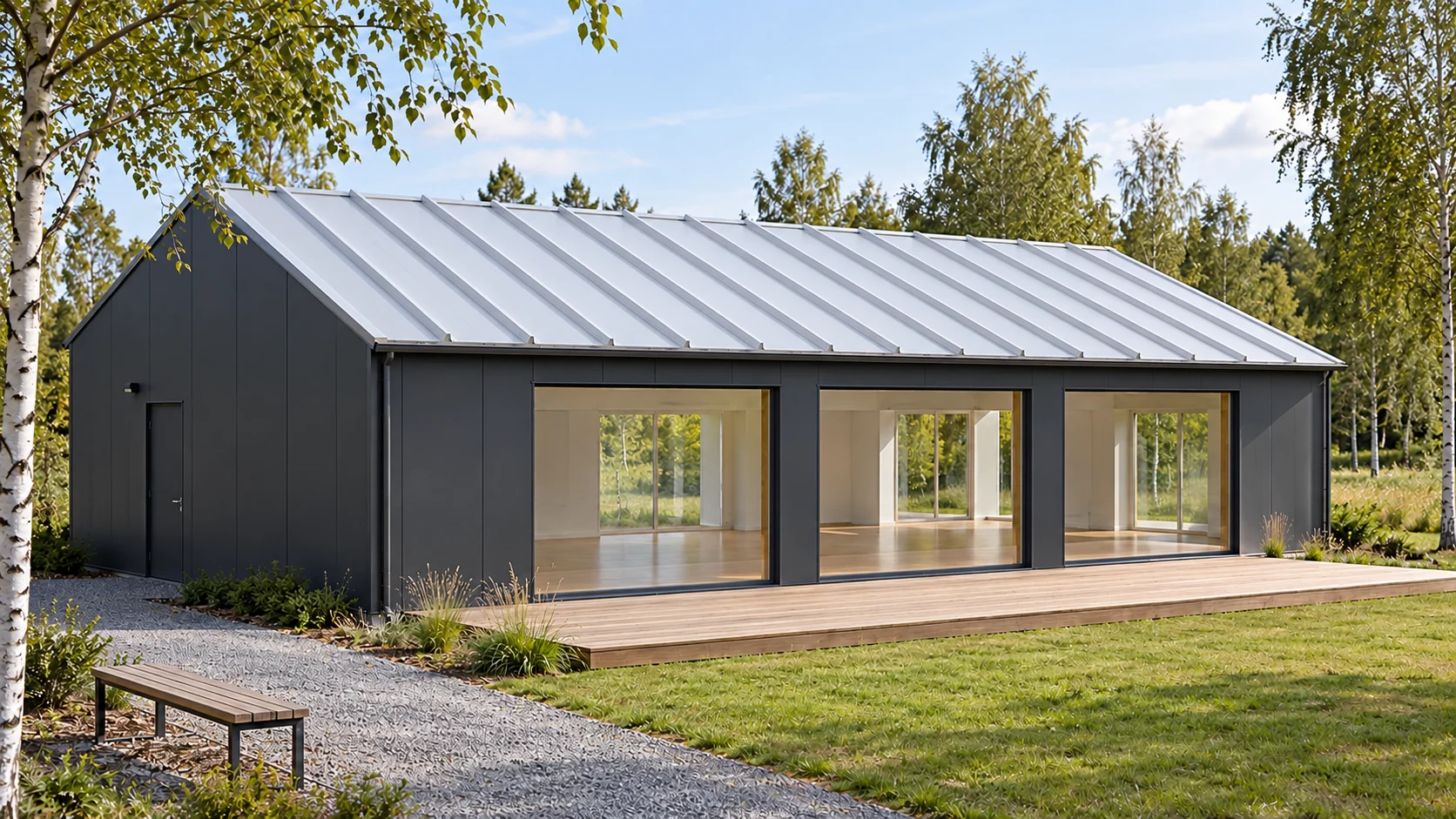
Choosing the thickness of a sandwich roof panel: where to start
Choosing the roof thickness starts with what will be happening beneath it throughout the year. A small activity room, a cool warehouse and a room used seasonally place different demands. Thickness affects thermal performance and some structural properties, but does not describe them on its own. A specific panel variant needs to be selected. An exercise room may be heated before a session, used intensively for several hours and cooler between sessions. In an instrument warehouse, stability of conditions may matter more. The building name alone is not enough to determine the covering thickness.
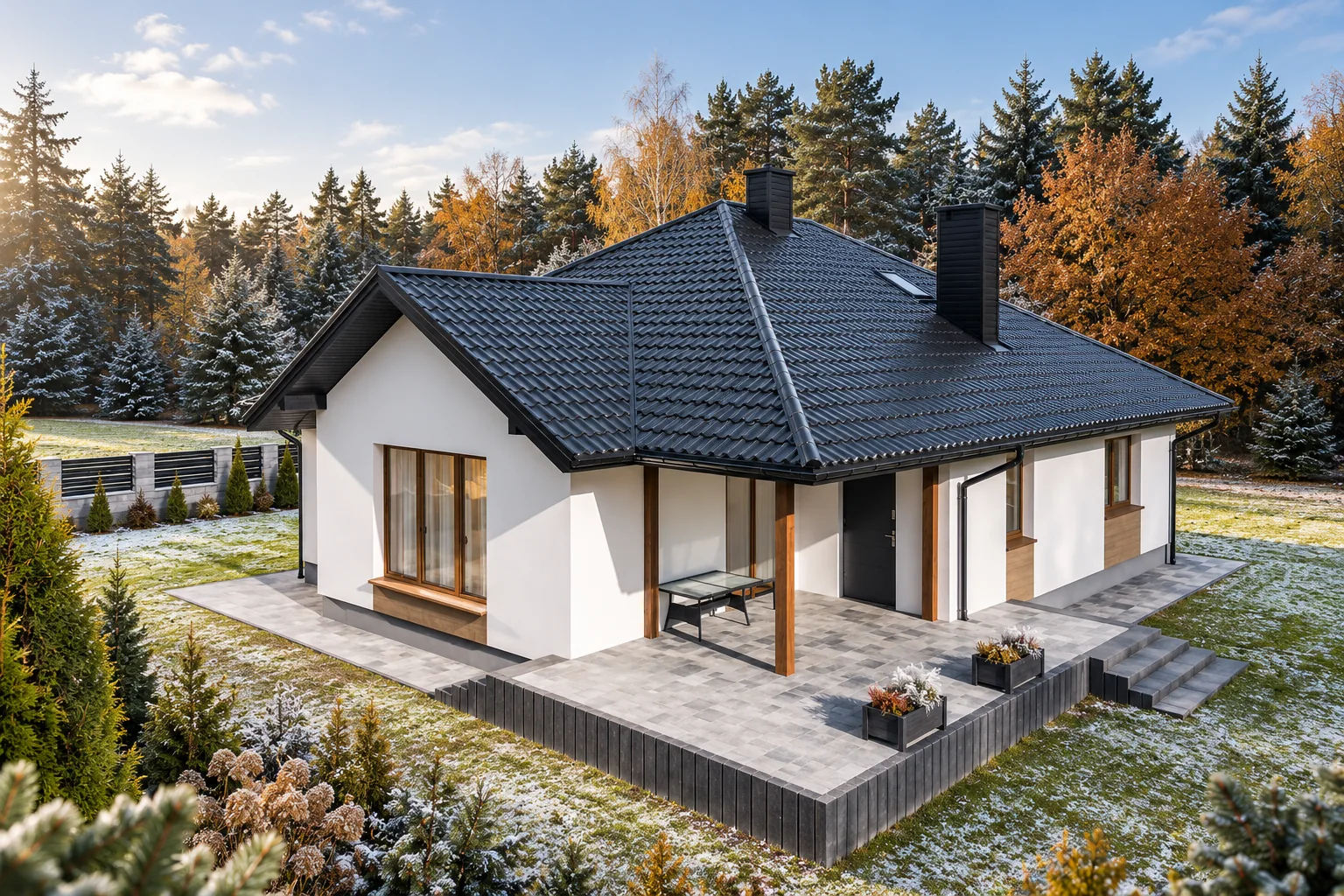
How to prepare a roof for winter
Begin by clearing debris, keeping drainage clear and repairing visible damage. Focus most on valleys, flashings, gutters and the fixings of accessories, and also check the attic. Schedule the work before frequent frosts arrive, bearing in mind leaf fall around the house; cleaning too early may need repeating, but do not delay repairing a fault until the season ends. Carry out part of the inspection from the ground and from the attic, and assess the scope of repair when the surface is dry and accessible.