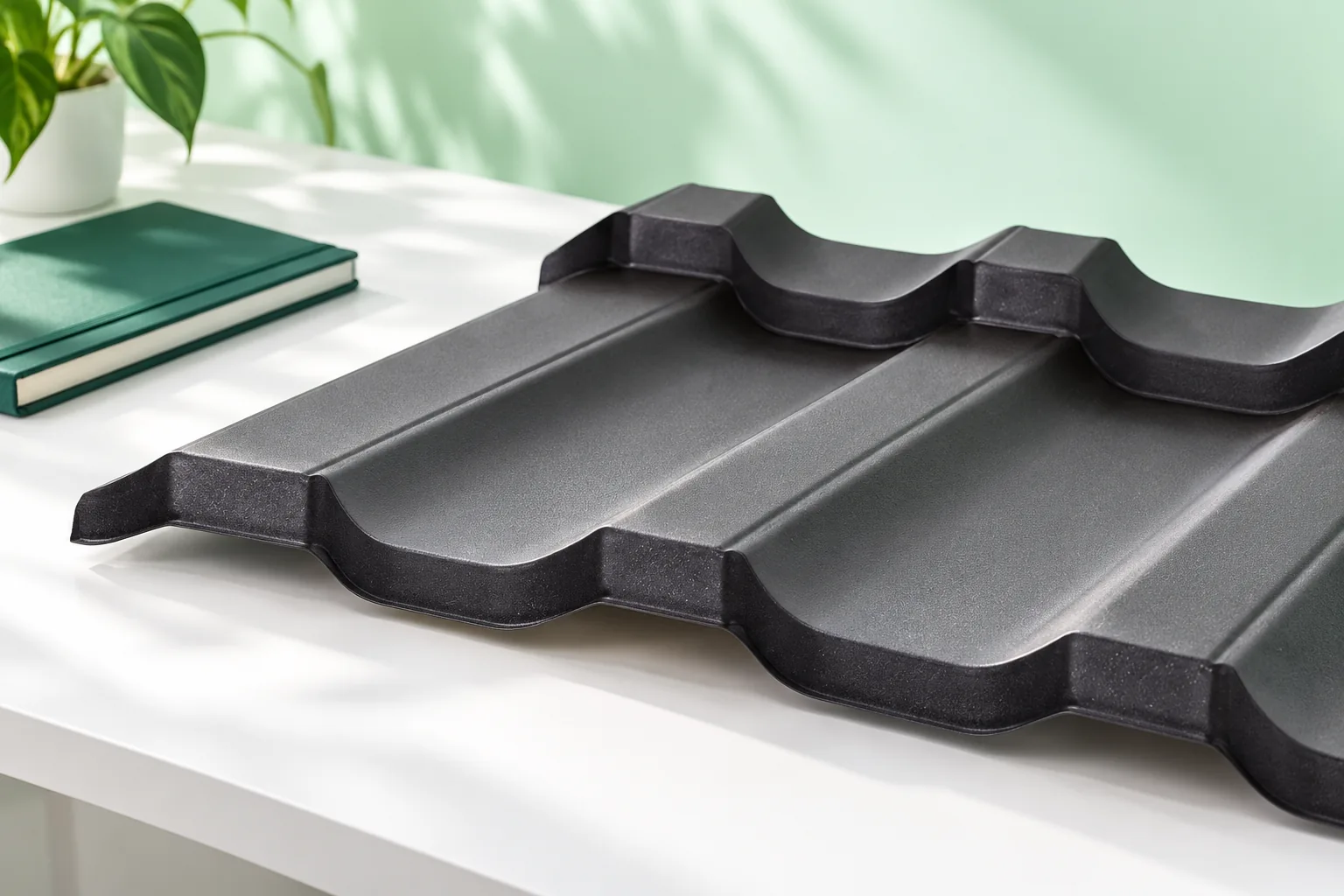
What is tile-effect metal roofing made of and what protects its steel core?

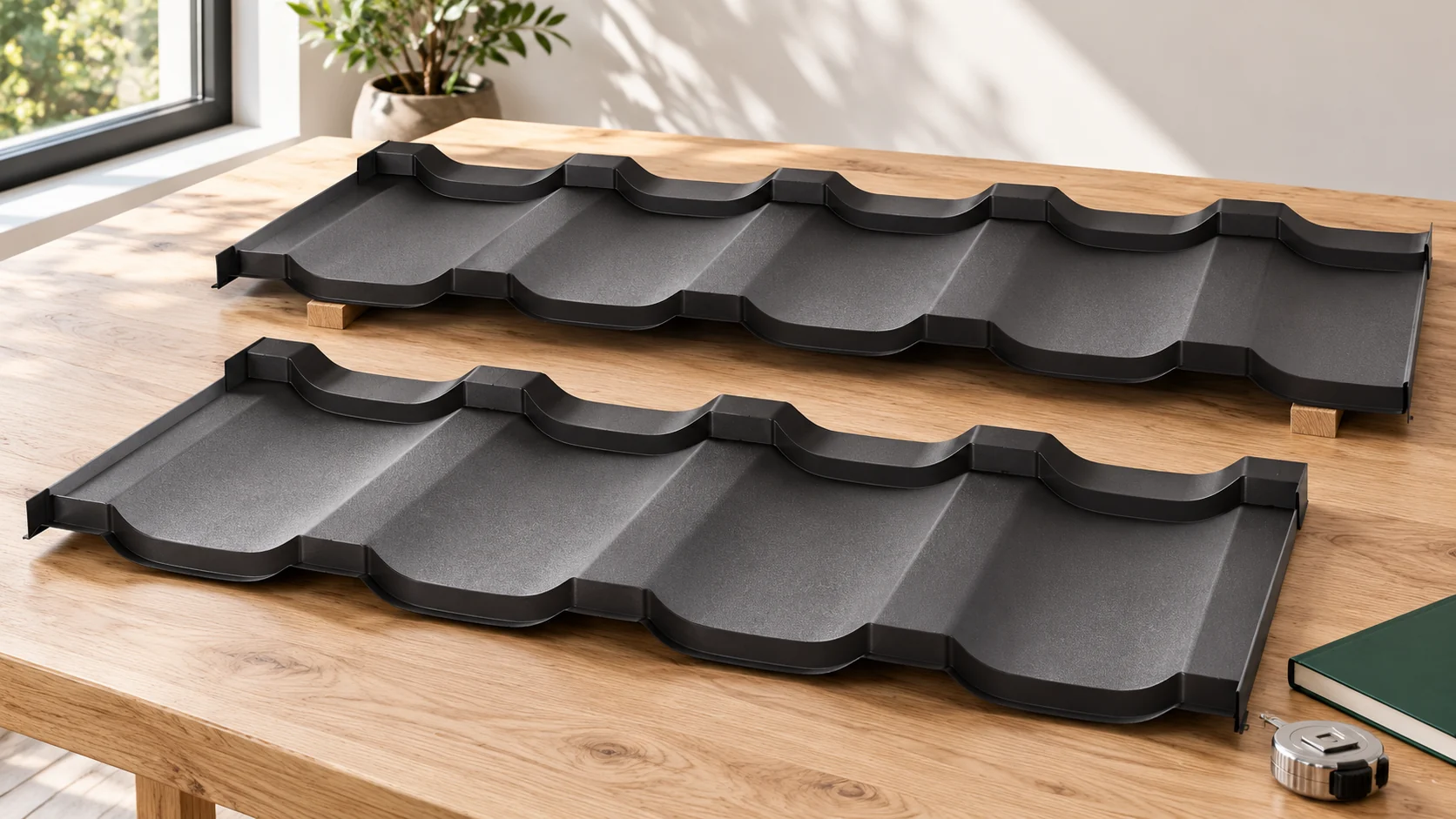
Tile-effect metal roofing is thin steel sheet formed to create a repeating tile pattern. However, its strength and durability do not come from the pattern alone. The steel core, surface protection and the way the roof is installed are what matter. It is worth separating these elements, because a colour description and a long warranty do not replace technical data. The basis is steel of a specified thickness and properties. Pressings give the thin sheet its shape and influence how it performs. Popular products often have a 0.5 mm core, but other variants also exist. The order must state the specific thickness, not just the term “strong sheet”.
2026-11-14T10:15:22+01:00

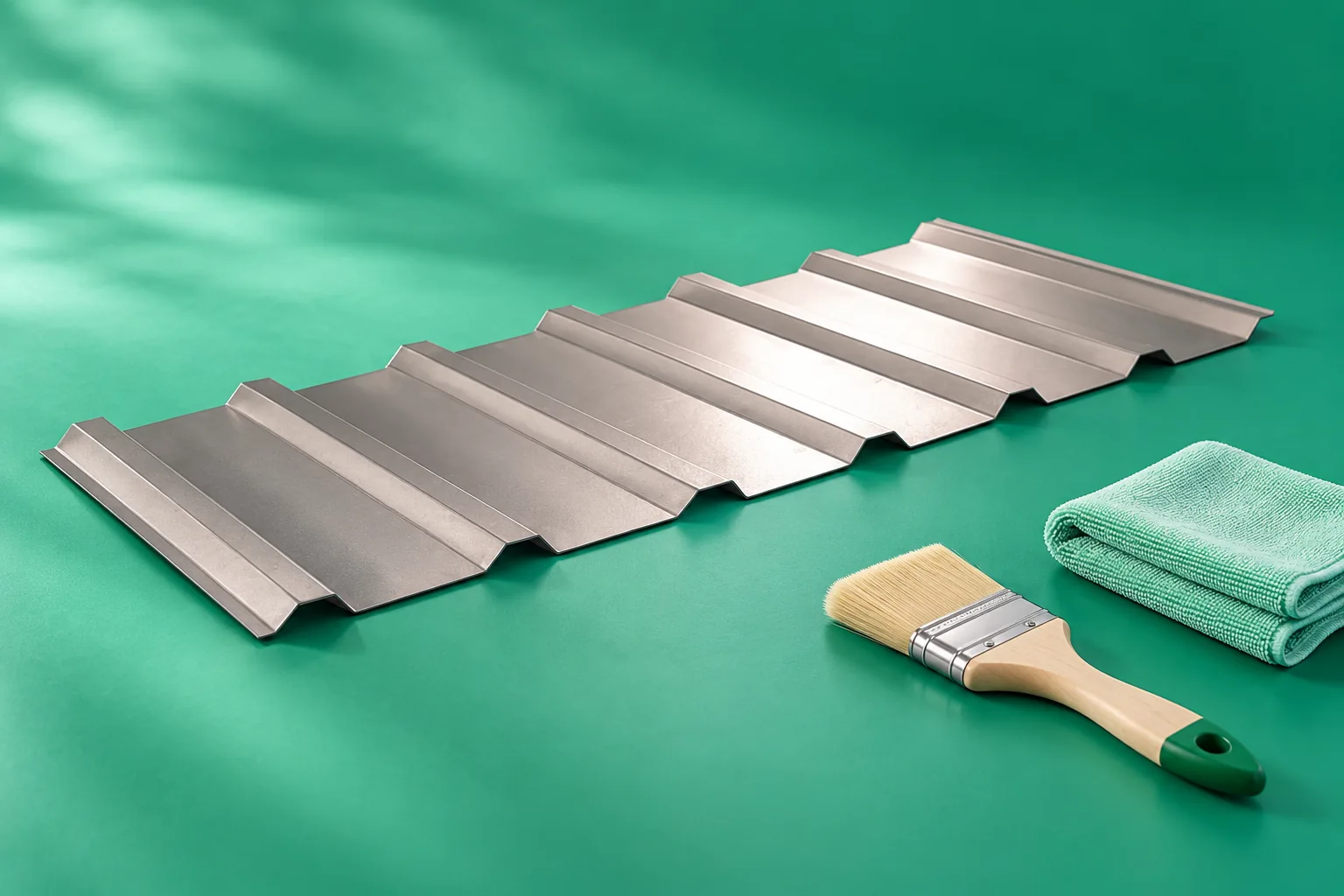
Before repainting a metal roof: checking the coating, corrosion and surface condition

Before painting a metal roof, check whether the substrate will still do its job once prepared. Inspect the sheets, flashings and fixings, and look underneath the covering where you can reach. Perforation, deep corrosion or permanent deformation may mean an element needs replacing, since a new coating will not restore sheet thickness or correct a faulty lap. Identify the existing coating, assess corrosion and clean the surface. Fresh colour will not mend a leak or lost steel, so remove the causes of damage first and choose a compatible paint system. Weather and adhesion to the old surface affect how long the work lasts.

2026-11-14T23:28:47+01:00

How to choose an insulated panel for a cattle shed, poultry house or piggery?

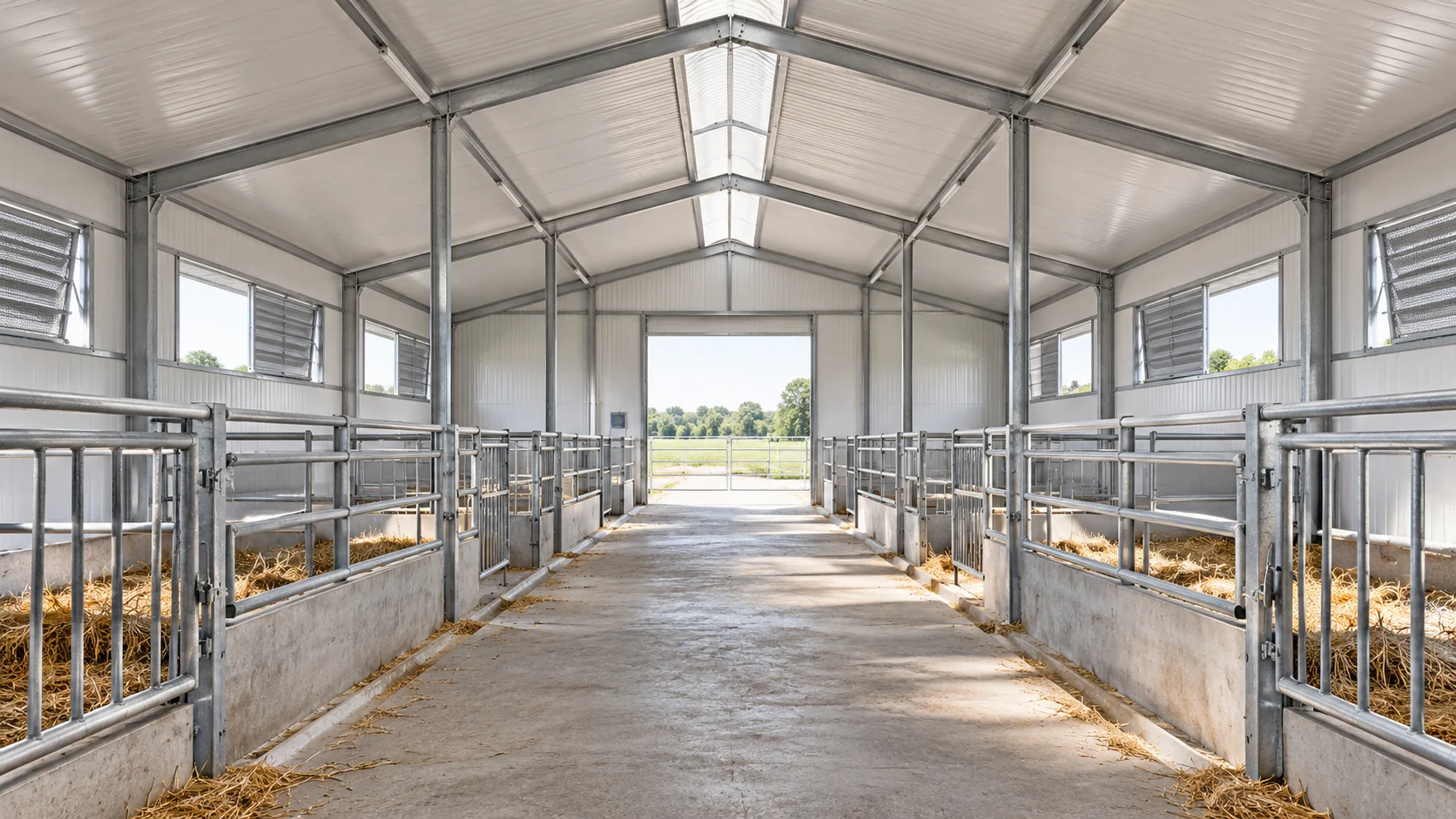
In an animal building, the panel performs differently than in a dry warehouse. It must work together with the ventilation, withstand moisture and suit the cleaning method. The requirements of a cattle shed, poultry house and piggery also differ. It is worth starting the selection with a description of daily use, and only then comparing the core, thickness and price of the individual variants. Selection requires information on temperature, humidity, type of livestock farming and ventilation operation. The frequency of cleaning, the agents used and areas of prolonged dampness are important. Two buildings called a cattle shed may have completely different conditions at the wall and roof surfaces.

2026-11-14T12:34:24+01:00

Moss on tile-effect metal roofing: choosing a cleaning method that protects the finish

Begin by establishing why the surface stays damp for long periods, rather than reaching straight for the strongest preparation. Check whether organic material accumulates in shaded areas and whether water drains freely around the flashings. Match the method to the type of coating, since sharp scraping and strong chemicals can damage the protective layer. Before cleaning the whole slope, carry out a gentle trial on a less visible section and assess the result once dry. Remember the gutters and outlets too, so that loosened debris does not block the drainage.

2026-11-14T23:27:21+01:00

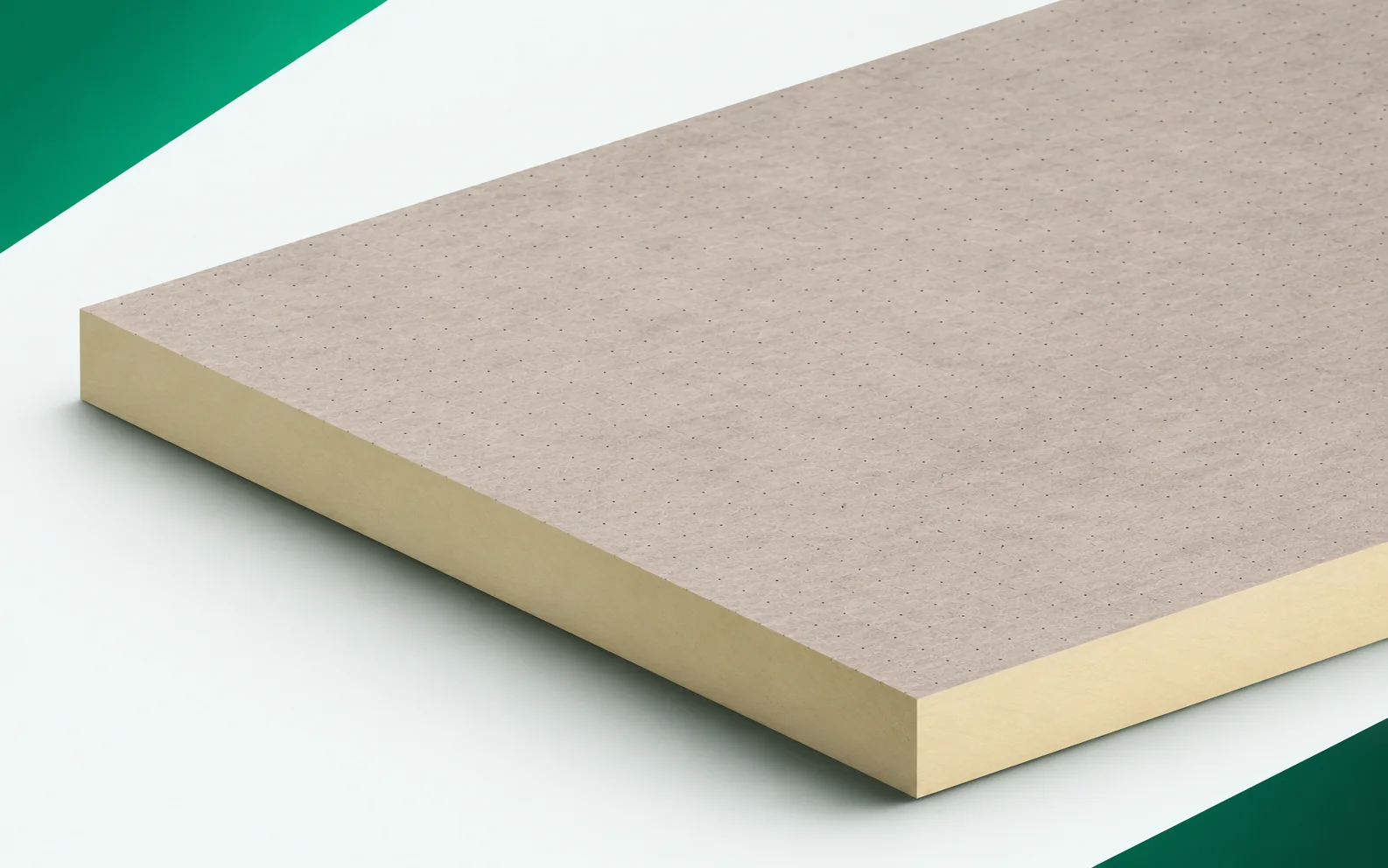
Which PIR board format will make your renovation easier: 120 × 60 or 120 × 240 cm?

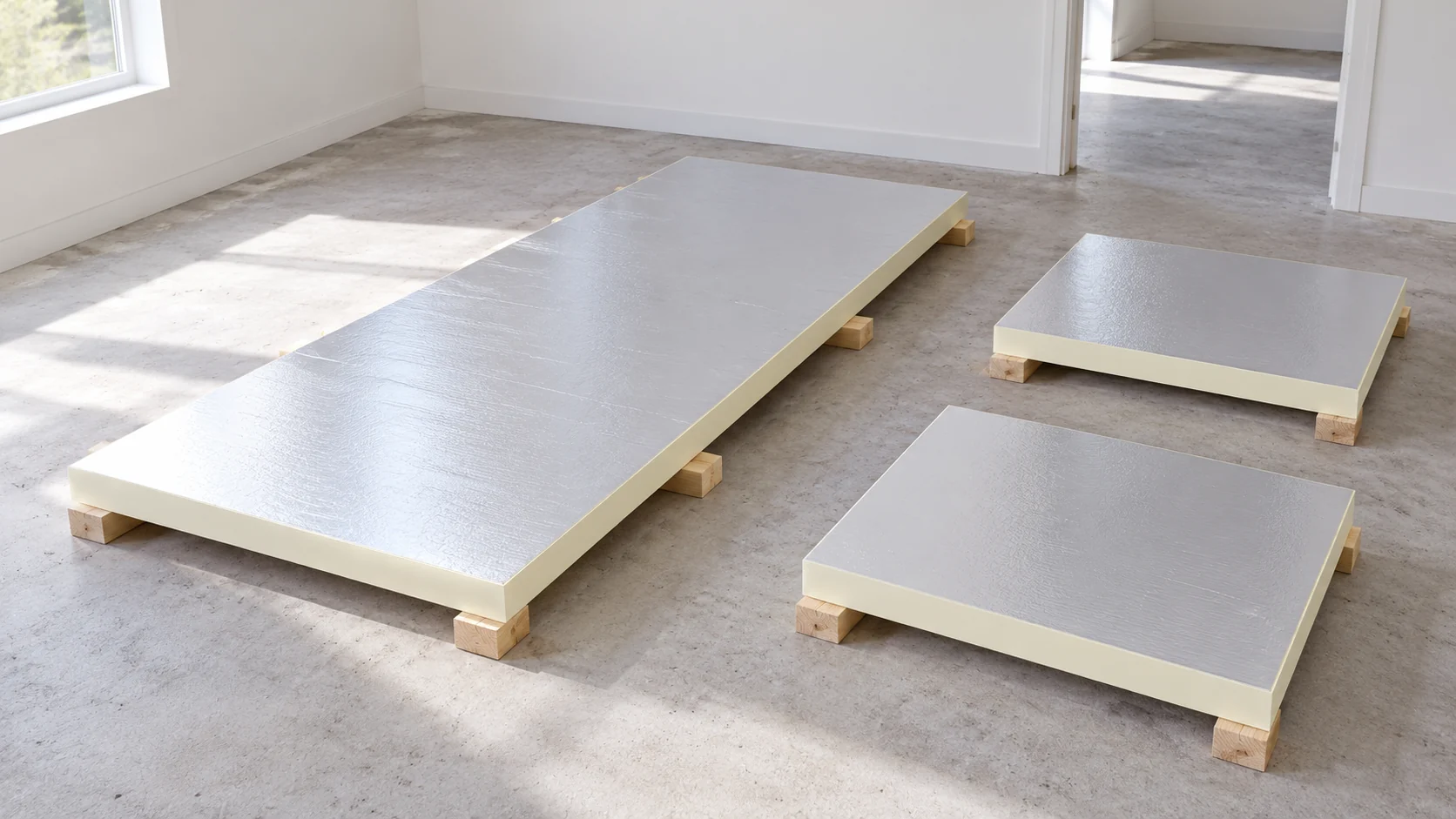
A large board means fewer joints, but in a small flat it can be difficult to bring in and position. A smaller format is easier to fit into recesses, although it creates more joints. When choosing PIR, check more than just the dimensions stated in centimetres. The edge type, the actual coverage area and the way the board is finished also matter. A board with nominal dimensions of 120 × 60 cm has 0.72 m², while 120 × 240 cm has 2.88 m². The large element therefore has four times the nominal area. This does not mean installation is four times faster: it must be carried, fitted and supported in line with the chosen solution.

2026-11-14T10:17:31+01:00

Why a price per square metre tells only part of the cost of a metal tile roof

Two tile-effect metal roofing products can have a similar headline price in the quote, yet a different cost for covering the same roof slope. The reason may be the unit of sale, the number of modules required or the scope of extras. It is therefore worth starting by converting the price to usable surface area. Then check what is actually included in the stated amount. The price may relate to a full sheet metre or an effective covering metre. Part of the sheet is concealed in the laps. It does not create new roof surface, although it is still part of the material purchased. A lower rate per full metre is therefore not necessarily more favourable.

2026-11-14T10:14:55+01:00

α-therm ROOF: IDELCO boards for different roof covering systems

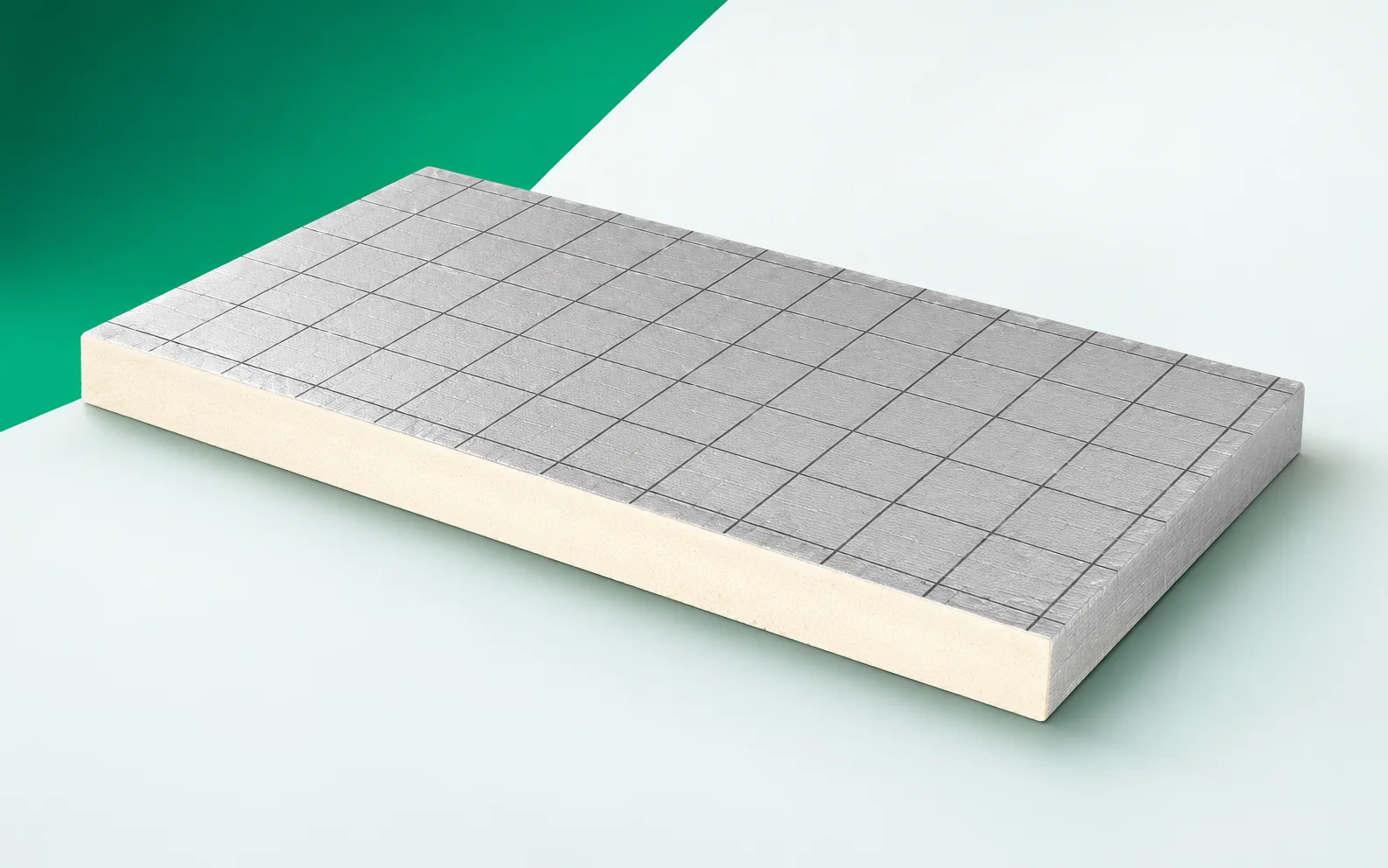
IDELCO α-therm ROOF is a PIR board for flat roofs with a gas-tight kraft paper and aluminium laminate on both sides. In such a roof build-up, the insulation is selected together with the substrate, the vapour control layer, the waterproofing and the fixing. The use of ballast, adhesive or fasteners changes the loads and the way the covering is held down, so approval of one method does not confirm the others. The roof detail should also show the terminations at parapets and at service penetrations. This guide explains how to match the parameters of a specific board with the design of these junctions. The general term “polyurethane insulation” identifies neither its facing nor the complete roof system.

2026-11-16T06:03:44+01:00

Therma TR27 and waterproofing: choosing insulation for a roof system

Kingspan Therma TR27 is a PIR board with glass fibre facings on both sides. This surface forms the interface with the covering layers, so the selection covers material compatibility, substrate preparation and the way the joint is made. The catalogue describes flat roofs and terraces that are mechanically fixed, bonded or ballasted, in accordance with the system documentation. This does not mean that any adhesive is approved or that it can be swapped for any PIR board. The thermal parameters of TR27 also depend on the thickness. In the following, we separate the requirements relating to the facings, the cut pieces, the loads at equipment and the cost of the complete solution, so that the cross-section corresponds to the actual roof layers.

2026-11-16T06:06:38+01:00

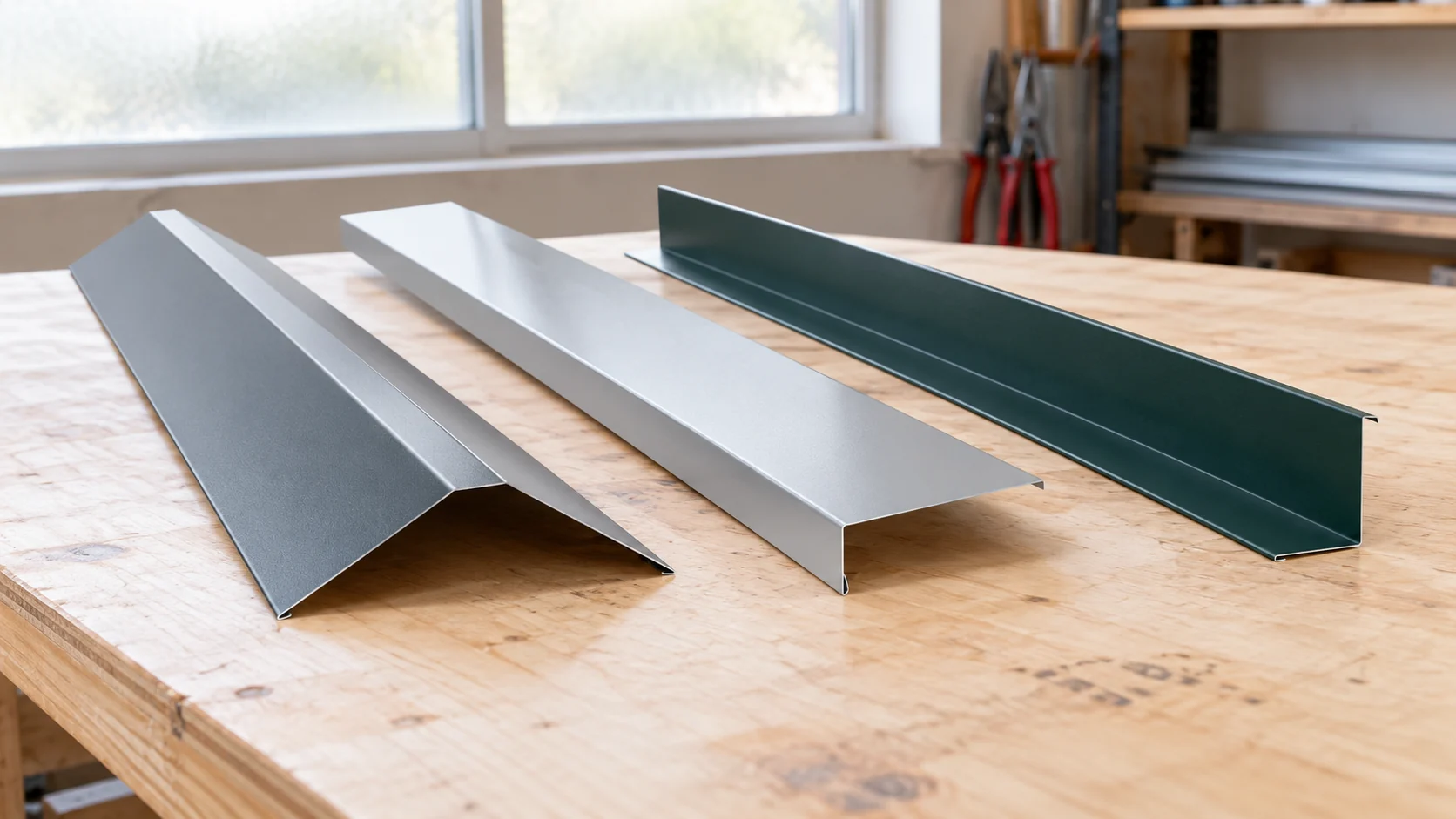
What flashings are needed on a metal roof and how do you calculate their quantity?

Flashings close the edges and guide water through difficult roof areas. A complete set cannot be selected from the roof surface area alone. A plan of edges, roof valleys and penetrations is needed. The easiest approach is to go over the roof on the drawing from the eaves to the ridge. For each section, note its length and purpose. In this zone, water from the covering must be directed into the gutter and the layers below properly terminated. The gutter apron and the fascia cover serve different purposes. Their presence and shape depend on the chosen detail. It is not worth ordering both simply because they have similar names.

2026-11-14T10:14:58+01:00

Metal tile-effect roofing or concrete tiles: what should you compare?

The choice between metal roof tiles and concrete roof tiles depends above all on how well the covering matches the roof structure, not on the price of the basic element alone. Check whether the design or the condition of the existing roof frame allows for the weight of the chosen covering together with the permanent layers and snow and wind loads. In a renovated building, weight is particularly important, so compare the finished covering over the same area, including accessories and flashings. Also consider the roof pitch, substrate requirements and installation method. Leave detailed technical decisions to the designer.

2026-11-14T16:29:36+01:00