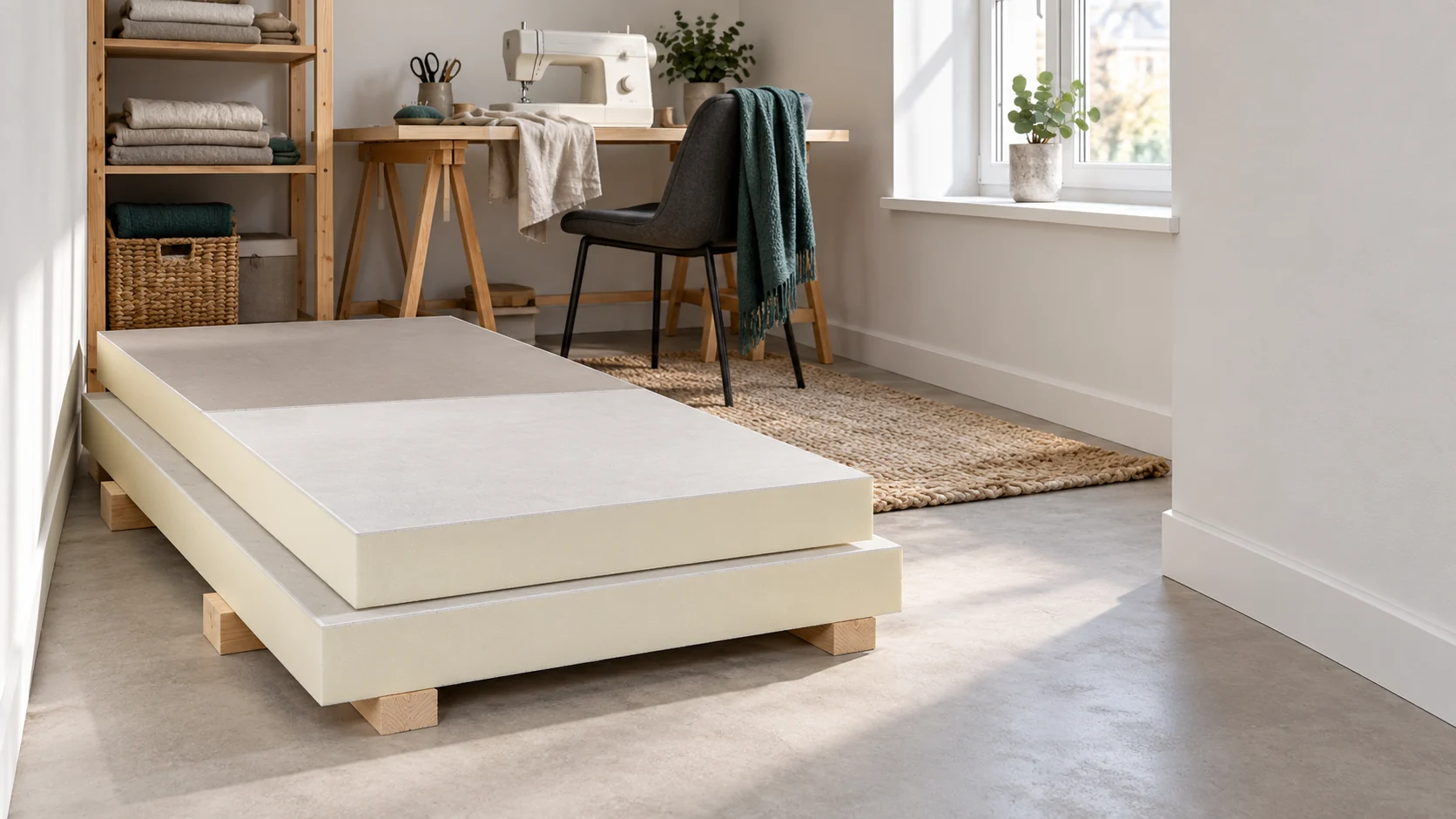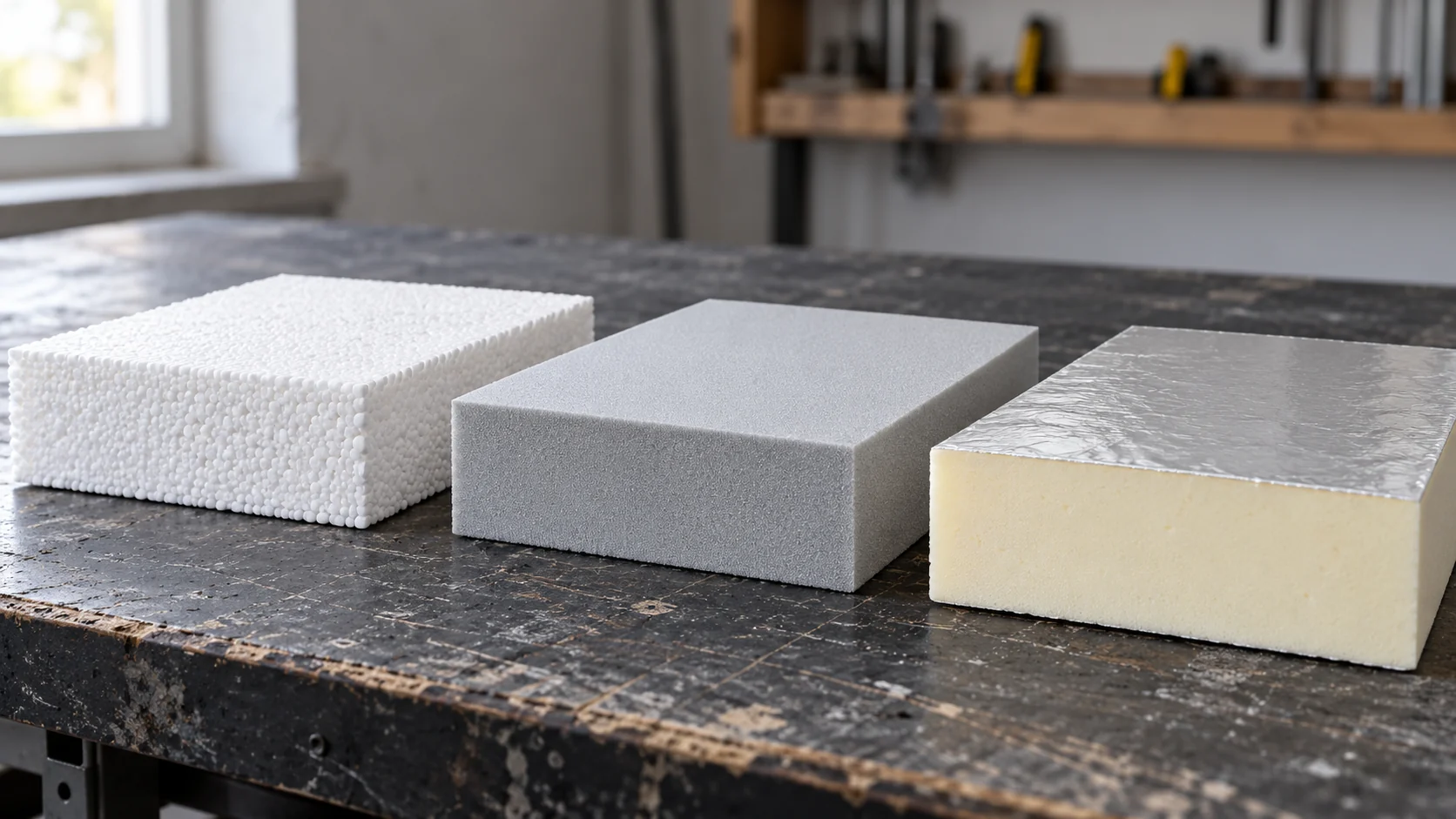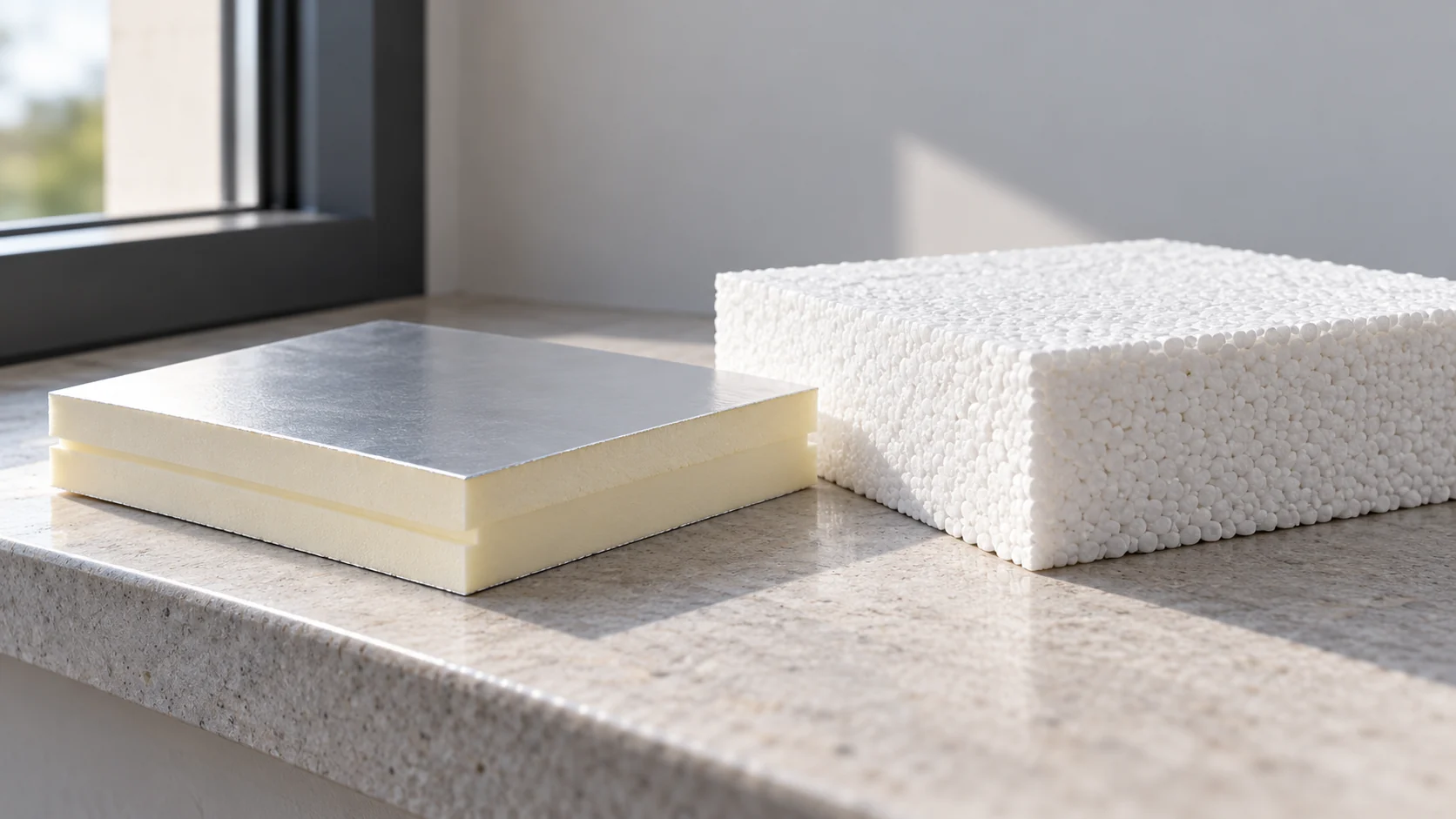
How many centimetres of PIR give a similar thermal resistance to polystyrene?

Thinner PIR can give a similar thermal resistance to thicker polystyrene, but there is no single conversion factor for all boards. You need to know the lambda of both materials and check their application. With a small window reveal, saving a few centimetres can be valuable, but it should not mean replacing the whole system without assessing its other properties. Thickness tells you how much space the layer will take up. Its ability to limit heat flow is given by the resistance, denoted R. In simplified terms, you divide the thickness in metres by the lambda. A lower lambda allows the same resistance to be achieved with a smaller thickness.
By |2026-11-14T10:17:09+01:002024-12-05|Construction basics|Comments Off on How many centimetres of PIR give a similar thermal resistance to polystyrene?

How to assess a 100 mm second-grade sandwich wall panel

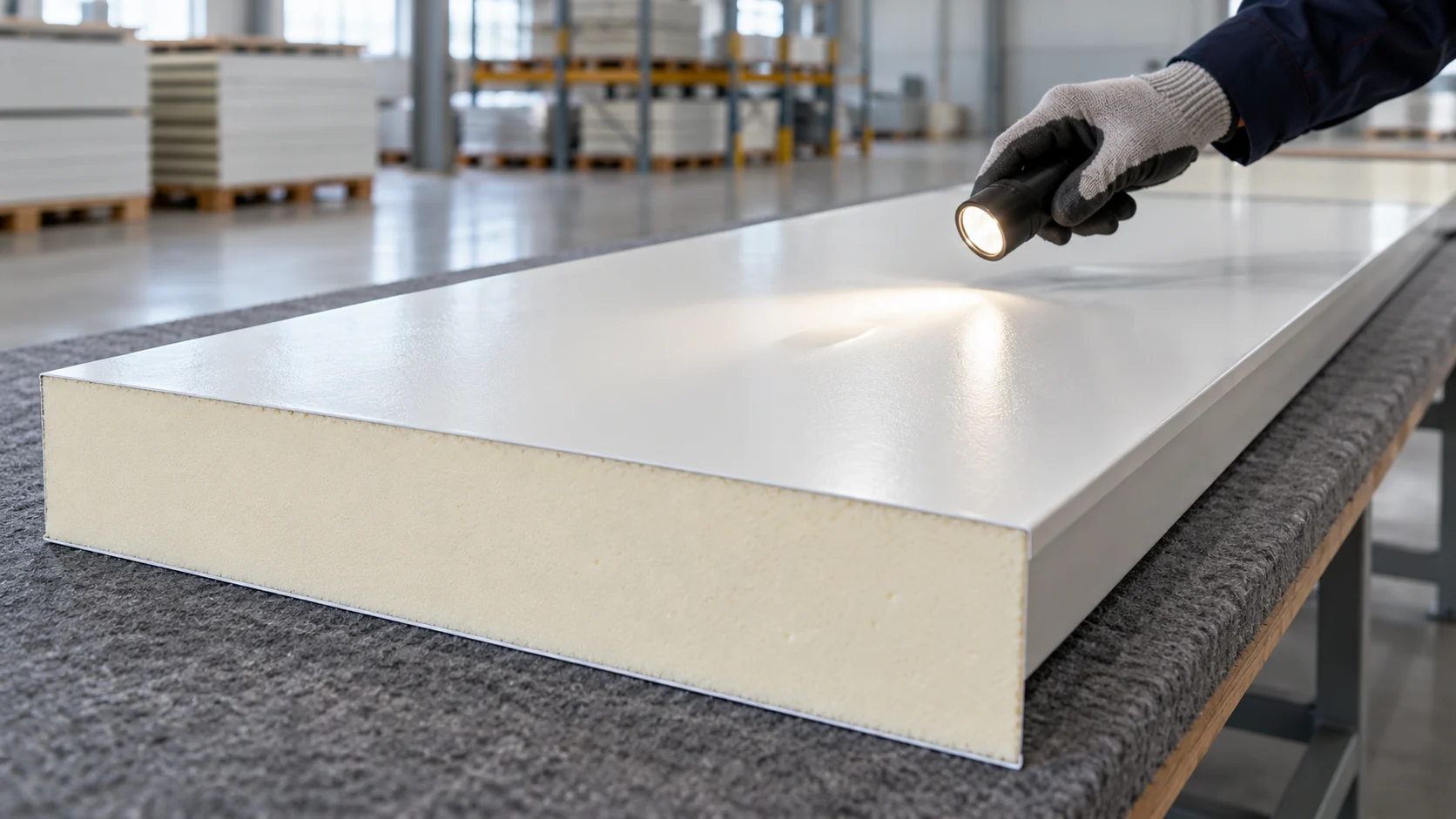
A thickness of 100 mm is only one of the parameters of a wall panel. With second grade, the cause of the downgrade and its effect on the application must also be identified. An even surface visible in a photograph does not give a complete picture of the material. The assessment should proceed from the function of the room to the specific piece, taking the entire joint into account. A panel of the same nominal thickness may have a PIR core, mineral wool or EPS. The facings and the joint profile may also differ. Thermal parameters, mass and fire properties do not follow from the number of millimetres alone. Product identification and documentation specific to the offered batch are required.

By |2026-11-14T16:27:48+01:002024-11-22|Construction basics|Comments Off on How to assess a 100 mm second-grade sandwich wall panel

PIR or polystyrene in a roof panel: how to compare ready-made variants?

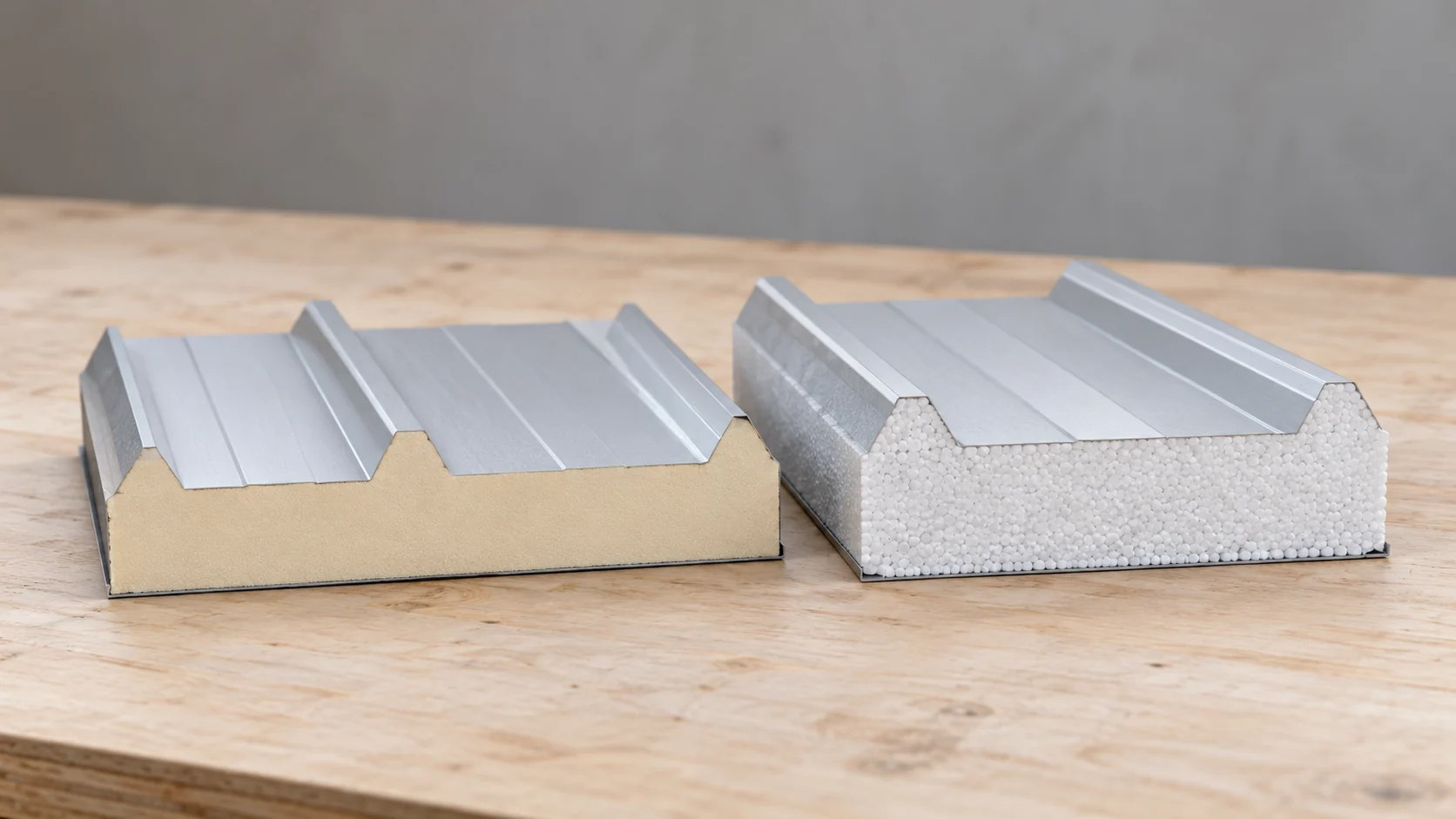
Two panels of the same thickness can restrict heat loss differently. Variants with a similar U-value may differ in height and mass. It therefore makes sense to base the choice between PIR and polystyrene on ready-made roof panels with specified facings. Comparing pieces of insulation alone is not enough to choose the covering over a workshop or warehouse. This comparison concerns panels with a core between two steel facings. They should not be confused with loose PIR or EPS boards laid under a membrane. A finished panel performs a different function and has specified joints, profiling and support rules.

By |2026-11-14T12:37:54+01:002024-11-19|Construction basics|Comments Off on PIR or polystyrene in a roof panel: how to compare ready-made variants?

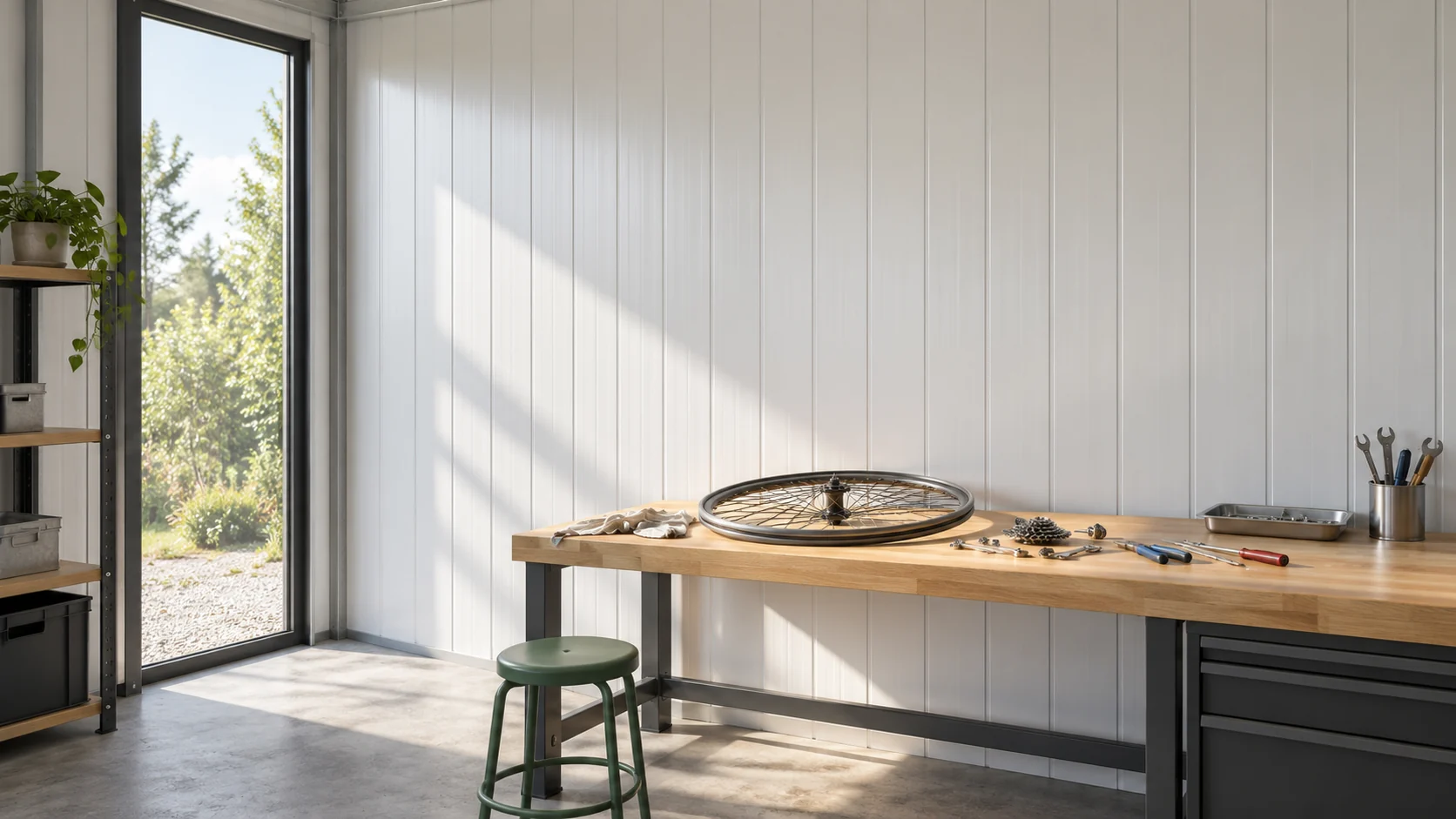
What thickness of PIR wall panel suits a heated workshop?

In a workshop, a wall panel should help maintain working conditions, not just shield the interior from rain. Temperature, heating duration and frequent opening of the gate matter. The PIR thickness should be chosen after assessing these needs. Load-bearing capacity and details must also be checked, because a warm wall with a leaky joint will still be a source of discomfort. A room heated all week has a different balance than a place used on Saturday. Note the expected temperature and operating time. It is also worth considering whether stored adhesives, paints or equipment require stable conditions even when unoccupied.

By |2026-11-14T12:37:12+01:002024-07-01|Construction basics|Comments Off on What thickness of PIR wall panel suits a heated workshop?

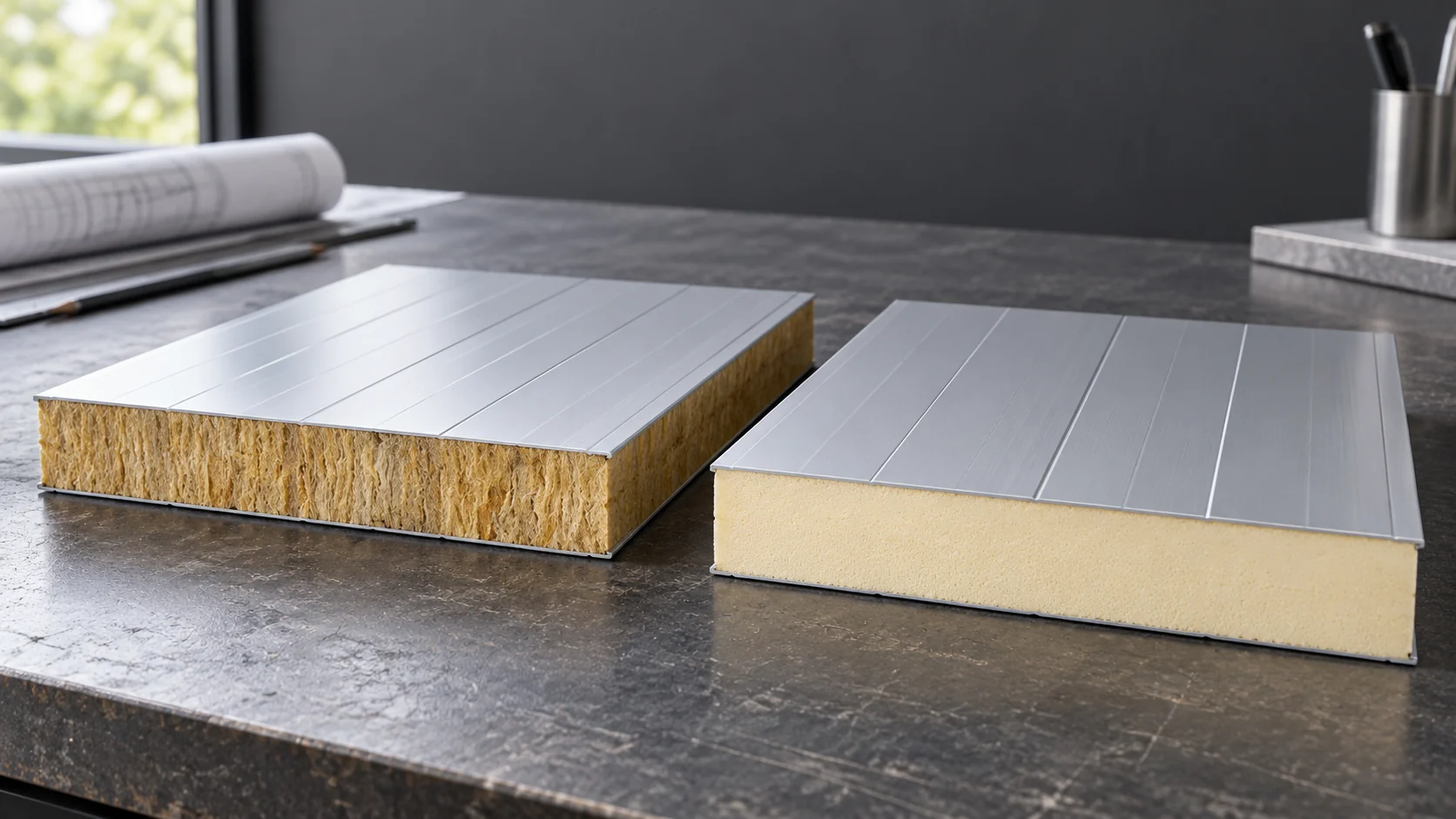
Mineral wool or PIR: which core suits the way the building is used?

The choice between mineral wool and PIR should not begin with the question of which material is always better. What matters more is the specific task of a given wall or roof. A warm workshop, a noisy workshop and a cool storage area each need a different set of characteristics. A comparison makes sense when it covers complete panels, the same function and clearly stated requirements. A mineral wool panel has a fibrous core, while PIR has a closed-cell foam core. In both cases, the facings and joints also determine performance. Comparing the insulation materials alone is not enough. Two panels with the same core can differ in load-bearing capacity, weight and range of application.

By |2026-11-14T12:34:26+01:002024-04-03|Construction basics|Comments Off on Mineral wool or PIR: which core suits the way the building is used?

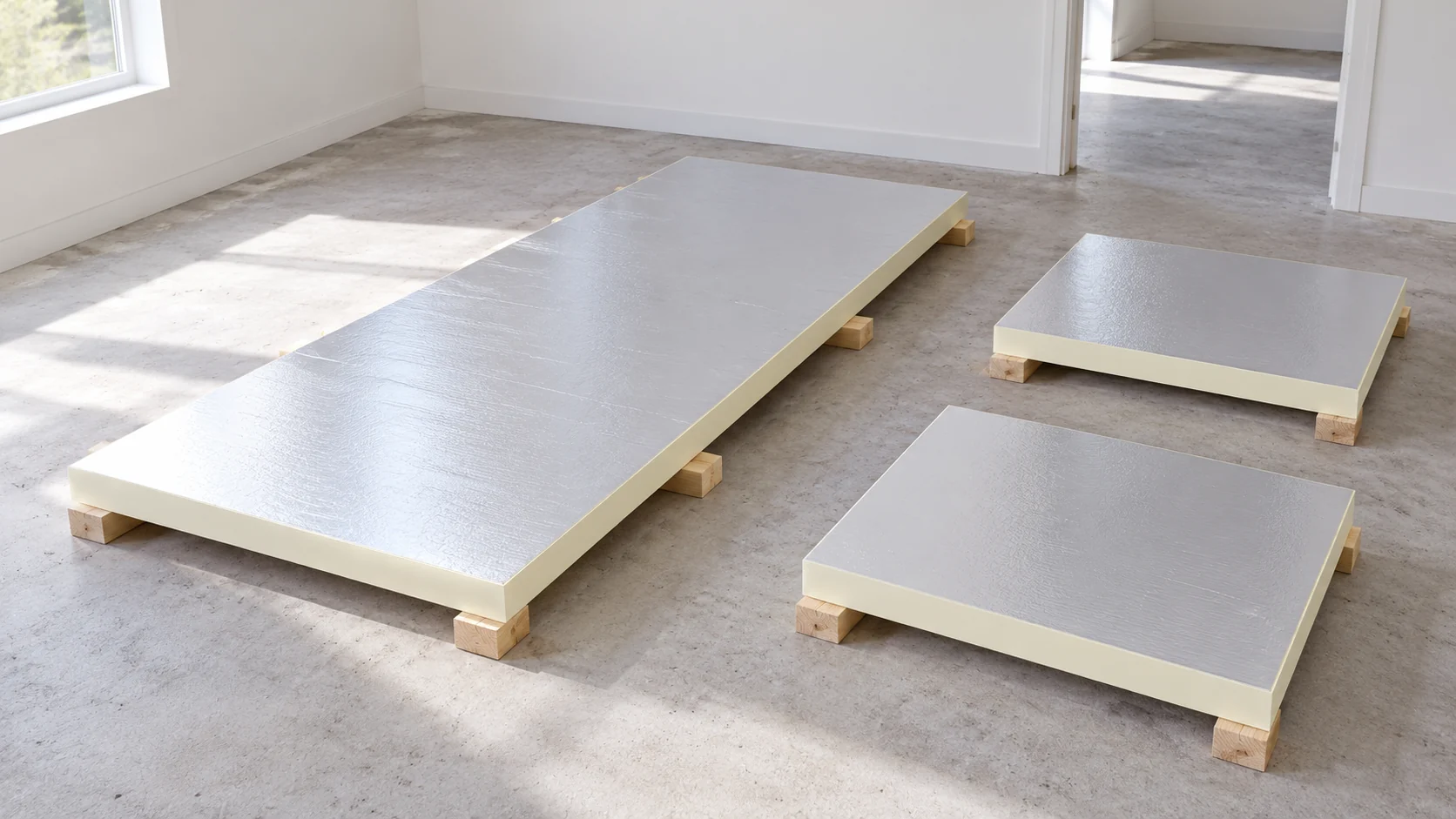
Which PIR board format will make your renovation easier: 120 × 60 or 120 × 240 cm?

A large board means fewer joints, but in a small flat it can be difficult to bring in and position. A smaller format is easier to fit into recesses, although it creates more joints. When choosing PIR, check more than just the dimensions stated in centimetres. The edge type, the actual coverage area and the way the board is finished also matter. A board with nominal dimensions of 120 × 60 cm has 0.72 m², while 120 × 240 cm has 2.88 m². The large element therefore has four times the nominal area. This does not mean installation is four times faster: it must be carried, fitted and supported in line with the chosen solution.

By |2026-11-14T10:17:31+01:002023-11-06|Construction basics|Comments Off on Which PIR board format will make your renovation easier: 120 × 60 or 120 × 240 cm?

Is it worth insulating a 1990s house from the inside with PIR board?

A good-looking façade does not always mean the house is evenly warm. In a 1990s building, one room may cool down faster than the others even though the heating is working correctly. PIR from the inside is sometimes considered when no façade renovation is planned. First, however, it is necessary to establish what is already in the wall and where the discomfort comes from. Houses with very different walls were built around the same period. The masonry may have had a cavity, thin insulation or an additional facing layer. Later renovations may have changed only part of the building. It is not worth assuming the insulation thickness on the basis of the appearance of the external render.

By |2026-11-14T10:17:11+01:002023-10-06|Construction basics|Comments Off on Is it worth insulating a 1990s house from the inside with PIR board?

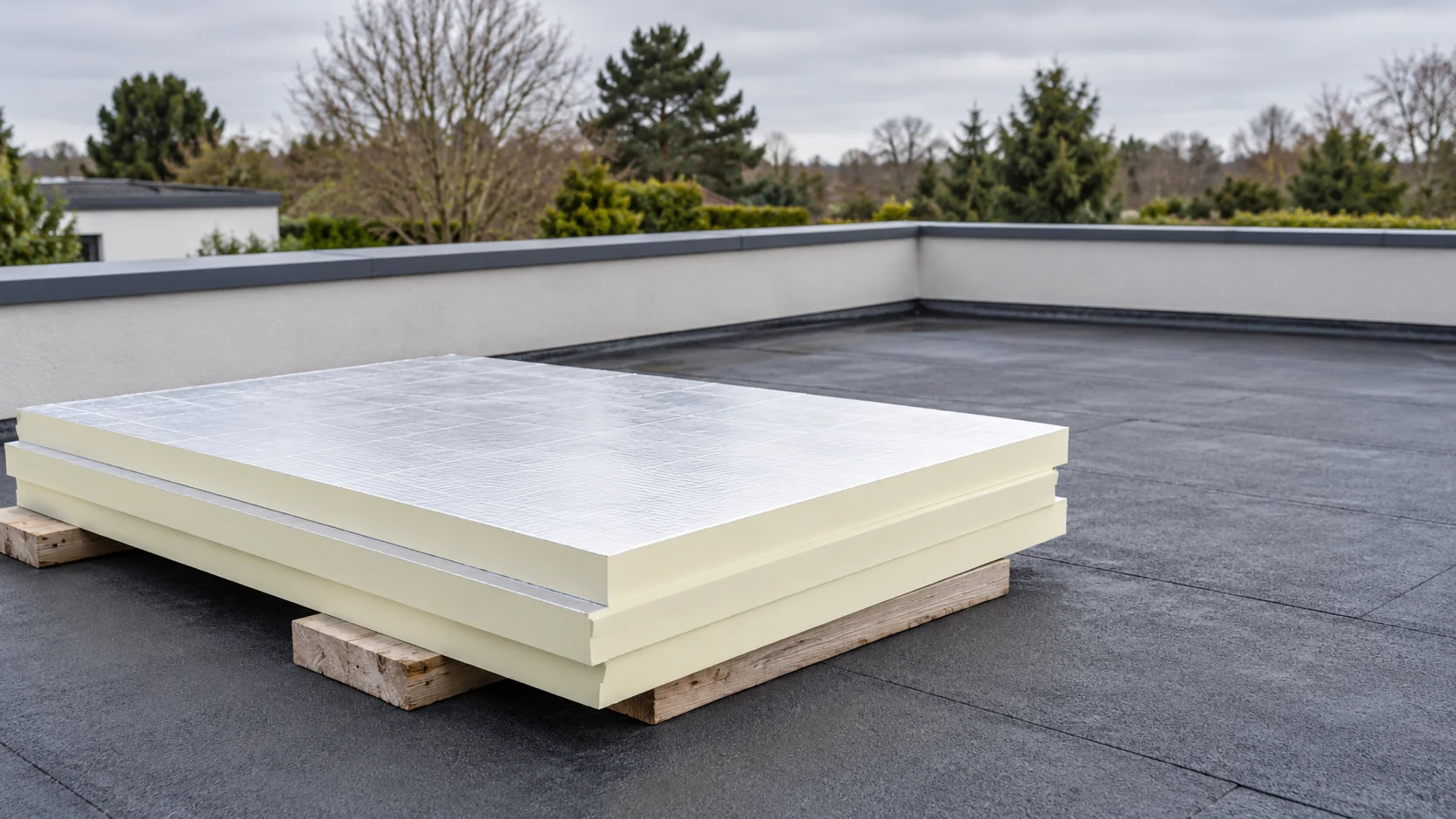
PIR or XPS for a flat roof: what does the position of the insulation tell you?

PIR and XPS are not chosen for a flat roof on the basis of lambda alone. First you need to know where the insulation will sit relative to the water-retaining layer. A dry board under a membrane performs differently from a material above the waterproofing, under gravel or a terrace. The requirements, details and the point of comparing prices all depend on this arrangement. In a traditional roof the thermal insulation is usually below the waterproof layer. In an inverted roof the order is different: the insulation goes above the waterproofing and may come into contact with water. This distinction matters more than the flat shape of the roof as seen from the street.

By |2026-11-14T10:17:33+01:002023-05-25|Construction basics|Comments Off on PIR or XPS for a flat roof: what does the position of the insulation tell you?

How to insulate a room from the inside with aluminium-faced PIR board?

Internal insulation can improve comfort where a wall is cold, but joints need careful planning. In a small room every centimetre counts, and after renovation it is difficult to return to a covered wall. The aluminium facing is part of the protection against vapour penetration. Its performance depends on the airtightness of the entire surface, including at the ceiling and window. Before choosing the board, check that the wall is dry and that water is not getting into it. Stains at the windowsill may result from an external leak. Dampness at the floor may have a different cause. Covering both places with insulation will hide the symptoms but will not stop moisture ingress.

By |2026-11-14T10:16:39+01:002023-05-22|Construction basics|Comments Off on How to insulate a room from the inside with aluminium-faced PIR board?

EPS, XPS or PIR: how to match insulation to the location in the building?

No single insulation material is best for every part of a building. On the façade, compatibility with the system and the finish matter; at ground level, contact with water; and in the floor, loads. EPS, XPS and PIR must be compared as specific products for a specific location. The name of the plastic alone or a favourable lambda does not complete the selection. Insulation under the floor of a workshop performs differently from that in the wall of a room. In the first case, pressures from the floor slab and equipment matter; in the second, continuity of insulation and the finish. The plinth and inverted roof also bring contact with water.

By |2026-11-14T12:35:08+01:002023-03-01|Construction basics|Comments Off on EPS, XPS or PIR: how to match insulation to the location in the building?