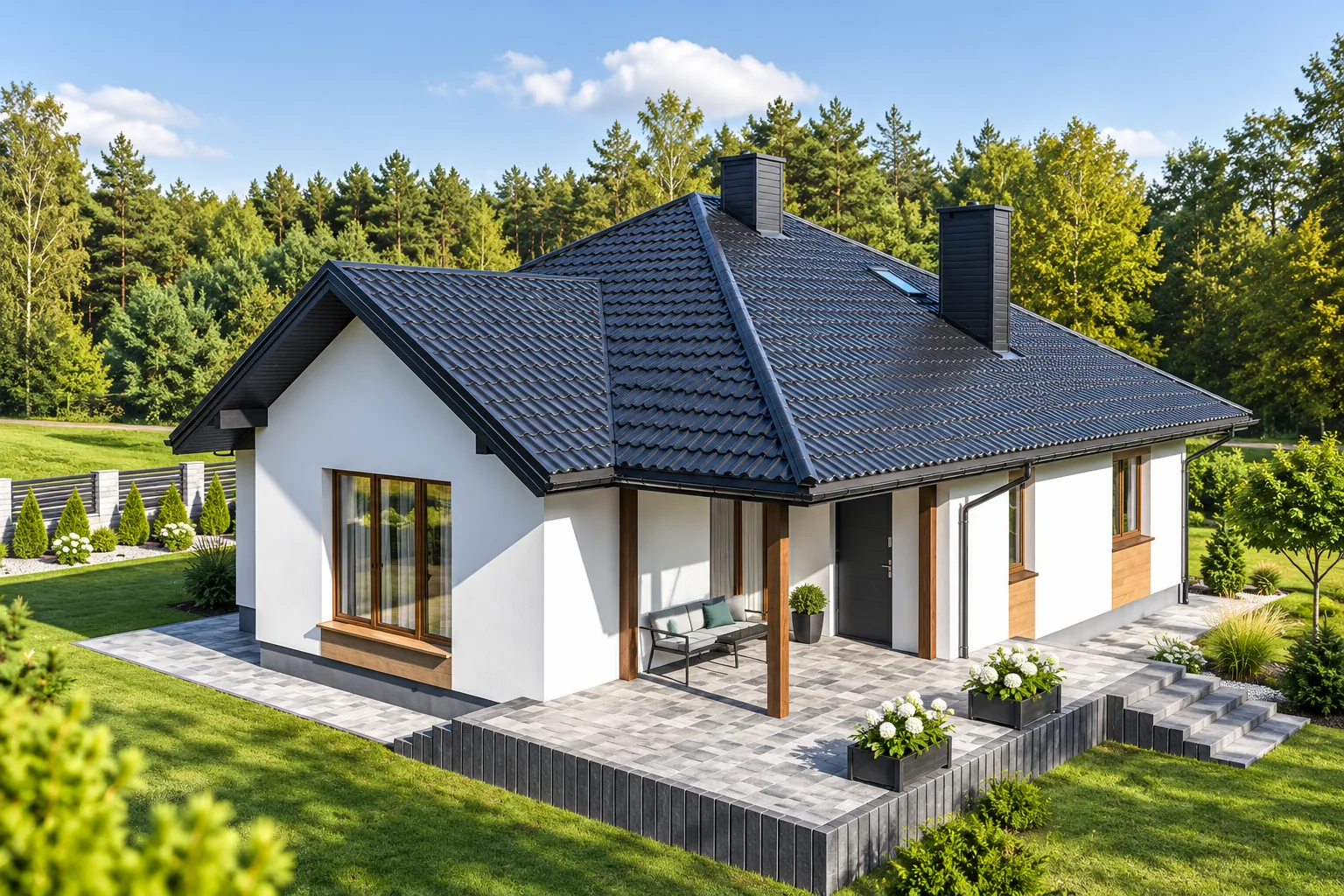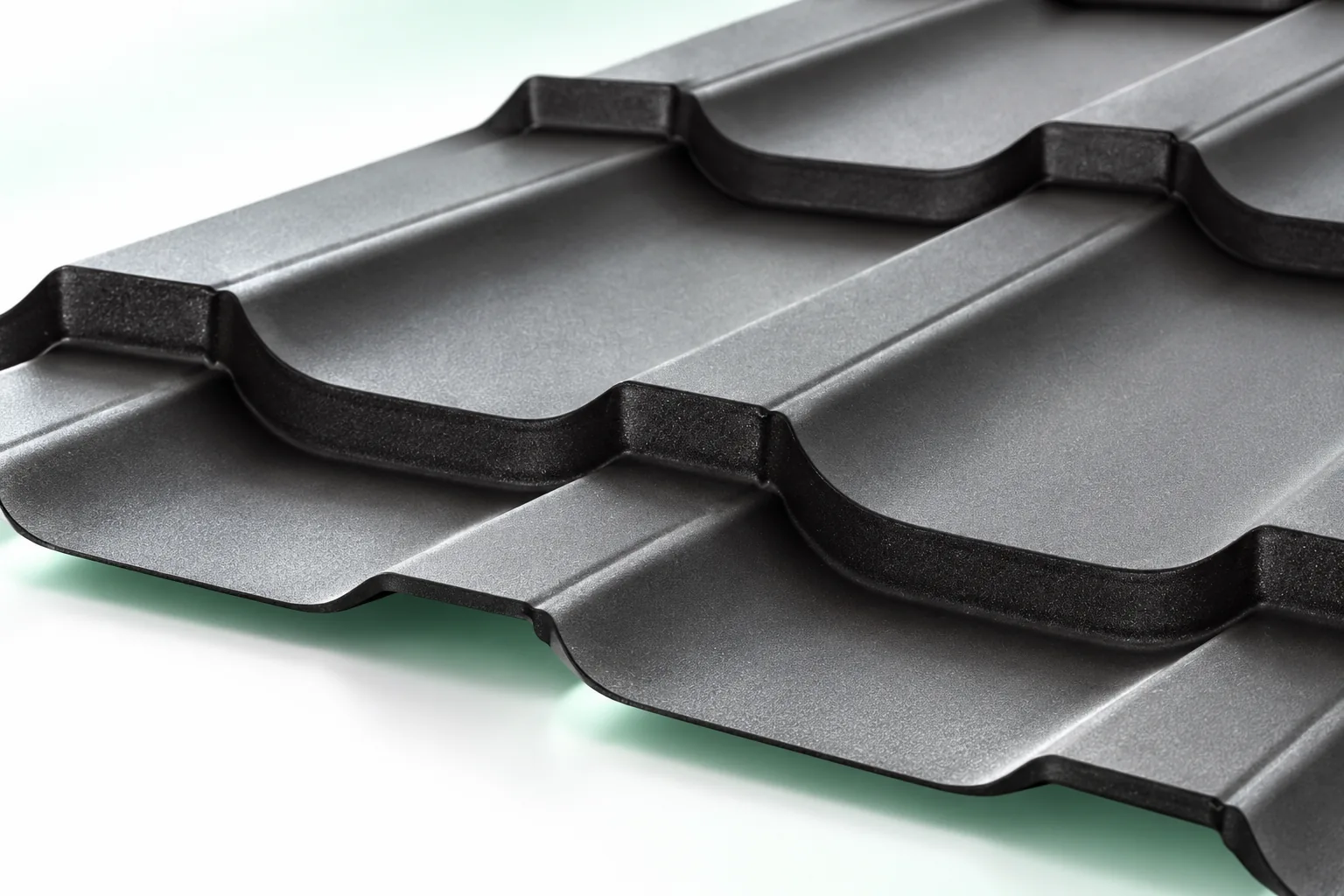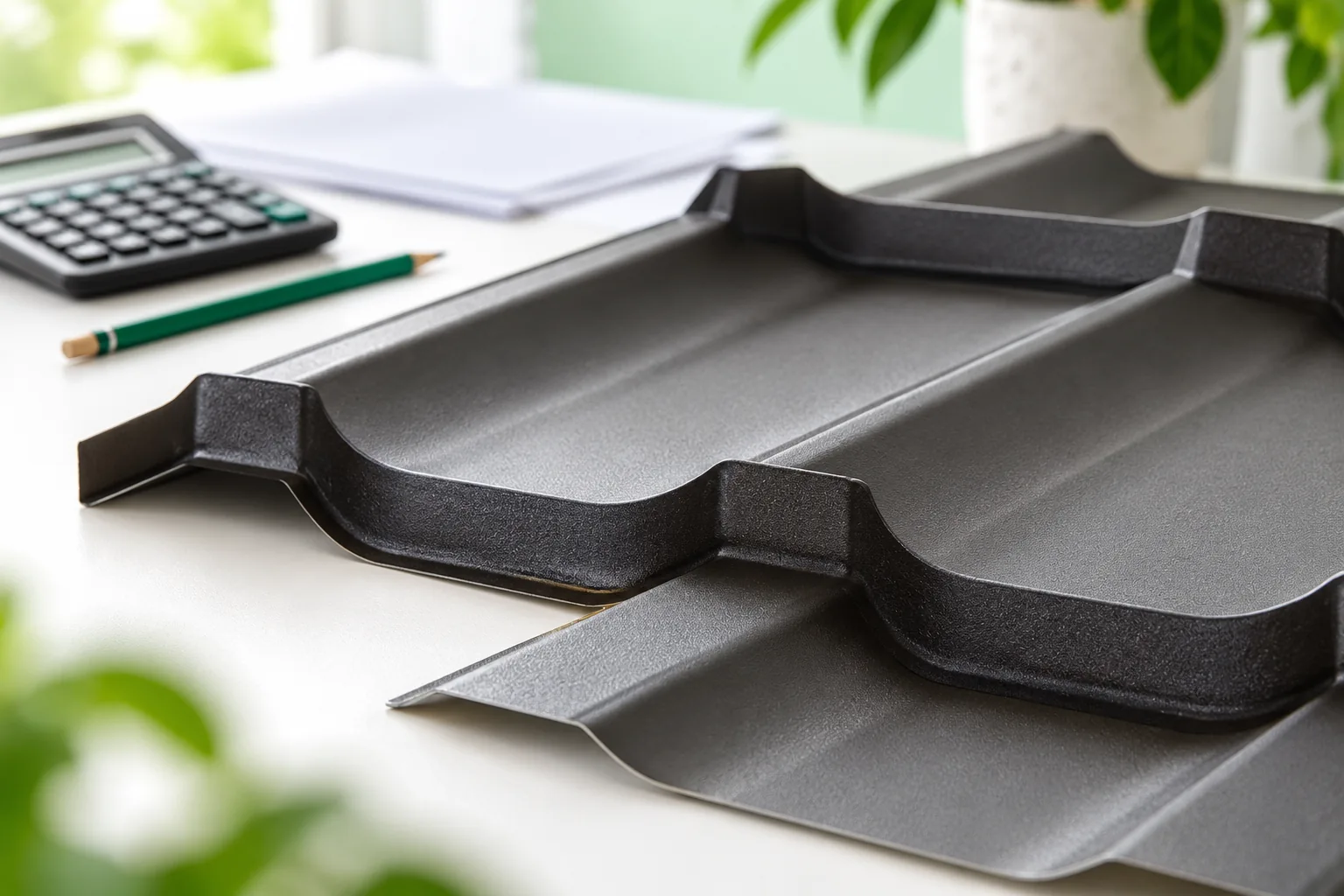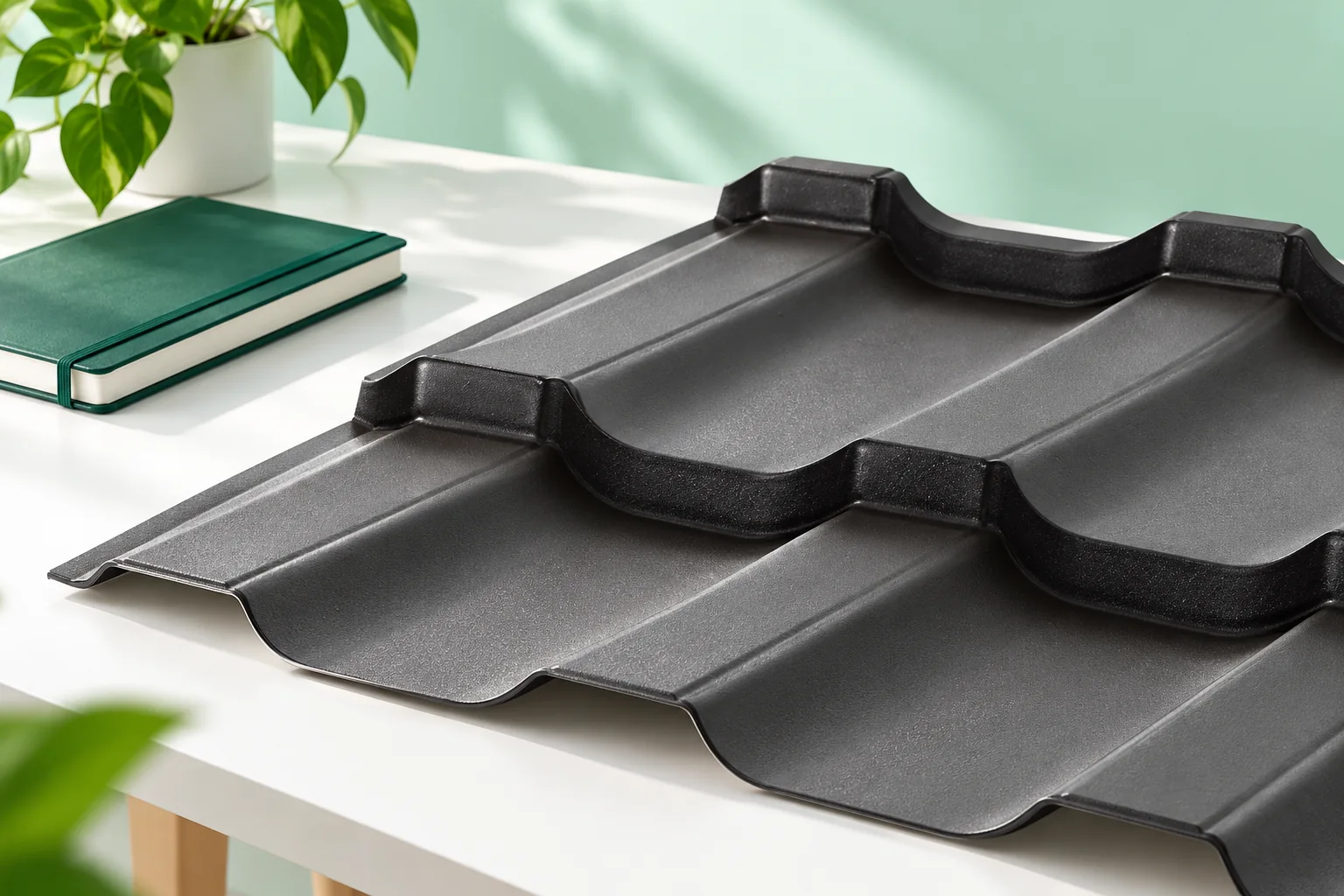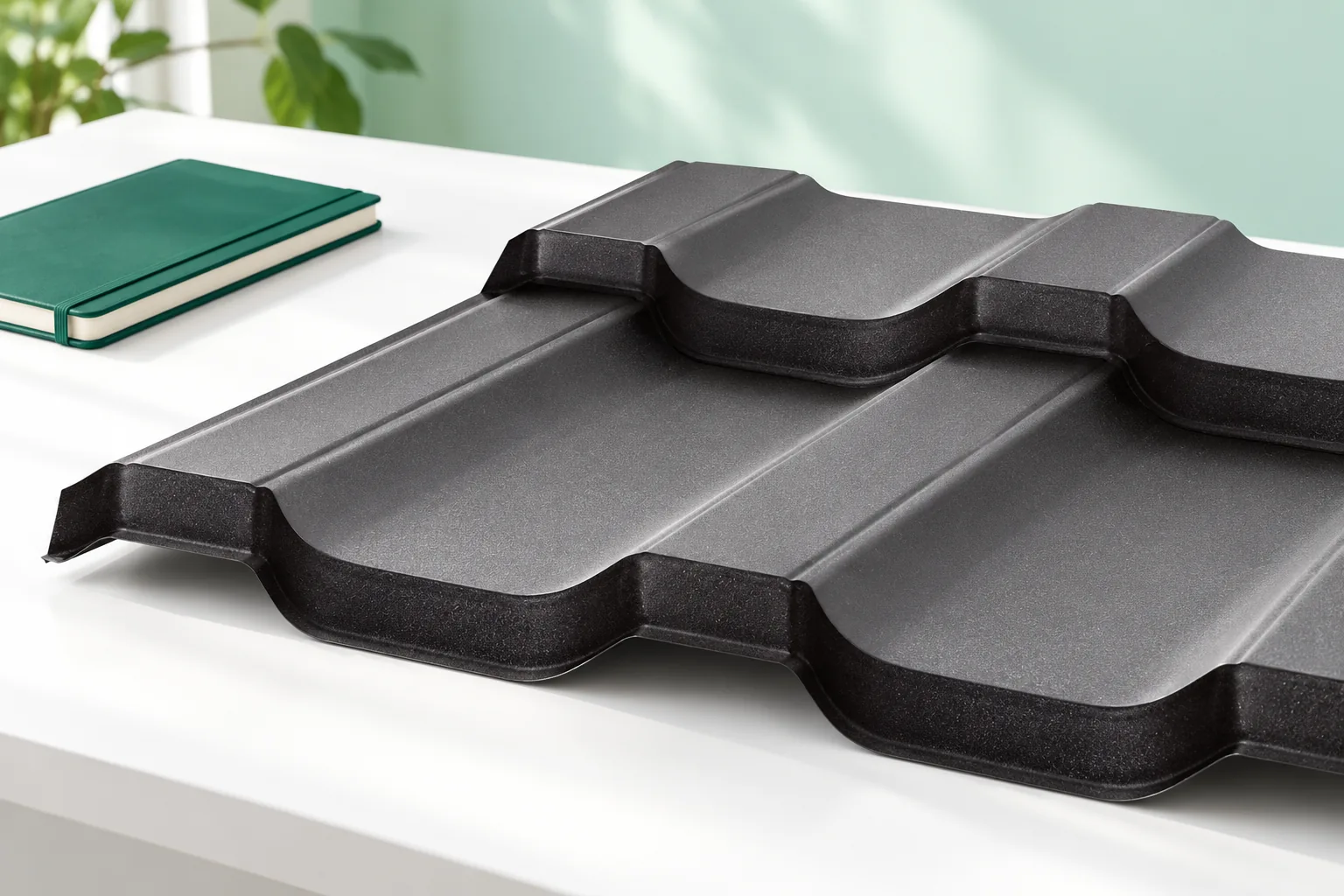
Tile-effect or trapezoidal steel roofing: which suits the roof?

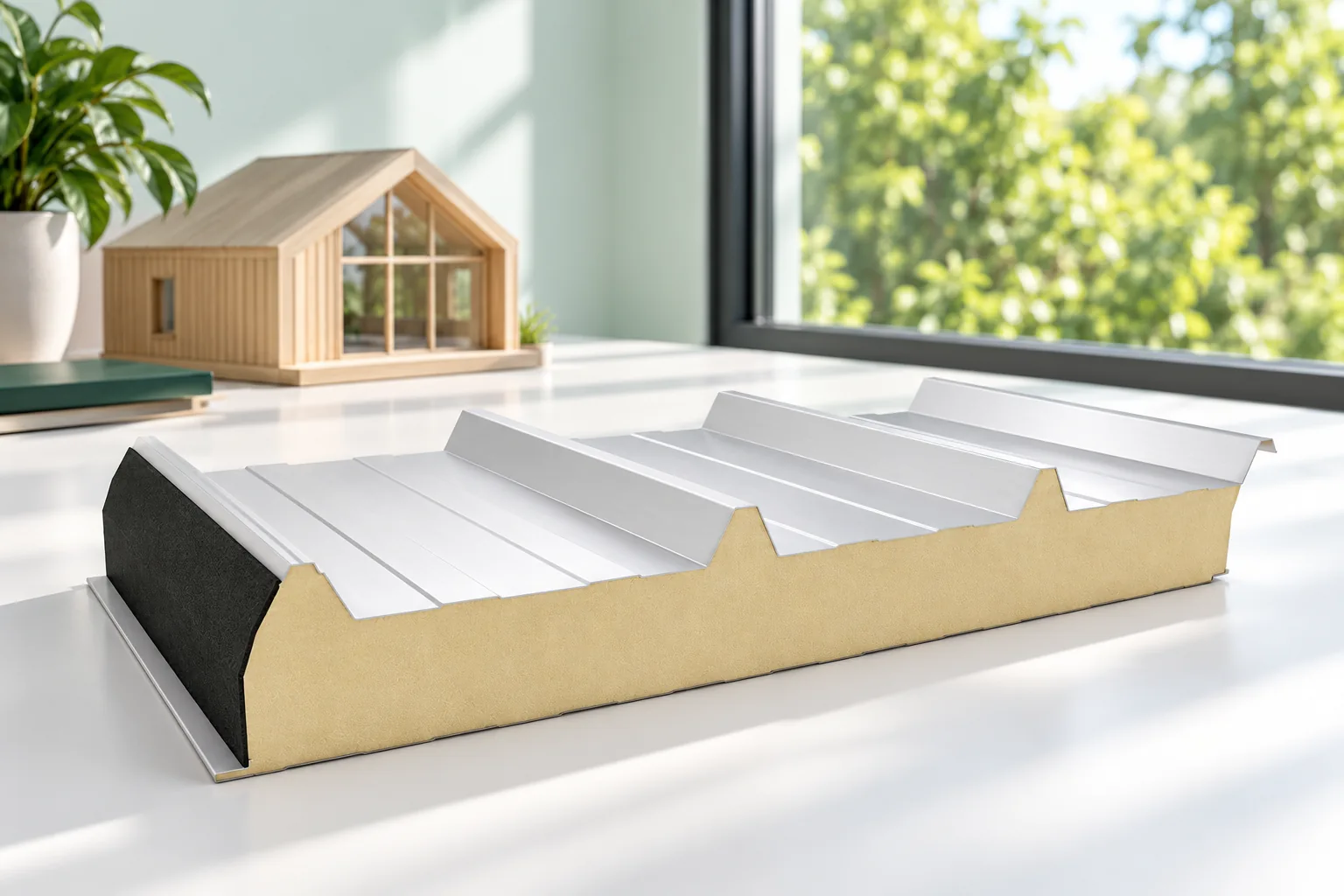
The choice between a tile-effect metal sheet and trapezoidal sheeting depends primarily on roof pitch and geometry, not on the price per square metre of the sheet alone. Check the specific profile's conditions of use – requirements for laps and layers beneath the covering vary between products. Compare complete roof systems serving the same function, including support, coating and full cost. On complex roof slopes, lay out the sheets to assess cutting and waste. Ultimately, choose the solution that meets technical requirements and suits the building.
2026-11-14T16:29:21+01:00

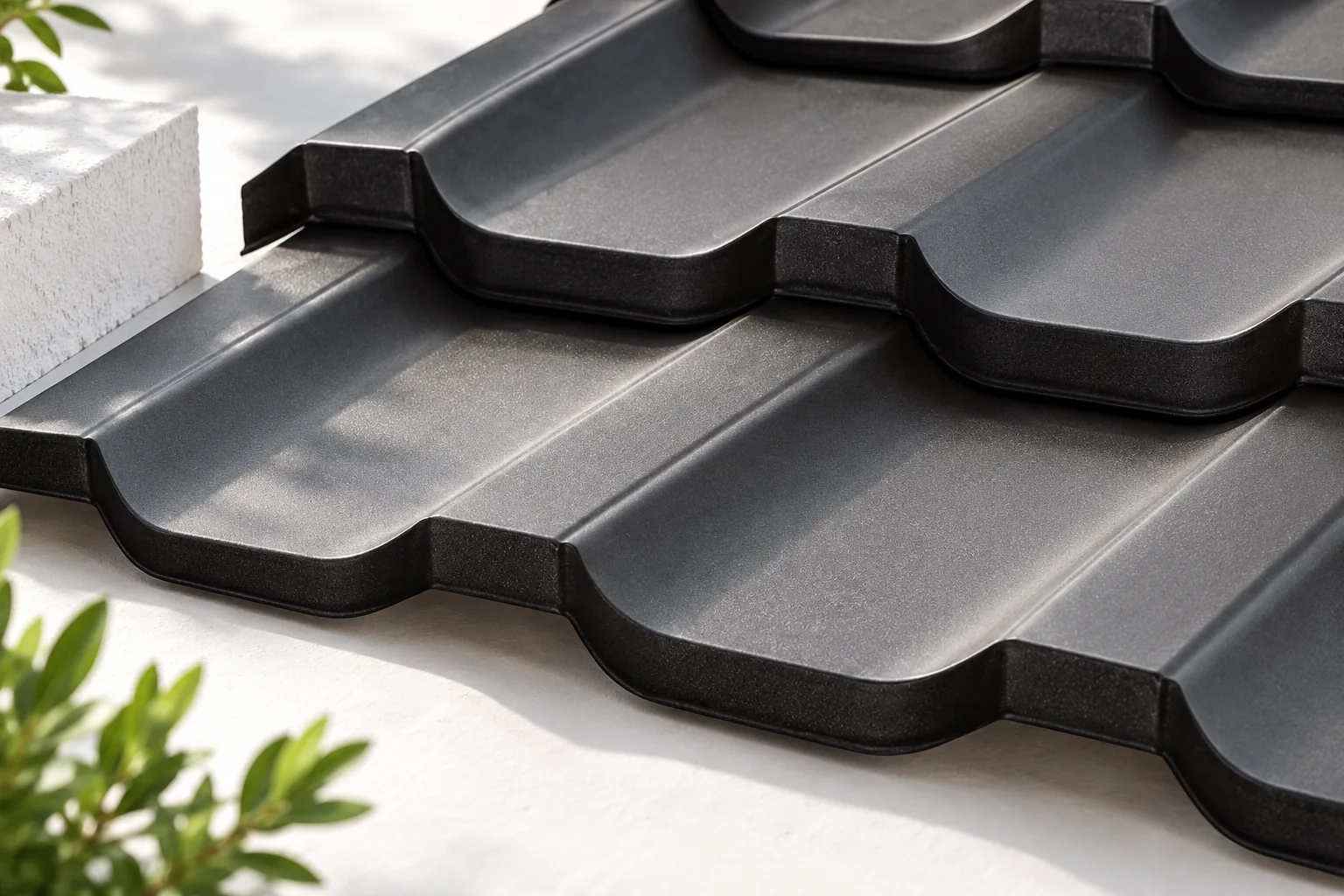
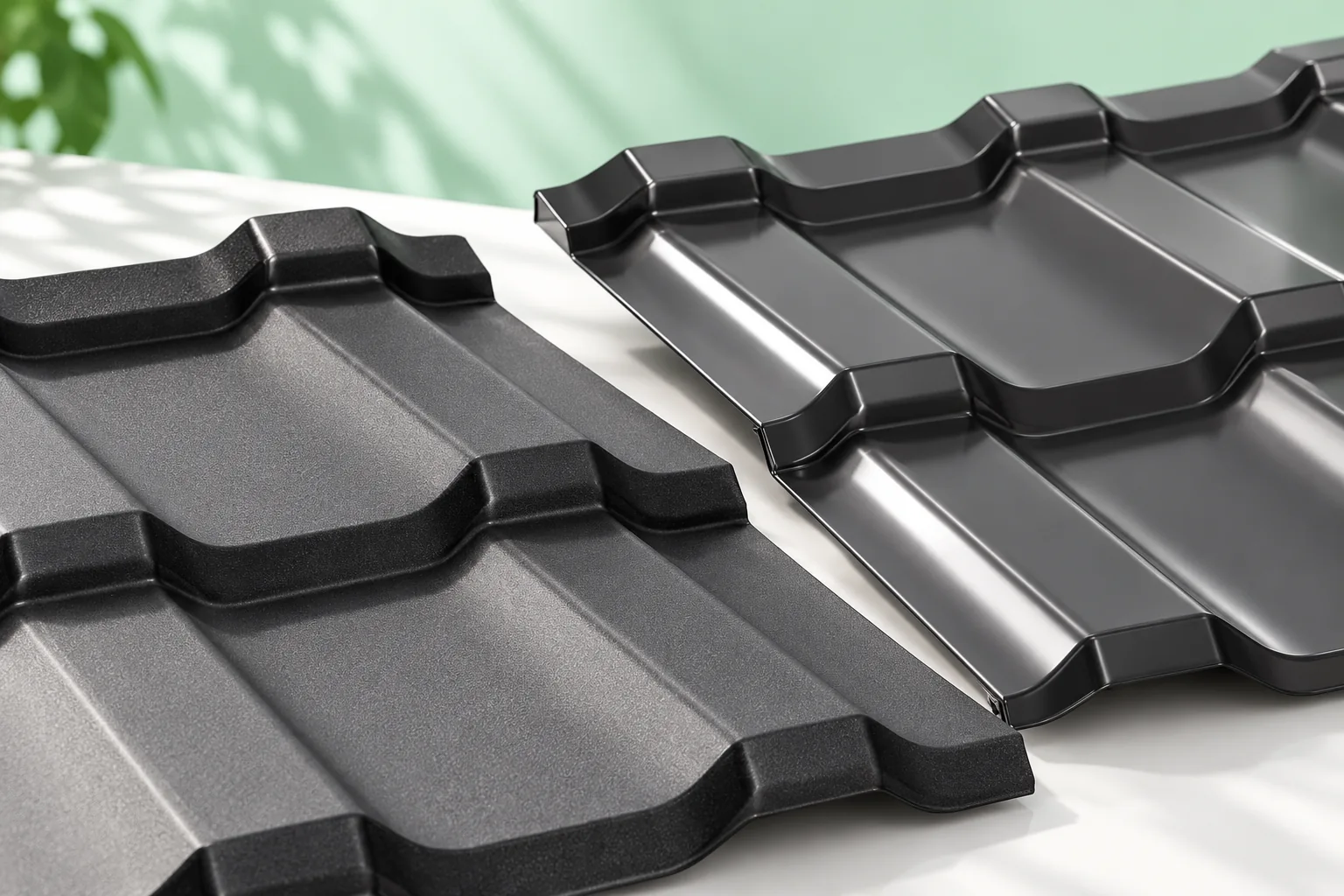
Matt or gloss? Choosing the finish for tile-effect metal roofing

The choice between matt and gloss is determined mainly by how the roof is to reflect light, not by durability alone. Both finishes are available in different coating systems, so the material's parameters and intended use should be checked first, with appearance assessed afterwards. It is worth viewing a sample outdoors at an angle close to the roof pitch, because the same colour can look different depending on texture and lighting. Matt usually diffuses reflections and gives the roof a calmer appearance, while gloss more strongly emphasises the curves of the profile. The final decision should take account of both aesthetics and the conditions of use.

2026-11-14T23:25:00+01:00

Which roof covering suits a holiday cabin?

First decide whether the cabin will be used only in summer or also in the colder months, as this determines many choices. Check the roof pitch, supporting structure, risk of water condensation and acoustics, not just the price per sheet. A lightweight covering does not exempt you from calculating snow and wind loads. Also decide whether to insulate the slopes or the ceiling above the rooms – these are different solutions. Closing the interior with wooden cladding alone will not retain heat; a layer arrangement suited to the building's use is needed.

2026-11-14T16:31:29+01:00

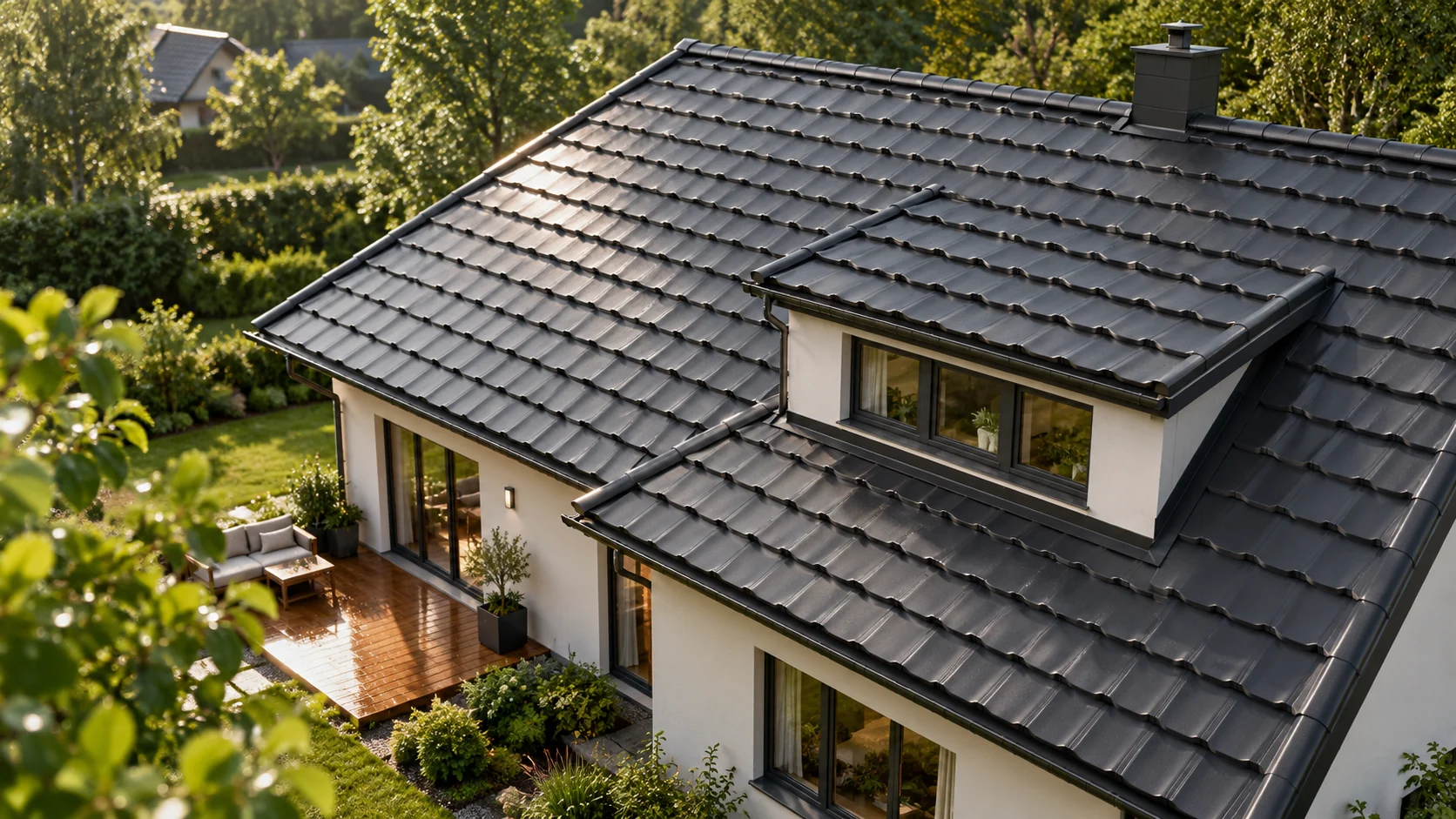
How to choose a covering for a roof with several intersecting slopes

On a multi-pitched roof, the choice of covering depends above all on how well it fits numerous edges, valleys and short slopes. Compare modular metal tiles with sheets cut to size, remembering that the price per metre does not reflect the cost of the whole covering. Account for waste, flashings, transport and time for careful joints. Start with the actual dimensions of every slope, then plan the cutting layout and the number of details.

2026-11-14T19:53:29+01:00

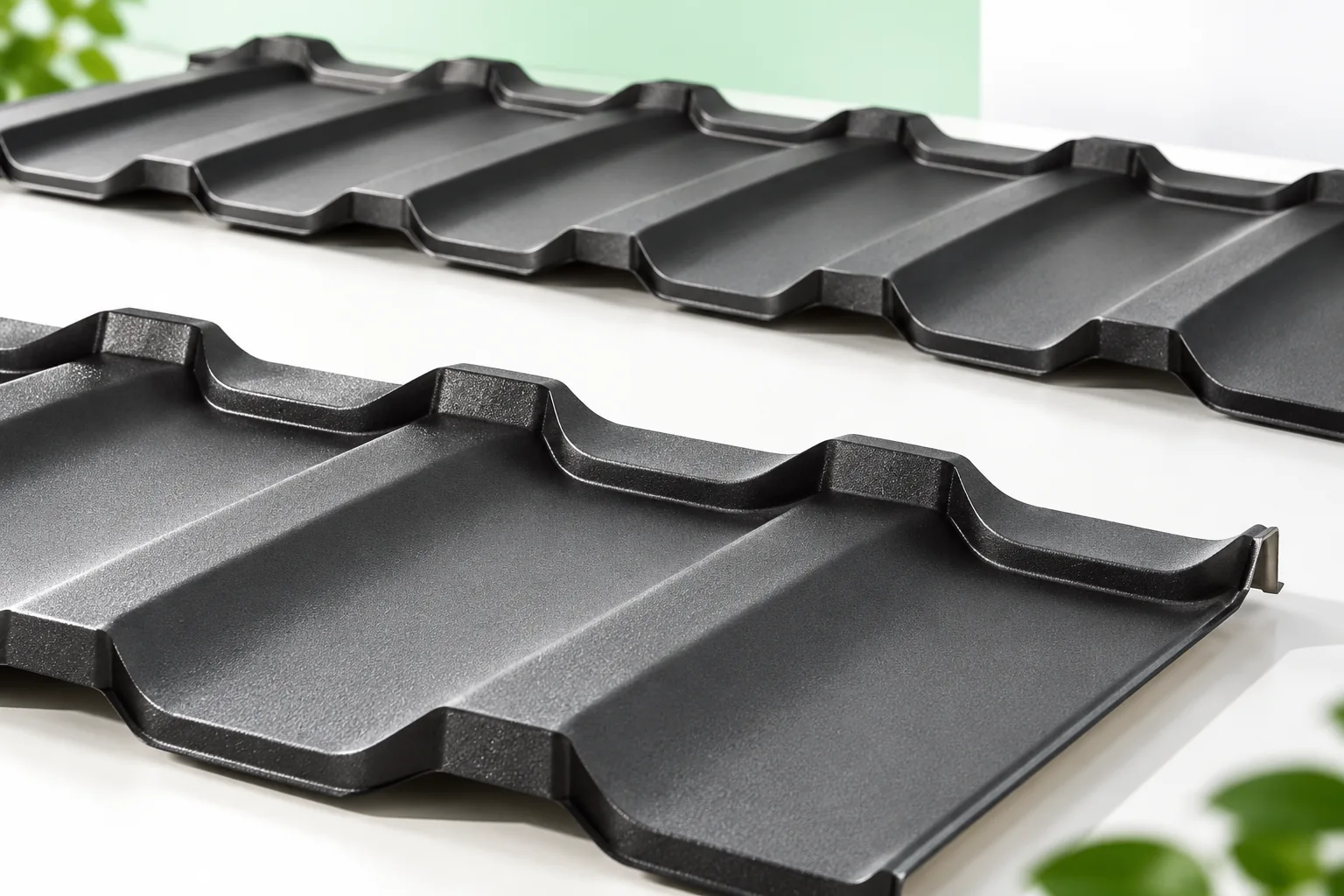
When should you choose modular tile-effect metal roofing and when full-length sheets?

Modules and made-to-measure sheets can produce a similar roof pattern. However, they differ in how the work is organised. Small elements are easier to carry and lay out on complex roof slopes. A long sheet can reduce the number of transverse joints. The right choice follows from the roof geometry and access to the building, not from the size of the material alone. There is no common format for all modular tile-effect metal roofing. In one example variant, the element has an overall dimension of 1195 × 740 mm. It covers 1140 × 700 mm, i.e. 0.798 m². Other profiles may have different dimensions, number of rows and method of overlap.

2026-11-14T10:15:01+01:00

Modular or cut-to-length metal roof tiles: which format should you choose?

The roof layout, not the sheet format itself, is the decisive factor. Before ordering, check how sheets or modules will be arranged on the slopes, where cuts will fall and whether transporting long elements is realistic. Compare the cost of complete installation rather than the unit price. Assess steel and coating quality separately, as these do not depend on sheet size. In both variants, agree the layout drawing before approving production and delivery.

2026-11-14T16:30:00+01:00

Why choose metal roofing sheets with a traditional tile profile?

A traditional-profile metal roof tile combines the look of repeated rows of tiles with the form of a profiled sheet, so it can suit houses with a pronounced eaves line, brick and timber. Its advantage is a wide choice of formats and finishes, but practical value depends on fit to the roof, correct installation and the quality of protection, not on similarity to a classic covering alone. Before buying, check the pitch, the layout and the complete set of accessories, and compare offers by effective coverage rather than the total sheet area. Keep a sample and documentation of the chosen finish.

2026-11-14T16:30:05+01:00

What are the benefits of cut-to-length tile-effect roofing sheets?

Cut-to-size metal roof tiles work best on simple, rectangular roof slopes, where they reduce the number of transverse joints. Before choosing this format, however, check the exact cutting plan for the specific roof, the transport and unloading options, and how the material will be passed onto the roof. The benefit depends on the geometry of the slope, not on the building's floor area alone. On roofs with dormers, valleys or difficult access, long sheets are not always more practical than modules, so compare the full cost and the organisation of installation.

2026-11-14T16:28:58+01:00

When do tile-effect metal roofing sheets offer good value?

Buying a metal roofing tile is worthwhile when its format, coating and fixing method suit the particular roof, not when the sheet alone is cheap. Before deciding, check the cutting plan, which shows the actual material use, where overlaps fall and which pieces must be cut. Also compare the full delivery scope: accessories, flashings, fasteners, transport and the installer's work. For a renovation, assess the condition of the roof structure and substrate. Any saving should come from good fit rather than from omitting necessary layers or details.

2026-11-14T16:31:09+01:00

Tile-effect metal roofing or bitumen shingles: how to choose

The choice between metal roofing tiles and bituminous shingles depends primarily on whether the substrate and roof geometry meet the requirements of the specific system. Shingles require a level, stable deck of boards or panels, whereas metal tiles are usually fixed to a designed batten grid. Before deciding, check the scope of substrate, underlay and labour in the offer, not just the covering price. Also compare the cutting plan, permissible pitch and how valleys, dormers and service penetrations are detailed. Only a complete comparison will show the difference between the options.

2026-11-14T16:29:38+01:00