

Building basics
Sandwich-panel.pl explains the basics of choosing sandwich panels, PIR insulation boards and metal roofing. Learn how the core differs from the facings, what the thickness describes and how the sheet dimensions relate to the effective cover area. The guides are intended for people planning a garage, industrial building, workshop or farm building. They explain which details to collect before ordering, how to identify accessories and what to inspect when the goods arrive. Use the articles to compare materials and prepare the questions that need to be resolved for your project.
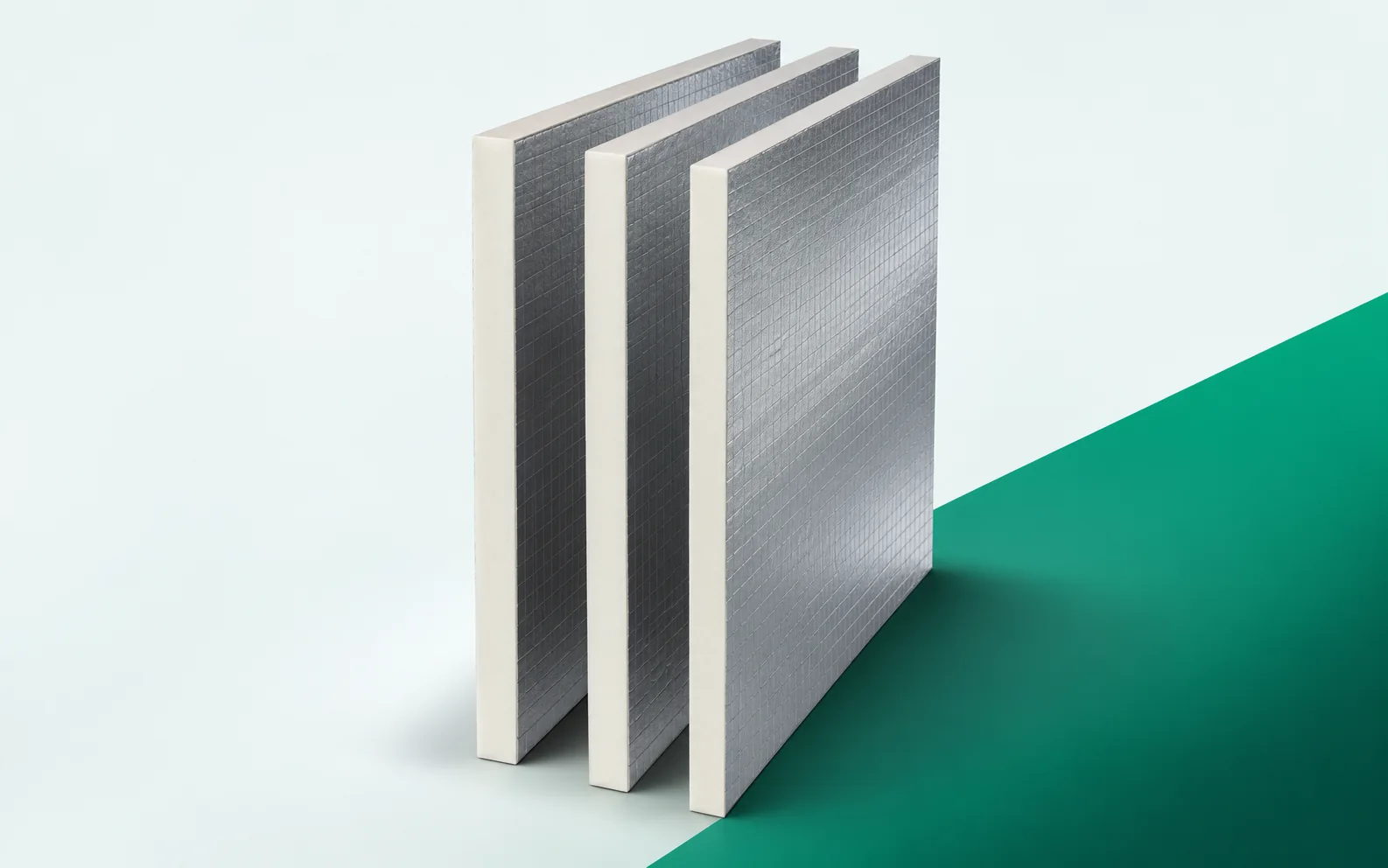
IKO enertherm ALU TAP with outlets and roof covering
For ALU TAP, the drainage plan should be consistent with the layout of the outlets and the covering details. Changing the position of a drain may require changing the order of the tapered boards. The membrane alone will not restore the intended direction of water flow on a poorly shaped field. The inspection should cover both the geometry and the subsequent sealing. The cross-section under consideration covers a roof with aluminium tapered boards at different pitches. The IKO enertherm ALU TAP task must be described together with the layers adjoining its surface. An important junction point is the joint between fields with a different drainage direction. The basis for agreement is the drainage field plan with marked pitches and heights. Before selecting materials, the height difference between the ends of the tapered board and the length in the direction of fall must be established so that the order of layers has a real reference.
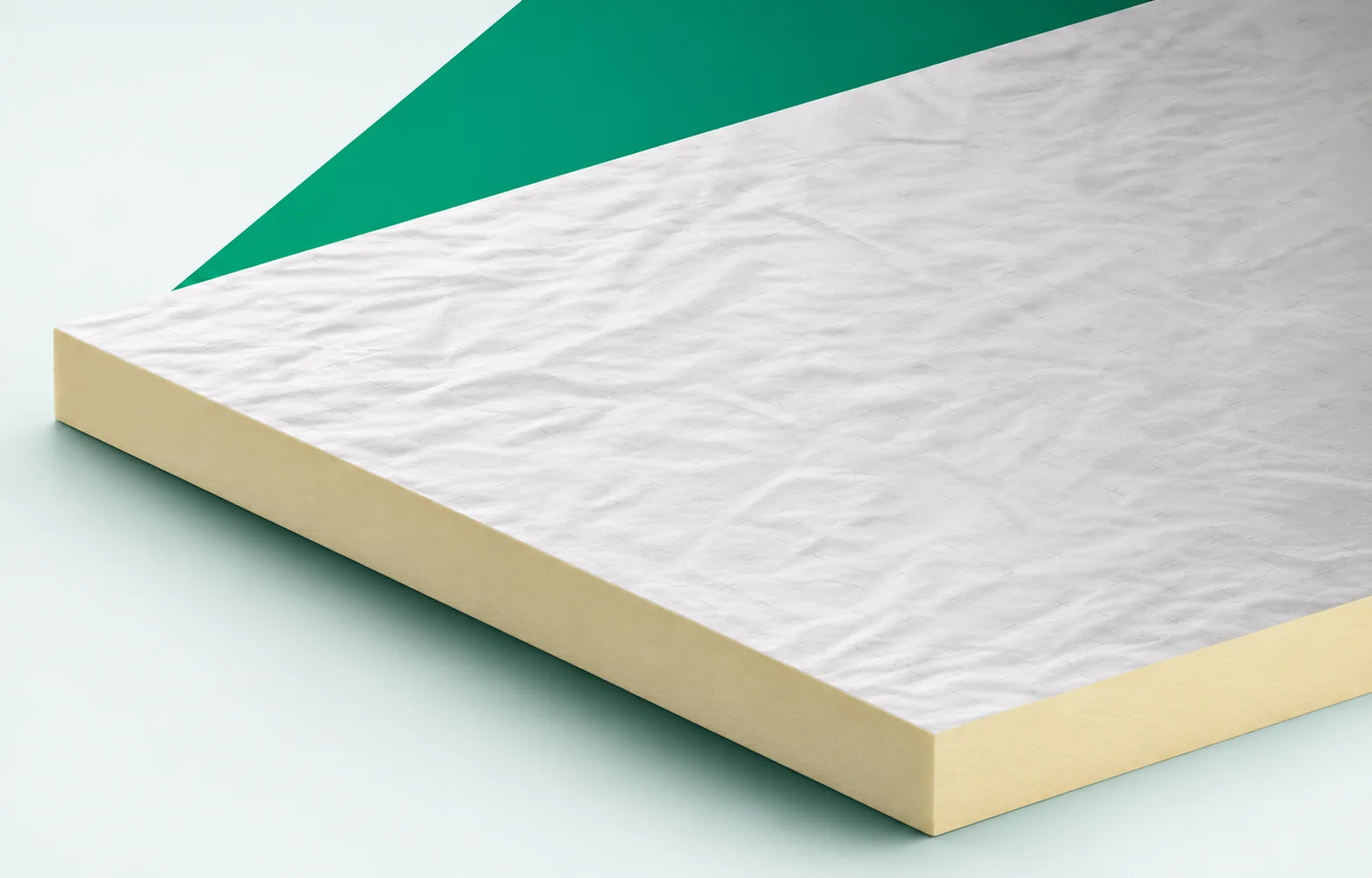
Kingspan PIR in roof systems: Therma TR26, TR27 and suitable facings
Kingspan boards are selected by family and application, not by brand alone. Therma TR26 and TR27 have a PIR core, whereas Kooltherm is phenolic foam insulation. The facings also differ: TR26 has an aluminium-containing facing, while TR27 has a glass fibre facing. A substitution requires checking the connection to the covering, the fixing, and the thickness needed to achieve the thermal resistance. In this guide, we separate these criteria from the assessment of load-bearing capacity and fire requirements. We also show why the full product name and documentation of the actual cross-section are needed to compare offers and approve a substitute material.
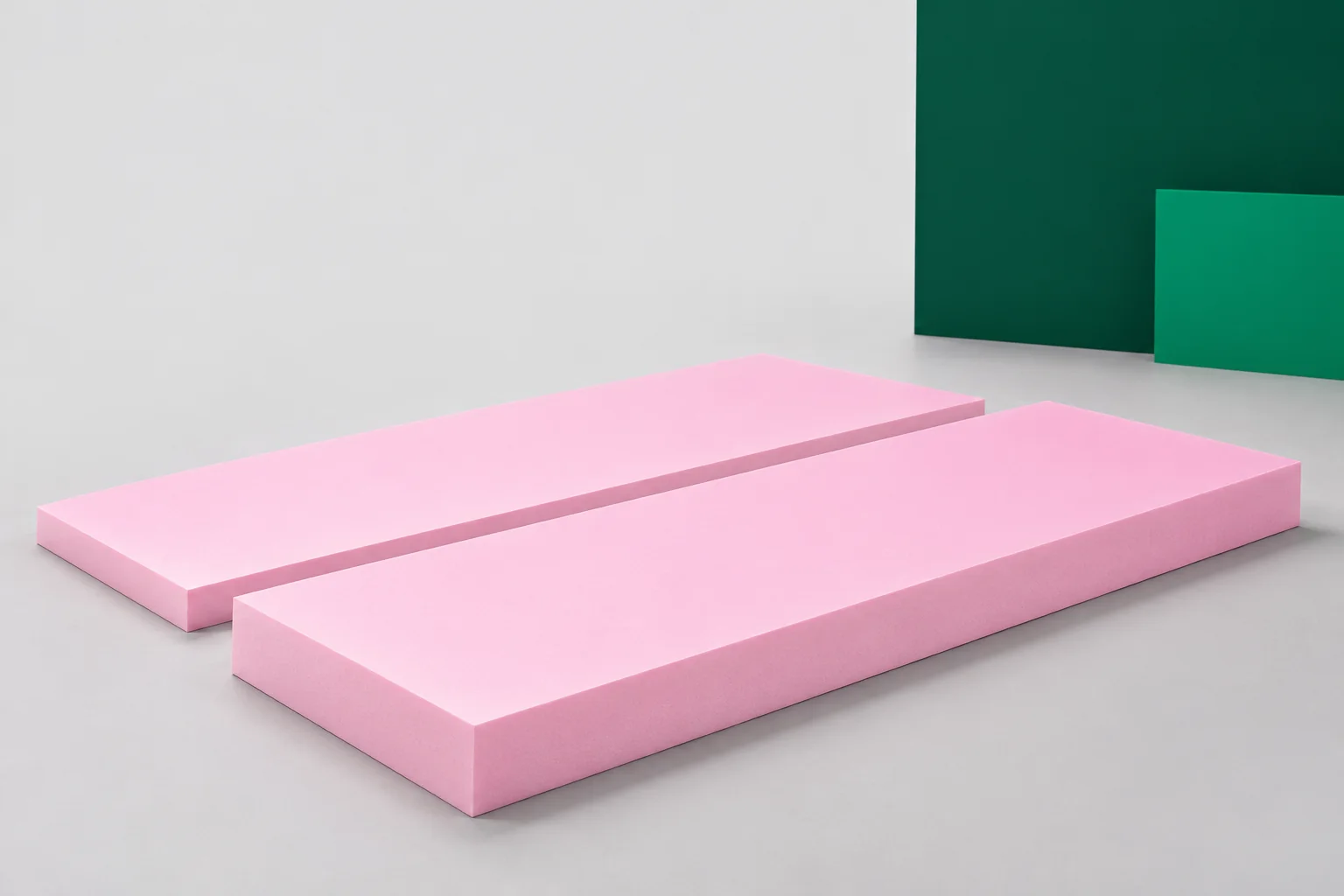
XPS and fire safety in industrial buildings: key distinctions
XPS is a plastic thermal insulation. It should not be presented as a non-combustible material, even when it remains covered by concrete in the finished floor. Extruded polystyrene has a specific reaction to fire, and the building element has its own requirements. These are two different levels of assessment. In an industrial hall, the sequence of works, storage and later changes to installations also matter. Correct selection requires more than checking a single letter on the label. The reaction-to-fire class indicates how the material behaves under specific test conditions. It must be read from the documentation for the specific XPS. There is no basis for attributing an identical class to all boards. Products with different declarations are available on the market, including among materials of a similar colour.
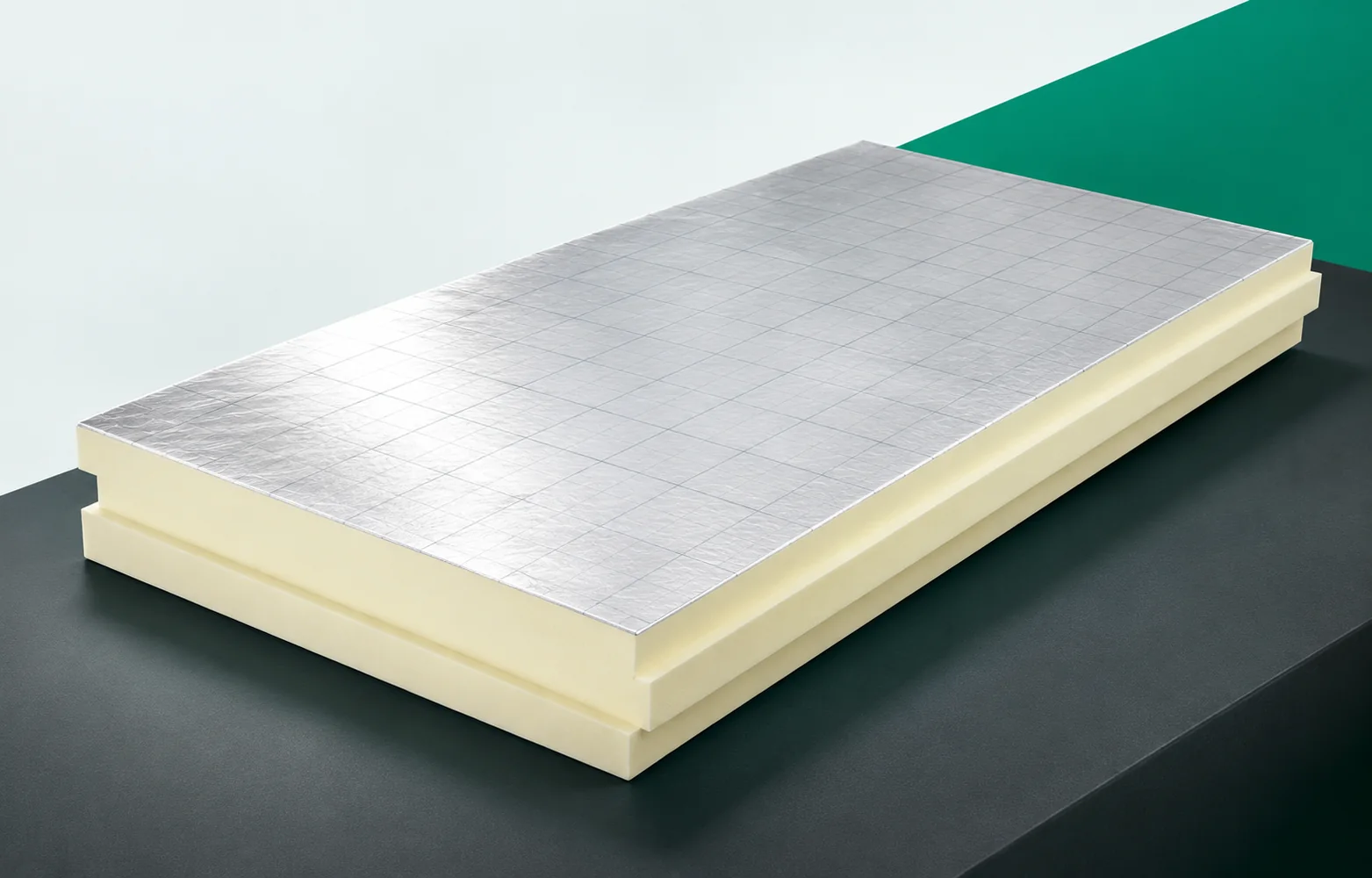
Flat roof with PIR boards: matching the facing, falls and fixing
Choosing PIR boards for a flat roof starts with the roof build-up as a whole. The type of facing affects bonding, and the fixing method must transfer loads to the substrate. Falls and drainage should be planned at the same time, because they affect the thickness and the detailing of the layer edges. Aluminium laminate, glass fleece and bituminous facing are not interchangeable surfaces. A glass-fleece surface and an aluminium laminate may require different contact layers. Compatibility must be confirmed for the specific type of membrane or roofing felt. The facing is the surface in contact with the next layer, so its type matters in practice.
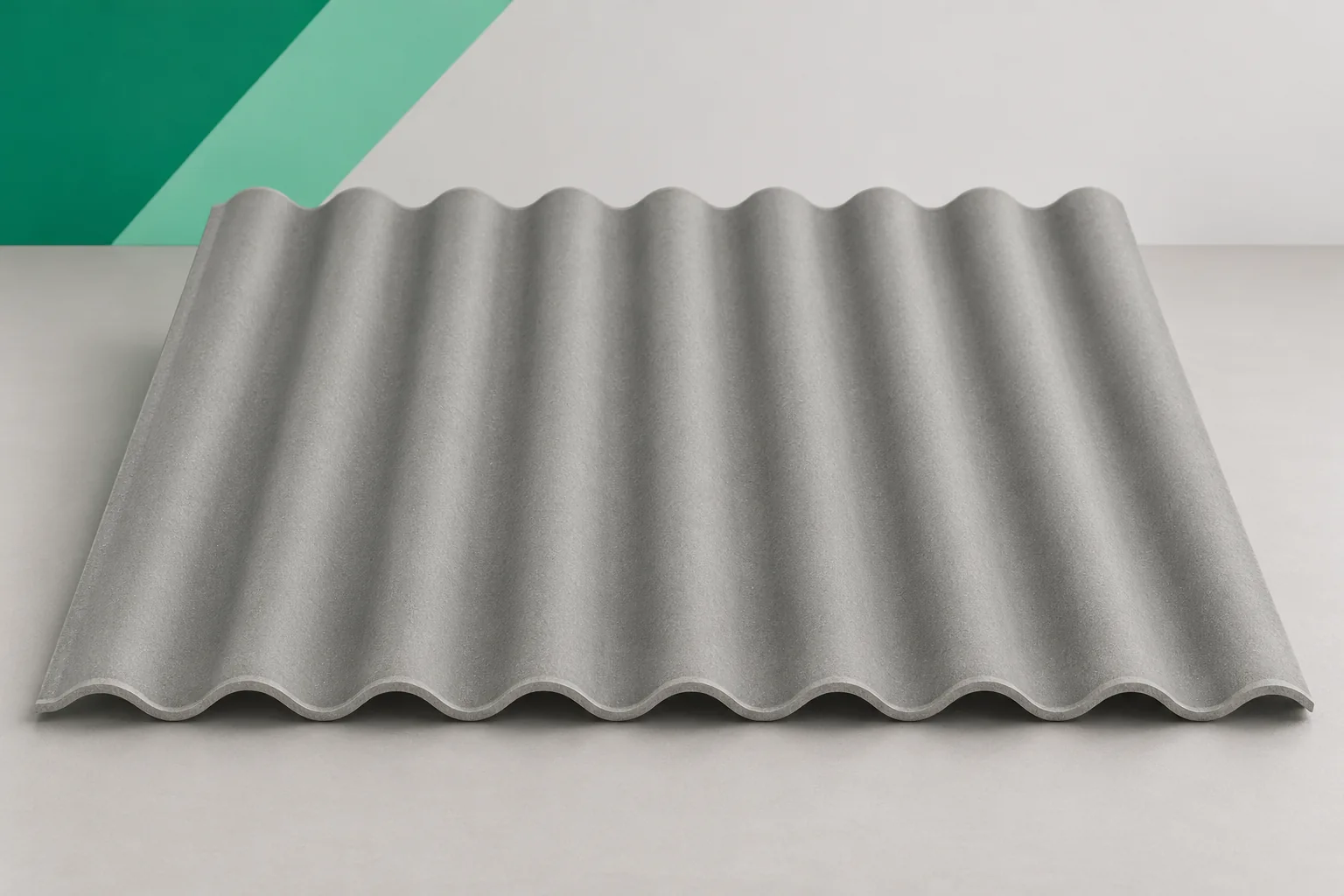
Roofing over animal feed: keeping out rain, maintaining hygiene and ventilation
A feed shelter should limit water ingress and make it easier to keep things tidy. Corrugated fibre cement sheets can be used for this purpose if they suit the structure and the storage conditions. Asbestos-free fibre cement is worth choosing together with a solution for the eaves, ventilation and service penetrations. The sheet alone does not ensure storage quality. Bagged feed, loose material and stock stored in separate bays do not require an identical layout. The storage recommendations for the specific product also matter. The roof should make it possible to meet them, but it does not replace checking the condition of the material received. On the plan, it is worth marking the unloading points and the places where feed is taken daily. These are where rain is most easily blown in through open gates.
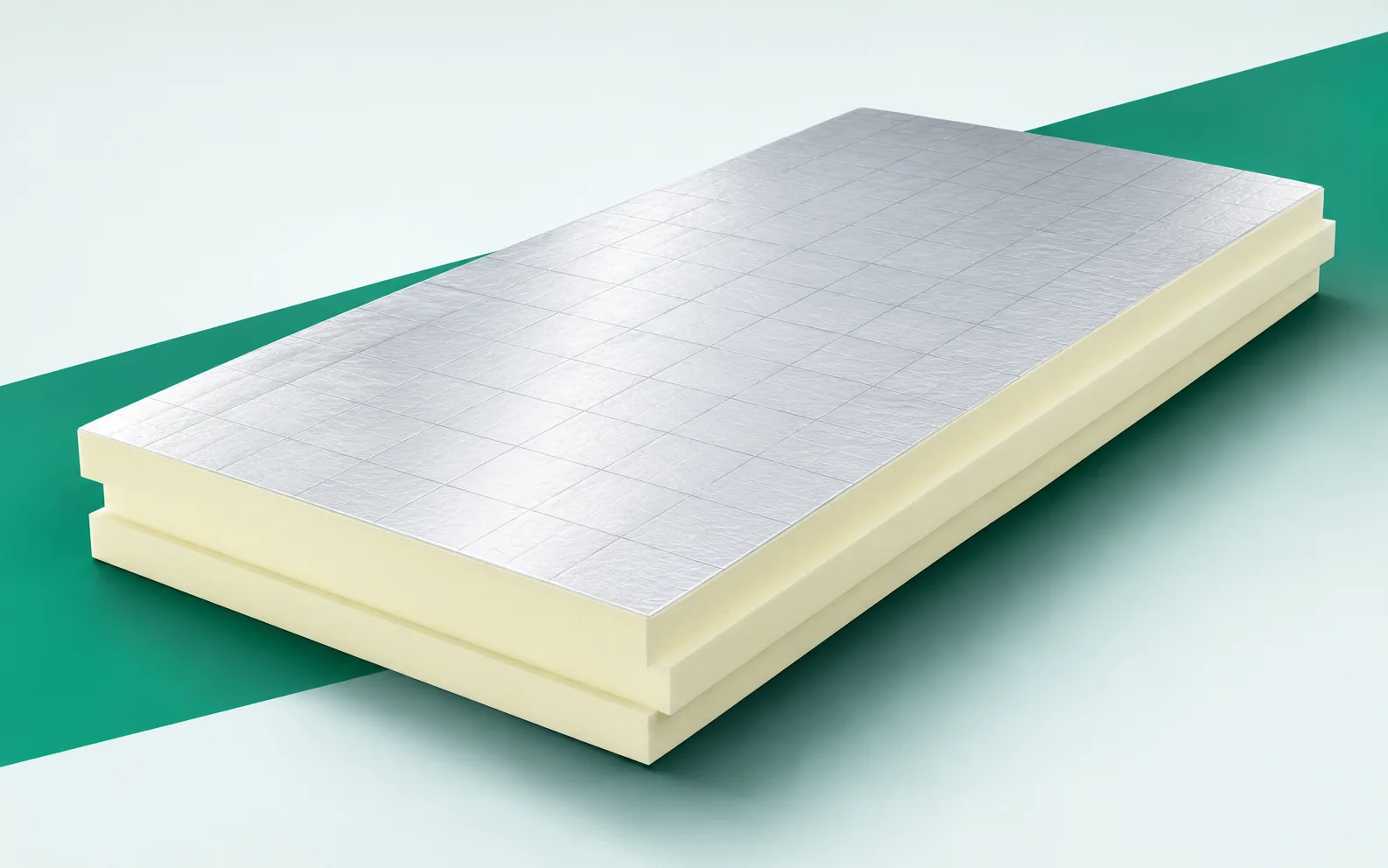
PIR boards in a roof assembly: identifying the right type
PIR boards can perform an important thermal function in a roof, but they do not form it on their own. The choice of variant must be linked to the substrate, the waterproofing and the method of fixing. A cross-section through the entire assembly explains the most. It shows what task each layer has. Polyurethane foam can also mean a spray-applied material or an gap-filling foam. Spray application requires identifying the cell structure and the execution conditions. Foam for filling gaps performs a different function from a board. None of these materials should be regarded as a substitute solely on the basis of the word polyurethane. The rigid core is only one of the elements in assessing a roof board. Polyurethane foam restricts the flow of heat, but it does not automatically take over the function of the sheathing and the covering.